Sunday, September 20, 2026 · 10 curated articles

Editor's Picks
Today's headlines reveal two troubling realities about AI infrastructure: systemic deception in data governance and the industry's accelerating arms race to paper over fundamental inefficiencies. Google's brazenly fraudulent 'Delete permanently' button in AI Studio (which merely moves JSON pointers to Trash) crosses from dark pattern into outright fraud. When paired with their instant ban of the researcher who exposed it, we see Big Tech's true stance on transparency: automated suppression of accountability under the guise of 'Intended Behavior.' This isn't slippery slope territory—we've plunged into the abyss where AI platforms openly weaponize user trust. Meanwhile, the frenzy of optimization stories (Cloudflare's Rust-based 100TB RAM savings, NVIDIA's AIPerf benchmarks) showcases an industry sprinting to mitigate the grotesque resource hunger of modern AI. Google's CC agent handling household logistics while devouring planetary-scale compute represents peak dissonance—we've built trillion-parameter models to replace sticky notes. The TypeSafe Jev model stands as the lone voice of reason, demonstrating how older research (RLCD) can deliver efficient narrow classifiers without perpetually scaling towards artificial general stupidity. Developers must demand radical transparency in data handling and reject the fallacy that every problem requires foundation-model overkill. Either we build systems with genuine deletion functions and right-sized intelligence, or we'll deservedly face regulatory hammers that crush innovation alongside deceit.
AI Policy & Ethics
Covering the evolving regulations and ethical debates shaping artificial intelligence development. From government oversight to corporate accountability, we track how policies attempt to balance innovation with societal risks. Recent controversies highlight growing tensions between transparency demands and proprietary systems.
Google AI Studio Faked Data Deletion, Banned Reporter in Seconds
The system does not send a deletion cascade to Google’s backend (Interactions API / Project Storage).
Closed as “Status: Won’t Fix (Intended Behavior)”.
Google AI Studio falsely claims to permanently delete user data when clicking 'Delete permanently.' Instead, the system merely moves a .json pointer file into Google Drive Trash, leaving the data intact and recoverable. A researcher demonstrated this flaw by restoring deleted files using Google Drive’s recovery tool, revealing the chat history was never purged. Upon reporting this deceptive design to Google’s Bug Hunter program, the researcher was permanently banned in less than a minute without human review. Google’s automated triage labeled the issue 'Intended Behavior,' confirming deliberate UI misinformation. The researcher escalated the matter to CISA and European privacy watchdogs for GDPR violations.
Source: Hacker News
Developer Tools
Stay updated with the latest in developer tools, from Cloudflare's new instant tunneling service to ongoing industry debates about coding literacy and AI-assisted development. These tools and discussions shape how modern developers build and deploy applications efficiently.
Cloudflare Launches Quick Tunnels for Instant Public URLs
One command turns the server on your laptop into a public, encrypted URL on Cloudflare's edge.
No account. No DNS. No open ports.
Cloudflare's Quick Tunnels feature allows developers to turn their localhost servers into public, encrypted URLs with a single command. The tool requires no account, DNS setup, or open ports, making it a highly accessible solution for sharing local development environments. With Cloudflare's edge network spanning over 335 cities, tunnels are created in approximately 3 seconds, offering automatic HTTPS and DDoS protection. Structured JSON output and support for webhooks make Quick Tunnels ideal for coding agents and developers needing ephemeral, secure URLs for testing and collaboration. The tunnels close automatically when the process ends, ensuring no residual configurations or cleanup tasks.
Source: Hacker News
Debating Code Literacy, RAG's Fate, and Skills vs. MCP
We dive into these questions and other AI hot takes on the latest episode of the GitHub Podcast.
The latest GitHub Podcast episode tackles pressing AI and development questions, including the relevance of reading code, the future of RAG (Retrieval-Augmented Generation), and the impact of Skills on MCP (Microsoft Certified Professional). These discussions reflect ongoing debates in the tech community about foundational skills versus emerging AI-driven tools. Exploring these topics helps developers navigate evolving job requirements and technological shifts. The episode serves as a timely resource for professionals adapting to rapid advancements in AI and software development practices.
Source: The GitHub Blog

AI Infrastructure
AI infrastructure developments enable faster, cheaper, and more scalable deployment of AI models. This covers breakthroughs in hardware acceleration, cloud inference services, and performance benchmarking tools that power modern AI applications. Stay updated on the platforms and technologies shaping how enterprises implement AI solutions.
NVIDIA Introduces AIPerf for LLM Inference Benchmarking
All of these paths have the same problem: single-process performance limits, Python’s GIL capping concurrency
NVIDIA’s AIPerf addresses the challenge of accurately measuring large language model inference performance at scale. Traditional methods like single-process scripts or Python-based load generators often fail to provide reliable benchmarks due to concurrency limitations and Python’s Global Interpreter Lock. AIPerf is designed to overcome these constraints, enabling developers to assess system performance more effectively under demanding workloads. This tool helps optimize resource allocation and ensures efficient deployment of LLMs in production environments. By eliminating guesswork, it empowers teams to deliver responsive AI applications.
Source: NVIDIA Generative AI Blog
Amazon SageMaker Inference: Key Launches in 2026
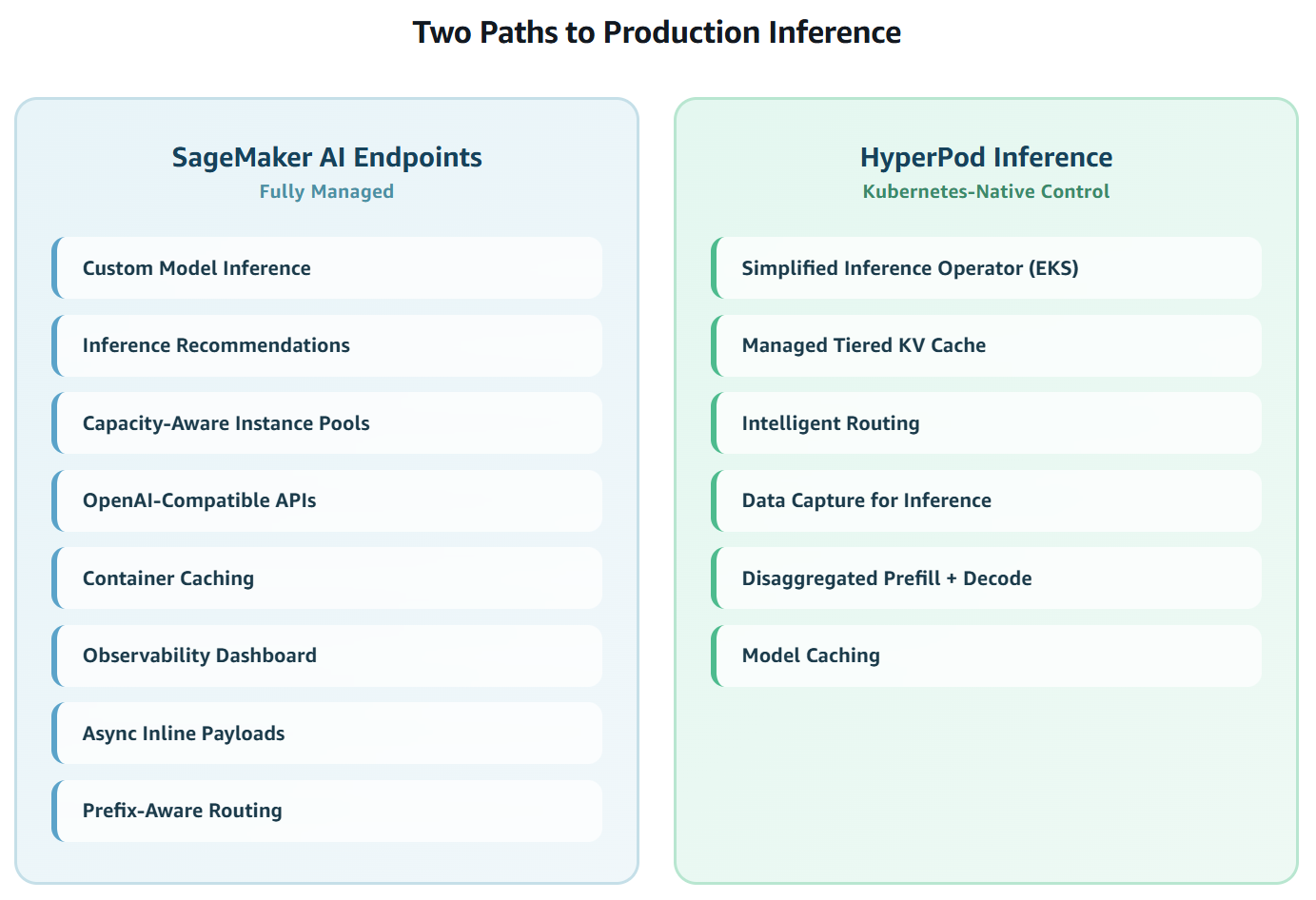
Amazon SageMaker AI shipped 13 inference launches in year-to-date across two deployment paths: fully managed endpoints and Amazon SageMaker HyperPod Inference.
Amazon SageMaker AI has introduced 13 inference-related launches in 2026, spanning two deployment paths: fully managed endpoints and Amazon SageMaker HyperPod Inference. These updates include innovations like inference recommendations, capacity-aware instance pools, tiered KV caching, and disaggregated prefill and decode. These enhancements aim to optimize AI model deployments, improve resource efficiency, and reduce latency for inference workloads. The improvements are particularly significant for enterprises scaling AI applications across diverse industries. By addressing key challenges in inference operations, SageMaker continues to strengthen its position as a leading AI infrastructure platform.
Source: AWS Machine Learning Blog
AI Agents
AWS's new AgentCore runtime accelerates AI agent deployment with elastic scaling for rapid startup. The cloud service promises to reduce cold start times for AI workloads by dynamically allocating compute resources. This advancement addresses a key bottleneck in agent-based AI systems where responsiveness impacts user experience.
AWS Launches AgentCore Runtime for Faster, Elastic AI Agent Startups
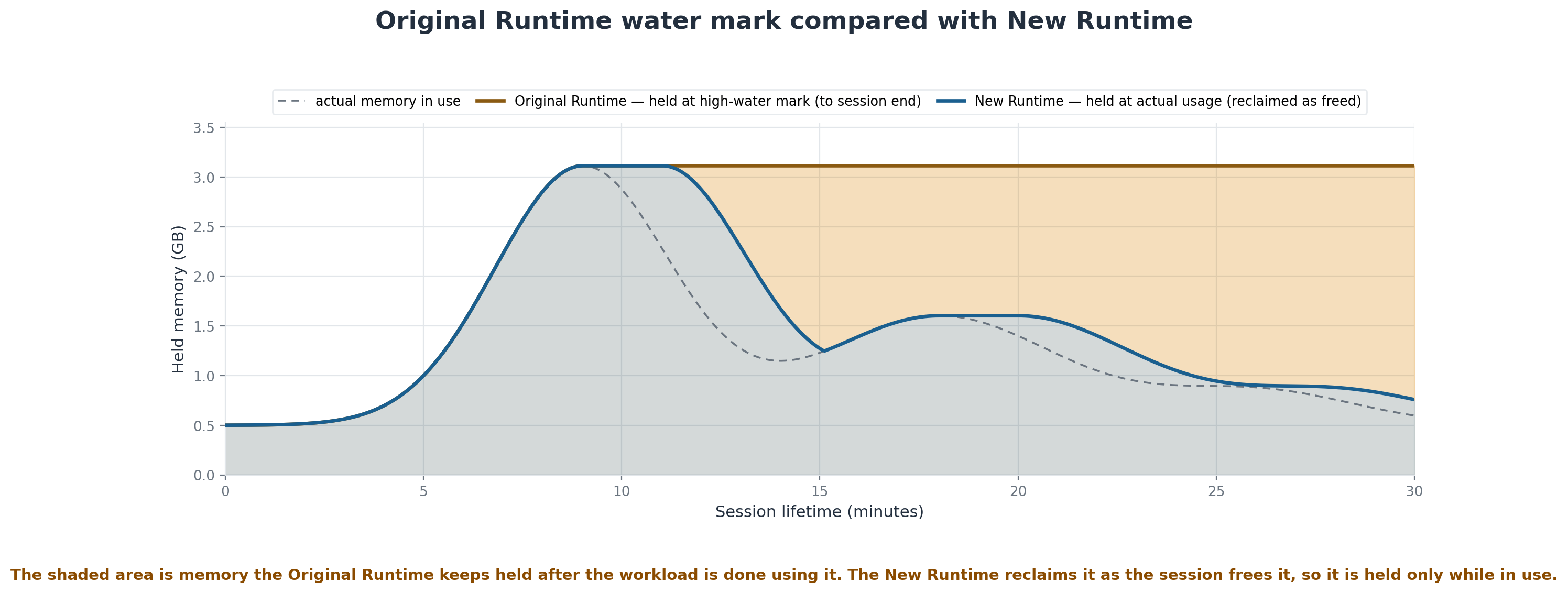
It reclaims memory as sessions release it and delivers consistent cold starts regardless of image size or concurrency.
AWS has introduced the new AgentCore runtime, a feature of Amazon Bedrock AgentCore designed to enhance speed, flexibility, and cost efficiency for production AI agents. This runtime reclaims memory as sessions release it, ensuring consistent cold starts regardless of image size or concurrency. By optimizing resource usage, it reduces operational costs and improves performance scalability. Developers can now expect more reliable and efficient AI agent deployments, making it a significant upgrade for production environments.
Source: AWS Machine Learning Blog
Foundation Models
Foundation models are large-scale AI systems that power diverse applications through transfer learning. This category tracks breakthroughs in model architectures, training techniques, and emergent capabilities that redefine what's possible with AI. We analyze how these foundational technologies enable new applications while confronting challenges around scale, safety, and efficiency.
Jev and RLCD: Reinventing the AI Classifier
What they did brilliantly was combine a bunch of ideas that have been sitting in research for years
Jev is a nod to Jevons paradox, the idea that making a resource cheaper can increase total consumption
TypeSafe's Jev model, built using the RLCD method, aims to address the inefficiency of applying large generative models to small decision-making tasks. By combining older research ideas into a new approach, Jev focuses on fast, automatic judgments akin to Kahneman's System 1. The model's name references Jevons paradox, suggesting that cheaper intelligence will lead to increased usage. This release comes at a time when developers are fatigued from using oversized models for minor decisions, making Jev's targeted approach particularly relevant. Open-source alternatives also exist, offering similar functionality without proprietary methods.
Source: Turing Post

AI Applications
Emerging AI tools are transforming daily tasks and professional workflows. From smart home management to multilingual meeting transcription, these applications demonstrate how machine learning is solving concrete problems across domains.
Google Launches AI Agent 'CC' to Streamline Household Management
Google is refocusing its CC AI agent on household coordination
letting families share emails, schedules, and tasks so the AI can manage calendars, fill out forms, make shopping lists, plan meals, and more
Google has introduced an AI agent called 'CC' designed to assist families in managing household tasks. The agent enables families to share emails, schedules, and tasks, allowing it to manage calendars, fill out forms, create shopping lists, plan meals, and more. This development aims to simplify the coordination of daily activities and reduce the mental load on family members. By leveraging AI, Google seeks to create a more efficient and organized household environment. The CC AI agent represents a step forward in integrating AI into everyday life, offering practical solutions for managing family logistics.
Source: TechCrunch AI

VoiceCap: AI-Powered Meeting Notes in Your Language
The AI notetaker for meetings in your language
VoiceCap is an AI-powered tool designed to take notes during meetings in multiple languages. It simplifies the process of capturing key points and action items, making meetings more efficient. Users can focus on discussions while VoiceCap handles the documentation. This tool supports various languages, ensuring accessibility for diverse teams. It also reduces the need for manual note-taking, saving time and improving accuracy.
Source: Product Hunt
Programming
Cutting-edge developments in software engineering, programming languages, and developer tools. Covers major version releases, optimization breakthroughs, and emerging best practices that impact modern development workflows across cloud, mobile, and embedded systems.
Cloudflare Saves 100TB RAM Using Mathematical Optimization in Rust
we reduced one of our Pingora-based service's RAM usage with statistics
Here's how we reduced one of our Pingora-based service's RAM usage with statistics
Cloudflare reduced one of its Pingora-based services' RAM usage by 100TB through statistical optimization techniques implemented in Rust. The global network infrastructure provider constantly seeks small efficiency gains that sometimes yield massive resource savings. This optimization demonstrates how mathematical approaches can deliver substantial infrastructure improvements. The Rust implementation ensured both memory safety and performance for the critical networking component. Such large-scale savings are significant for Cloudflare's operations and cost structure. The technique may influence similar optimizations across distributed systems architectures.
Source: The Cloudflare Blog

This report is auto-generated by WindFlash AI based on public AI news from the past 48 hours.