Saturday, July 18, 2026 · 10 curated articles

Editor's Picks
Kimi K3 and the “State of Open Source AI 2026” report point in the same direction: open models are becoming credible choices for more production workloads, while the cost of capable inference continues to fall. Kimi K3’s 2.8-trillion-parameter design, native vision, and one-million-token context are notable, but its full weights are not expected until July 27. The sensible conclusion is therefore narrower than the launch-day excitement: the open-model ceiling is rising quickly, yet independent testing, serving costs, and practical access will determine how much of that capability developers can actually use.
LongStraw shows why model announcements are only part of the story. It extends reinforcement-learning post-training beyond two million positions under a fixed GPU budget, addressing the gap between models that can accept very long inputs and training systems that can teach them to work across equally long trajectories. Together with RoboTTT’s 8,000-step visuomotor context and VideoChat3’s efficient video architecture, it suggests that the next round of progress will depend as much on better execution methods as on adding parameters.
The infrastructure stories make the same point from below. NVIDIA’s BlueField design focuses on the data movement created when one request expands into many model calls, tool calls, memory lookups, and policy checks. ZooData and Amazon Bedrock’s managed knowledge base target the state and retrieval layer around agents. The practical lesson for engineers is not that prompting has stopped mattering. It is that useful agents increasingly depend on observable workflows, reliable data access, bounded costs, and infrastructure that can survive repeated actions rather than a single impressive response.
Foundation Models
Foundation models are advancing through massive scaling and native multimodality, highlighted by the debut of the 3T-class Kimi K3 architecture. Open-source initiatives like VideoChat3 are democratizing specialized video understanding, while the integration of Grok 4.3 into Amazon Bedrock signals a maturing landscape for enterprise-grade agentic workloads. These developments underscore a trend toward longer context windows and robust reasoning capabilities for complex industrial applications.
Kimi K3: World's First Open 3T-Class Foundation Model with Native Vision
Kimi K3 is the first open model to reach 2.8 trillion parameters.
The full model weights will be released by July 27, 2026.
Kimi K3 marks a significant milestone as the world's first open 3T-class foundation model, featuring 2.8 trillion parameters and a 1-million-token context window. Built on a sophisticated architecture utilizing Kimi Delta Attention and Attention Residuals, the model achieves a 2.5-fold improvement in scaling efficiency over its predecessor. It integrates native vision capabilities and a Stable LatentMoE framework that activates 16 out of 896 experts to optimize compute usage. In benchmarks, the model demonstrates frontier-level performance in long-horizon coding and kernel optimization, rivaling proprietary models like Claude Fable 5. Currently available via the Kimi API and web platforms, the full model weights are scheduled for public release by July 27, 2026. This development establishes a new upper bound for open-source AI performance across complex reasoning and engineering tasks.
Source: Hacker News
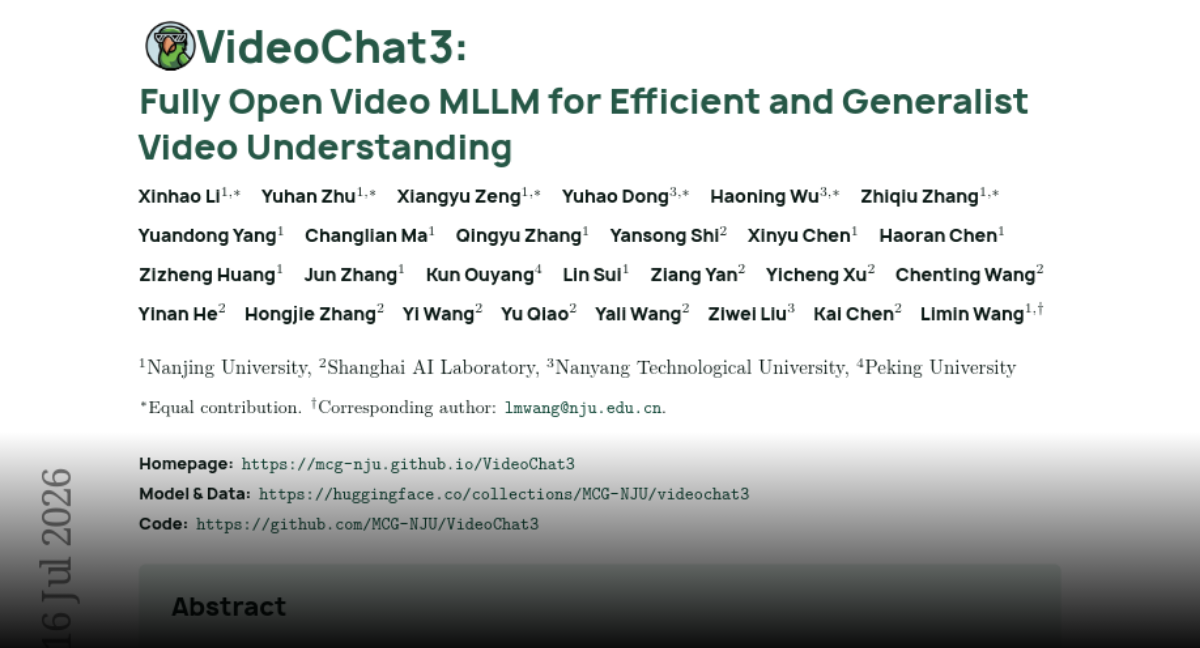
VideoChat3: A Fully Open 4B Parameter Video MLLM for Generalist Video Understanding
VideoChat3 surpasses prior open-source models with equal or larger parameter counts with only 4B parameters and higher efficiency.
we introduce Inflated 3D Vision Transformer (I3D-ViT) and Adaptive Frame Resolution for Streaming Video Perception
VideoChat3 achieves a superior balance between computational efficiency and broad generalization by utilizing only 4B parameters to outperform larger open-source models across diverse benchmarks. The model addresses critical limitations in existing video understanding frameworks by introducing an Inflated 3D Vision Transformer (I3D-ViT) and Adaptive Frame Resolution for efficient spatiotemporal representation. To enhance cross-domain versatility, the development team curated three high-quality training datasets: VideoChat3-Academic2M, VideoChat3-LV116K, and VideoChat3-OL617K, which cover general, long-form, and streaming video scenarios. Unlike many contemporary models that are only partially open, this project releases the complete training code, strategies, and datasets to foster community-driven development and reproducibility. Experimental results demonstrate that VideoChat3 maintains high efficiency during both training and inference while providing robust performance in real-world applications. This fully open-source approach provides a scalable foundation for future advancements in motion analysis and streaming interaction.
Source: HuggingFace Papers
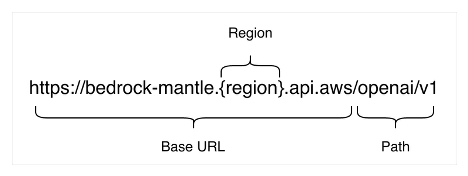
Amazon Bedrock Integrates Grok 4.3 for Enterprise and Agentic Workloads
Grok 4.3 a great fit for agentic and enterprise workloads
configurable reasoning effort, tool calling, structured output, image input, and stateful multi-turn conversations
Grok 4.3 is now available on Amazon Bedrock, providing a high-performance foundation model specifically optimized for complex agentic and enterprise-level workloads. This integration allows AWS developers to access advanced features including configurable reasoning effort, tool calling, and structured output directly within the Bedrock ecosystem. Organizations can leverage the model's image input capabilities and stateful multi-turn conversation support to build more intuitive and context-aware AI assistants. By utilizing this managed service, teams can transition from basic chat requests to sophisticated enterprise deployments without the overhead of managing underlying infrastructure. The inclusion of Grok 4.3 broadens the selection of frontier models available to AWS customers, facilitating the development of secure and scalable generative AI solutions. This launch emphasizes the strategic importance of providing diverse reasoning options for developers building next-generation AI agents.
Source: AWS Machine Learning Blog
Open Source
The open-source landscape is witnessing a transformative era where collaborative innovation now rivals the capabilities of proprietary systems. By achieving performance parity and significantly reducing operational costs, open-source AI projects are dismantling traditional barriers to entry and mitigating vendor lock-in risks for enterprises worldwide. This category explores the latest breakthroughs, community-driven frameworks, and strategic reports that define the future of transparent and accessible technology development.
The State of Open Source AI 2026: Parity, Performance, and the Cost Collapse
Inference cost in 36 months: $20 → $0.40 per 1M tokens
a majority of production tokens now route through them, and the five highest-volume models on OpenRouter are all open.
GPT-4-class inference costs plummeted from $20 to $0.40 per 1 million tokens over 36 months, a 50x decrease that outpaces historical computing and bandwidth price curves. Open-weight models have reached parity with closed models in coding and instruction-following, resulting in a majority of production tokens now routing through open-source alternatives. While the capability gap on the Chatbot Arena leaderboard fluctuated to 3.3% by March 2026 as closed reasoning models pulled ahead, the top five highest-volume models on OpenRouter remain exclusively open-weight. Global organizations including PwC and the Red Cross are increasingly adopting open models to ensure data sovereignty and eliminate per-token metering. This shift suggests that model inputs are becoming commoditized, with value migrating upward to agentic harnesses and specialized fine-tuning for humanitarian, financial, and local language applications.
Source: Hacker News
Research
Stay at the forefront of innovation with the latest breakthroughs in artificial intelligence and robotics research. This section highlights pioneering studies that bridge the gap between theoretical modeling and real-world application, such as scaling robot visuomotor context for long-term memory and optimizing real-time neural rendering for dynamic scenes. By exploring these cutting-edge methodologies, we gain a deeper understanding of how machines can learn to navigate, perceive, and interact with complex environments more efficiently than ever before.
RoboTTT: Scaling Robot Visuomotor Context to 8K Timesteps
scale visuomotor context to 8K timesteps, three orders of magnitude beyond state-of-the-art policies
unlock new robot capabilities: one-shot in-context imitation from human video demonstrations
RoboTTT (Test-Time-Training Robot Policies) scales visuomotor context to 8,000 timesteps, representing a three-order-of-magnitude increase over current state-of-the-art robot foundation models. This architectural advancement achieves long-context capabilities without increasing inference latency, addressing a critical bottleneck in real-time robotic control. By utilizing this extended historical window, the model enables one-shot in-context imitation directly from human video demonstrations and allows for on-the-fly policy improvements during operation. These capabilities lead to significantly improved performance on multi-stage, long-horizon tasks and enhanced robustness against environmental perturbations. The training recipe provides a framework for future robot policies to leverage historical interaction data more effectively for complex manipulation and navigation. This research marks a significant shift from the single-step or short-history processing typical of contemporary robotic systems.
Source: ArXiv
Online Neural Space Time Memory for Real-Time Dynamic Novel View Synthesis
Online novel view synthesis from multi-view streaming videos faces a fundamental trade-off: maintaining a persistent, long-horizon memory
The computational cost of heavy memory updates precludes real-time application and can lead to instability over long contexts.
Online novel view synthesis from multi-view streaming videos requires balancing persistent long-horizon memory with strict real-time processing constraints to reconstruct occluded regions effectively. Standard models using Test-Time Training typically mandate gradient-based memory updates at every frame to adapt to dynamic scene motion, a process that often exceeds computational budgets. The computational intensity of these frequent memory updates limits practical applications and can introduce instability over extended video sequences. By addressing the demand for more efficient memory updates, this research explores a framework designed to maintain scene consistency without the overhead of per-frame gradient adjustments. This approach enables the reconstruction of temporarily hidden areas in high-speed environments while preserving the performance necessary for real-time streaming applications. The system focuses on mitigating the inherent trade-off between memory retention for temporarily occluded regions and the latency requirements of streaming media environments.
Source: ArXiv
AI Infrastructure
AI infrastructure is evolving to support increasingly complex workloads, ranging from long-context reinforcement learning to the orchestration of large-scale agentic systems. Recent innovations like LongStraw demonstrate techniques for maximizing fixed GPU budgets, while hardware-software co-design using NVIDIA BlueField DPUs optimizes data flow for agentic factories. Furthermore, specialized data layers like ZooData are emerging to meet the unique storage and retrieval requirements of autonomous agents, ensuring more efficient and scalable AI operations.
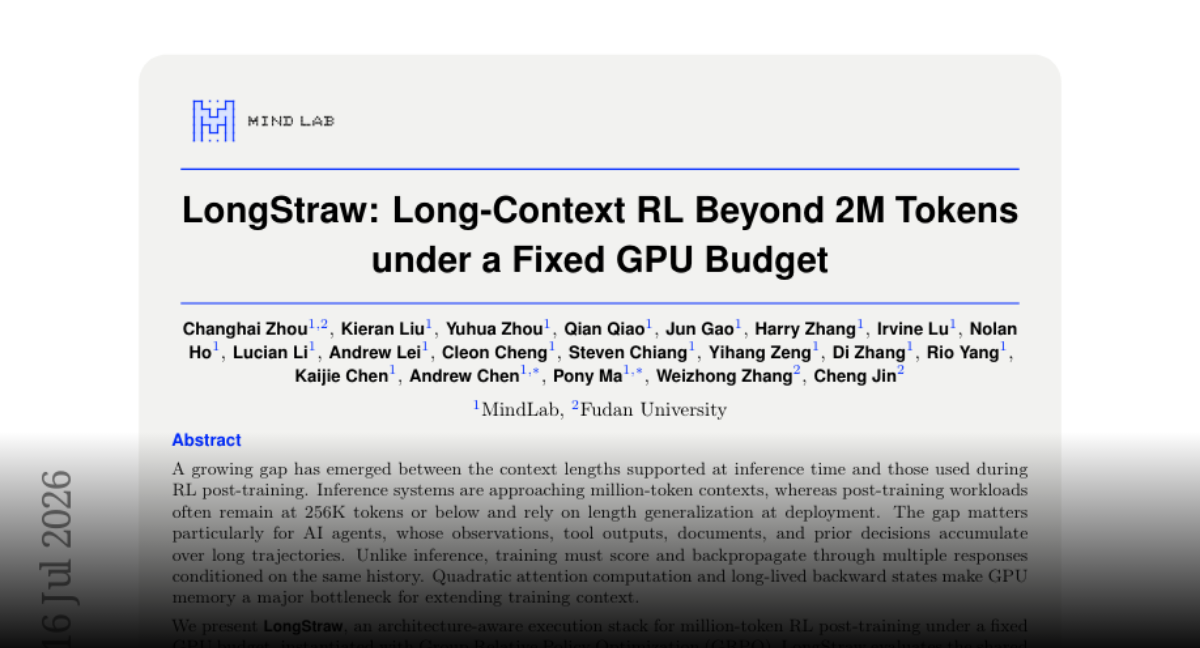
LongStraw: Enabling 2M+ Token RL Training Under Fixed GPU Budgets
LongStraw is an architecture-aware execution stack for million-token RL post-training under a fixed GPU budget
increasing the group size adds only 0.21 GB of peak allocated memory, while a separate stress test reaches 4.46M positions.
LongStraw establishes an architecture-aware execution stack that enables reinforcement learning (RL) post-training to scale beyond 2 million tokens using a fixed GPU budget. By utilizing Group Relative Policy Optimization (GRPO) and evaluating shared prompts without autograd, the system bridges the gap between million-token inference capabilities and traditional 256K-token training limits. The architecture retains only model-specific states for later tokens and replays short response branches sequentially to minimize the live training graph. Experimental results on eight H20 GPUs demonstrate that LongStraw can process 2.1 million positions for Qwen3.6-27B, while a separate stress test reached 4.46 million positions. Further validation on 32 H20 GPUs confirmed the end-to-end execution path for a 2.1 million-token prompt across all 78 layers of the GLM-5.2 model, establishing high execution capacity for complex AI agent trajectories.
Source: HuggingFace Papers
Scaling Agentic AI Factories via Hardware-Software Co-Design with NVIDIA BlueField
Agentic AI changes the infrastructure pattern for AI factories.
One request can trigger many model calls, tool calls, memory lookups, policy checks, storage accesses, and network transfers
Agentic AI workflows fundamentally transform infrastructure patterns for AI factories by requiring a single user request to trigger a complex cascade of model calls, tool executions, memory lookups, and policy checks. This architectural shift demands high-performance data movement and protection to maintain low latency across multiple services and storage layers. NVIDIA BlueField DPUs enable extreme hardware-software co-design to accelerate these data-intensive tasks while ensuring security across distributed sessions. As more agents run simultaneously and carry context across various tools, the underlying network and storage layers must adapt to prevent bottlenecks. Optimized data retrieval and reuse become critical components in sustaining the performance of modern AI factories. Ultimately, this approach focuses on moving and protecting data fast enough to keep pace with the iterative nature of agentic reasoning.
Source: NVIDIA Generative AI Blog

ZooData: A Specialized Data Layer Designed for AI Agents
The data layer for AI agents
ZooData functions as a dedicated data layer specifically engineered to support the operational requirements of AI agents. The platform addresses the critical need for structured information management within autonomous systems by providing a foundational architecture for agentic workflows. By serving as an intermediary between raw data sources and intelligent agents, it facilitates more efficient data retrieval and processing. This specialized infrastructure aims to streamline how AI agents interact with complex datasets, ensuring higher reliability in automated task execution. The integration of such a data layer allows developers to focus on agent logic rather than underlying data logistics. Ultimately, the tool positions itself as a core component of the emerging AI agent technology stack.
Source: Product Hunt
AI Agents
Explore the evolution of AI agents as they transition from simple chatbots to sophisticated autonomous entities capable of executing complex workflows. This category covers the latest advancements in agentic frameworks, multi-agent orchestration, and the integration of enterprise-grade search tools like Amazon Bedrock. Learn how organizations are leveraging these technologies to automate decision-making processes and enhance operational efficiency through seamless data retrieval and reasoning capabilities.
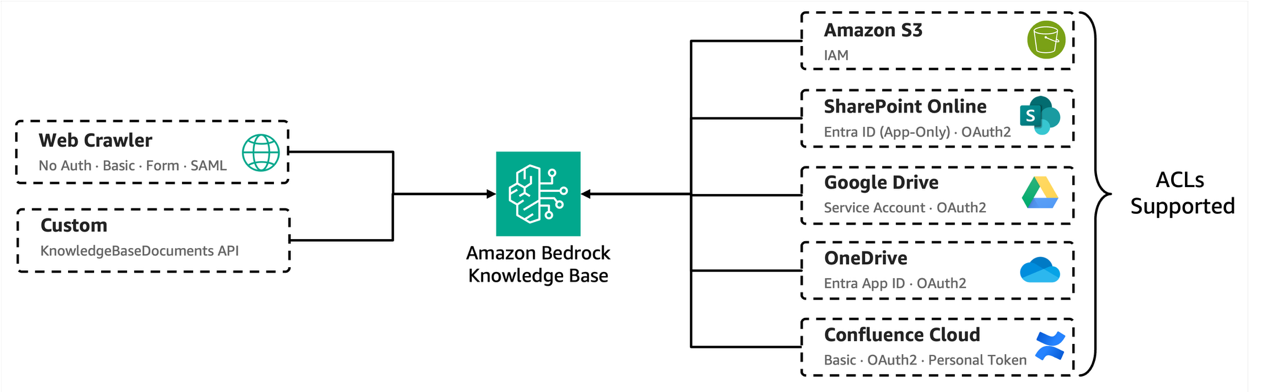
Build Enterprise Search for AI Agents with Amazon Bedrock Knowledge Base
simplified setup, smarter retrieval, and production readiness
code examples for setting up a knowledge base and retrieving from it
Amazon Bedrock Managed Knowledge Base facilitates enterprise search for agents through three core pillars consisting of simplified setup, smarter retrieval, and production readiness. These pillars enable developers to bridge the gap between foundation models and proprietary data without managing complex infrastructure. Simplified setup streamlines the ingestion of diverse data sources into vector databases for rapid indexing and retrieval. Smarter retrieval mechanisms optimize the search process to provide more accurate context to AI agents during real-time interactions. Production readiness features ensure that the system scales efficiently while maintaining security and compliance within enterprise environments. Practical implementation is demonstrated through code examples for setting up a knowledge base and performing retrieval operations. This managed service significantly reduces the technical overhead traditionally associated with building RAG-based systems for autonomous agents, allowing for faster deployment of AI-driven search capabilities.
Source: AWS Machine Learning Blog
This report is auto-generated by WindFlash AI based on public AI news from the past 48 hours.