Thursday, July 9, 2026 · 10 curated articles
Editor's Picks
The era of bloated abstraction is hitting a physical wall, and the industry is finally reacting with a 'performance-at-all-costs' mindset. Samsung’s staggering semiconductor profits—outpacing its last 40 years combined—are a brutal reminder of the 'AI Tax' we are all paying. As memory becomes the primary bottleneck and value driver, the software layer can no longer afford to be lazy. We are seeing a massive re-architecting of the developer stack to claw back every millisecond of efficiency. TypeScript 7’s move to a native Go port is the most significant white flag flown in years; it is an admission that the 'JavaScript-on-JavaScript' dream has failed the scale of modern engineering. When build times for massive projects like VS Code drop from minutes to seconds, we aren't just seeing a technical upgrade—we are witnessing the restoration of developer flow that the last decade of tooling complexity had systematically eroded.
This drive for raw efficiency is concurrently transforming how we define model 'intelligence.' We are moving away from the era of 'fast chat' toward 'deep work.' Grok 4.5’s emphasis on per-token efficiency and long-duration agentic rollouts signals a shift in the North Star for foundation models. It is no longer enough to be a high-speed encyclopedia; the goal is now the 'SWE Marathon'—the ability to sustain coherent, multi-hour reasoning traces to solve complex engineering tasks. By optimizing for languages like Rust and C++ and focusing on per-token intelligence, SpaceXAI is positioning the model not as a co-pilot, but as an autonomous engineer capable of surviving the grueling reality of actual production cycles.
The synthesis of these trends—native-speed tooling and agentic autonomy—is leading us toward the inevitable: Recursive AI Self-Improvement. As highlighted in the survey of 1,250 papers from the last two years, the feedback loop is closing. When models like Gemma 4 integrate a 'thinking mode' to generate internal reasoning traces, and infrastructure like TypeScript 7 makes the development loop near-instant, the friction between human intent and machine execution begins to vanish. For engineers in 2026, the mandate is clear: stop worrying about the boilerplate that agents are already beginning to automate. Instead, focus on the architectural integrity of systems that must now operate in an environment where AI is not just a tool, but an active participant in its own evolution.
Foundation Models
This category explores the cutting edge of large-scale AI, highlighting the rapid evolution of foundation models that power modern intelligence. Recent milestones like Grok 4.5 demonstrate a focus on specialized engineering and coding capabilities, while Google’s Gemma 4 pushes the boundaries of open-source multimodal systems with integrated reasoning modes. These developments signify a shift toward models that not only process vast data but also exhibit sophisticated logical depth for complex technical applications.
Grok 4.5: SpaceXAI's Smartest Model for Coding and Engineering
Grok 4.5 was trained across tens of thousands of NVIDIA GB300 GPUs
SWE Marathon resolution rate (pass@1): Grok 4.5 29.0%
Grok 4.5 achieves a 29.0% resolution rate on the SWE Marathon benchmark, surpassing competitors like Opus 4.8 and GPT 5.5 in specific software engineering metrics. Developed by SpaceXAI in collaboration with Cursor, this model was trained using tens of thousands of NVIDIA GB300 GPUs with advanced stability techniques for large-scale runs. The training methodology prioritized high-signal data curation and scaled reinforcement learning, focusing on multi-step reasoning and per-token intelligence across hundreds of thousands of technical tasks. Operating at a speed of 80 tokens per second, the model claims twice the token efficiency of other leading models, significantly reducing operational costs for complex agentic workflows. Grok 4.5 demonstrates high proficiency in languages such as Rust and C++, enabling the creation of end-to-end functional applications from minimal user specifications. The system is specifically optimized for long-duration agentic rollouts that can run for many hours during the learning process.
Source: Hacker News
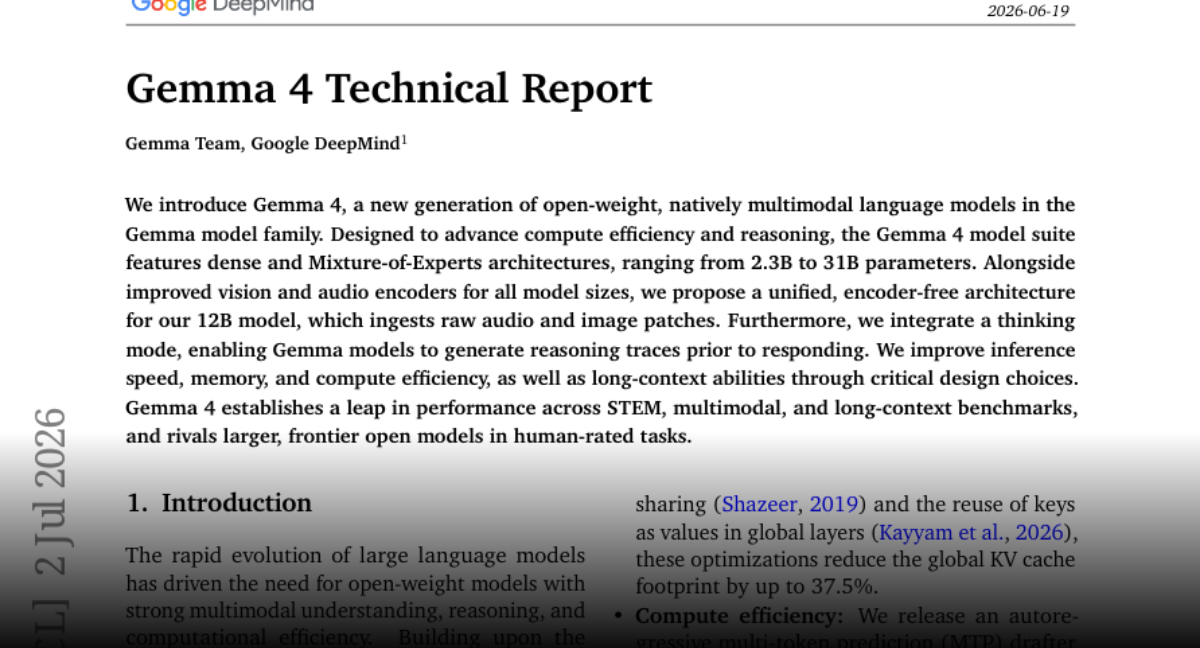
Gemma 4 Technical Report: Multimodal Open Models with Thinking Mode
Gemma 4, a new generation of open-weight, natively multimodal language models in the Gemma model family.
we propose a unified, encoder-free architecture for our 12B model, which ingests raw audio and image patches.
Gemma 4 introduces a new generation of open-weight, natively multimodal language models ranging from 2.3B to 31B parameters within the established Gemma family. These models are engineered to significantly advance compute efficiency and reasoning capabilities through the use of both dense and Mixture-of-Experts (MoE) architectures. A standout feature is the 12B parameter model, which utilizes a unified, encoder-free architecture to ingest raw audio and image patches directly. Furthermore, the integration of a specialized thinking mode allows these models to generate detailed reasoning traces prior to delivering a final response, mimicking human-like problem-solving processes. All model sizes benefit from improved vision and audio encoders, ensuring robust performance across multimodal tasks. This technical report details the architectural innovations and performance enhancements that define the Gemma 4 suite as a significant step forward in open-access AI development.
Source: HuggingFace Papers
Programming
The programming landscape is undergoing a significant transformation as core development tools prioritize extreme performance through low-level system languages. This shift is exemplified by major updates like TypeScript 7, which leverages a native Go port to deliver tenfold improvements in build speeds. As developer workflows become increasingly complex, these infrastructure-level optimizations ensure that modern software engineering remains efficient and scalable for projects of all sizes.
TypeScript 7 Released with Native Go Port Delivering 10x Performance Boost
The mission was a native port of TypeScript built in Go that could make the most of modern hardware.
TypeScript 7 brings native code speed, shared memory multithreading, and a number of new optimizations that typically yield speedups between 8x and 12x
TypeScript 7 introduces a native port built in Go that delivers performance improvements ranging from 8x to 12x on full builds compared to previous versions. This major architectural shift maintains compatibility with the original codebase while utilizing native code speed and shared memory multithreading to optimize modern hardware usage. Benchmarks on large-scale projects like VS Code demonstrate build times dropping from 125.7 seconds to just 10.6 seconds, representing an 11.9x speedup. In addition to increased velocity, the new compiler reduces memory consumption by up to 26% on specific open-source codebases like Bluesky. The update includes full support for the Language Server Protocol (LSP), ensuring seamless integration and near-instantaneous diagnostics in editors such as VS Code, WebStorm, and Visual Studio. Developers can access the new version immediately via npm to achieve significantly faster feedback loops in their daily development workflows.
Source: Hacker News
AI Infrastructure
AI infrastructure remains the backbone of the current technological revolution, focusing on the high-performance hardware and specialized chips necessary to sustain generative AI workloads. Recent market shifts, highlighted by Samsung's record-breaking semiconductor profits, underscore the surging global demand for high-bandwidth memory and advanced processing power. As competition intensifies among industry giants like NVIDIA and Samsung, the evolution of this sector will dictate the pace of AI deployment and scalability across global industries.
Samsung Chip Division Profits Beat Past 40 Years Combined Amid Memory Price Surge
Samsung chip division's single-year profits beat its past 40 years of profits, combined
Samsung passes Nvidia to become most profitable company in the world, notches 19x quarterly increase in profit
Samsung’s semiconductor division has recorded single-year profits that exceed its total earnings from the previous 40 years, primarily driven by sharp increases in memory and storage prices. This financial milestone has propelled Samsung past Nvidia to become the world’s most profitable company, underscored by a massive 19-fold increase in quarterly profits. The rapid growth is largely attributed to the intensifying demand for memory hardware required to support global artificial intelligence infrastructure. As the AI sector continues to expand, the rising costs of essential components like HBM and high-capacity storage have shifted market dominance toward major hardware manufacturers. This shift highlights the critical economic impact of underlying infrastructure components in the current technological era. This unprecedented profitability signals a major realignment in the global technology supply chain as memory becomes a primary bottleneck and value driver.
Source: r/LocalLLaMA
Research
Explore the latest breakthroughs in artificial intelligence through comprehensive literature surveys and innovative architectural frameworks. This section highlights significant advancements in recursive self-improvement methodologies alongside unified 4D world models tailored for high-precision robotic manipulation. By synthesizing thousands of recent academic papers and cutting-edge practical applications, these studies offer a critical roadmap for the next generation of autonomous systems and embodied intelligence.
Recursive AI Self-Improvement: A Survey of 1,250 Papers from 2024-2026
survey 1,250 arXiv papers (2024-2026) along two axes: what the system improves
vocabulary ("self-refine," "self-reward," "self-play," "self-evolve") that conflates fundamentally different ambitions
A comprehensive survey of 1,250 arXiv papers published between 2024 and 2026 categorizes the methodologies of recursive self-improvement in AI systems. The analysis maps these developments along two primary axes: the specific component being improved and the level of autonomy in the feedback loop closure. Investigated components include deployment behavior, policy training, internal evaluators, and the broader AI research process itself. The study clarifies distinct technical ambitions often conflated under terms like "self-refine," "self-reward," "self-play," and "self-evolve." Findings highlight how models are increasingly capable of revising their own outputs and adapting harnesses during deployment. This taxonomy provides a structured framework for evaluating the transition from human-guided refinement to fully autonomous research loops, illustrating AI's growing role in its own lifecycle.
Source: ArXiv
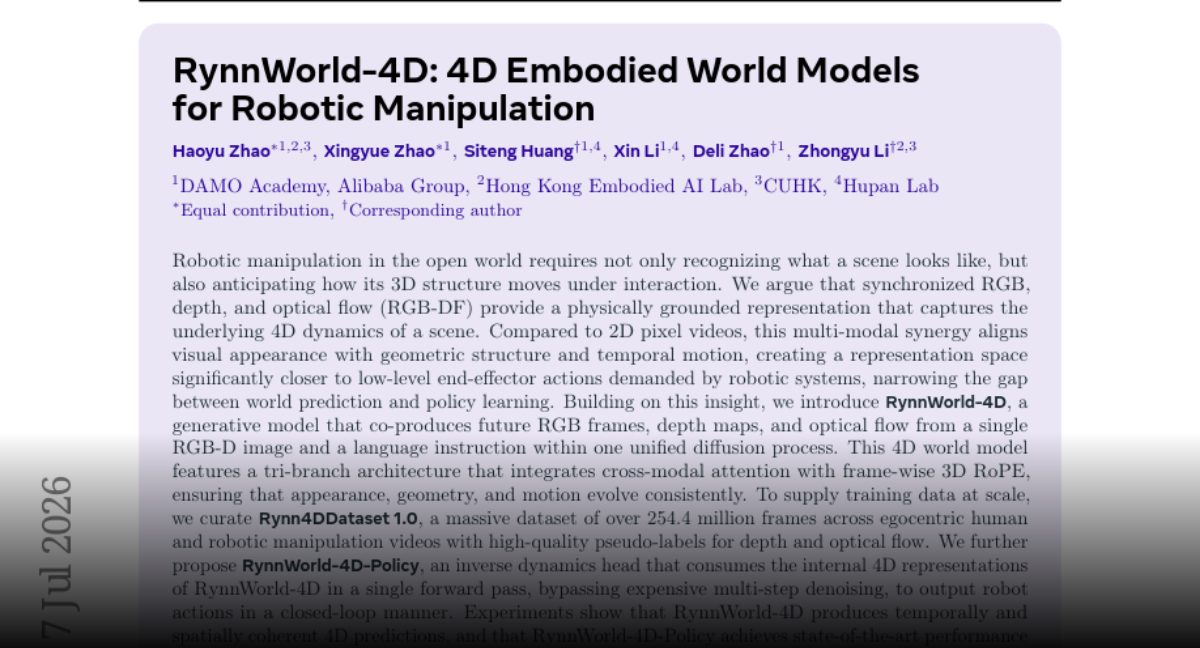
RynnWorld-4D: Unified 4D World Models for Precision Robotic Manipulation
curate Rynn4DDataset 1.0, a massive dataset of over 254.4 million frames across egocentric human and robotic manipulation videos
RynnWorld-4D, a generative model that co-produces future RGB frames, depth maps, and optical flow from a single RGB-D image and a language instruction
RynnWorld-4D introduces a generative world model that co-produces future RGB frames, depth maps, and optical flow from a single RGB-D image and language instructions within a unified diffusion process. This multi-modal synergy, termed RGB-DF, aligns visual appearance with geometric structure and temporal motion to provide a physically grounded representation of 4D dynamics. The model features a tri-branch architecture integrating cross-modal attention and frame-wise 3D RoPE, ensuring spatial and temporal consistency in its predictions. For large-scale training, the Rynn4DDataset 1.0 provides over 254.4 million frames of egocentric human and robotic manipulation data with high-quality pseudo-labels for depth and flow. A dedicated inverse dynamics head, RynnWorld-4D-Policy, allows for closed-loop robot action output by consuming internal 4D representations in a single forward pass, bypassing expensive multi-step denoising. Experimental results demonstrate state-of-the-art performance in real-world bimanual tasks, particularly those requiring extreme spatial precision and temporal coordination.
Source: HuggingFace Papers
AI Policy & Ethics
As artificial intelligence reshapes global dynamics, establishing robust regulatory frameworks and ethical guidelines becomes paramount. This section examines how international bodies and major nations, including China, are navigating the complexities of AI governance to balance innovation with security. By exploring diplomatic dialogues and legislative developments, we provide insights into the evolving landscape of global tech standards and the pursuit of responsible AI deployment.
China’s Position at the UN’s First Global Dialogue on AI Governance
What China Said at the UN’s First Global Dialogue on AI Governance
China presented its strategic vision for international artificial intelligence regulation at the United Nations’ inaugural Global Dialogue on AI Governance. The proceedings highlighted the necessity of a unified international framework that balances technological advancement with ethical safeguards and national sovereignty. Representatives emphasized a people-centered approach, advocating for inclusive growth that ensures developing countries have equitable access to AI resources and benefits. The dialogue served as a platform for major powers to discuss the mitigation of risks associated with autonomous systems and data privacy on a global scale. China's participation underscores its commitment to influencing the development of international norms and standards for AI deployment. This engagement reflects the increasing urgency for global consensus as AI technologies rapidly evolve and integrate into critical infrastructure. Such dialogues are essential for preventing a digital divide and ensuring safe AI implementation worldwide.
Source: r/LocalLLaMA
AI Agents
AI Agents are evolving from simple chatbots into autonomous systems capable of executing complex workflows across diverse technical environments. By leveraging large language models and specialized toolkits, these agents can automate labor-intensive tasks like cross-repository documentation management and real-time industrial monitoring. This category explores the latest frameworks and practical implementations of agentic systems that bridge the gap between AI reasoning and operational execution in modern software and industrial engineering.
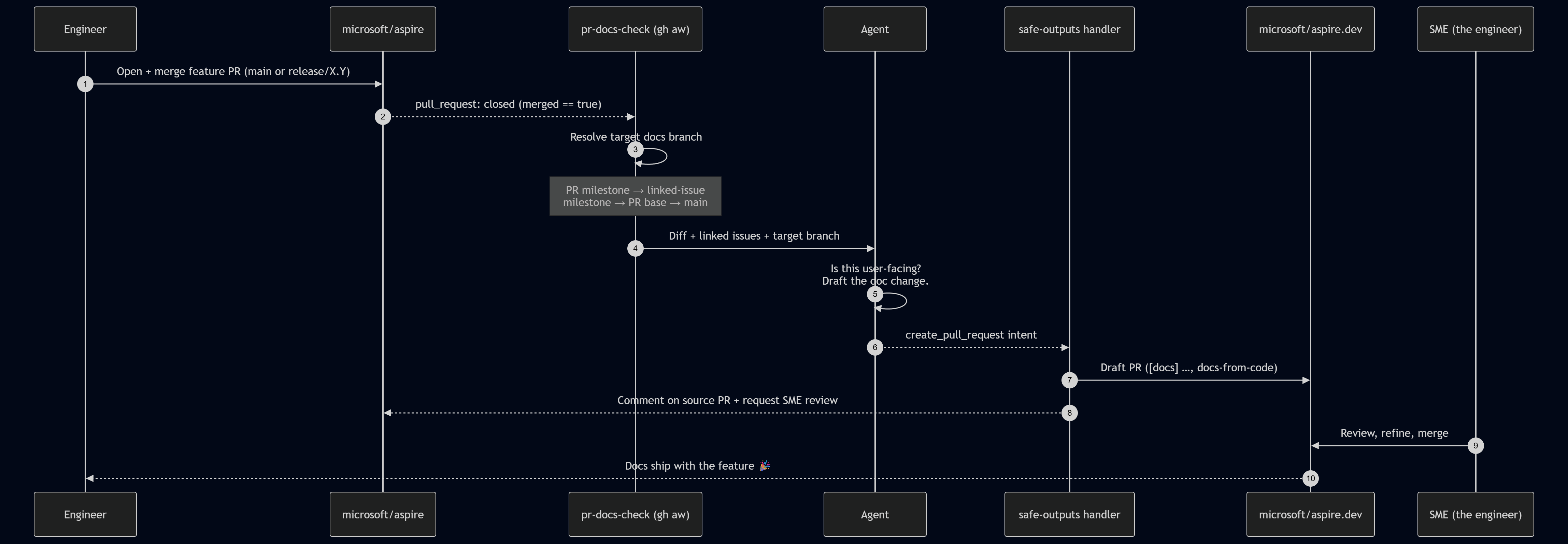
Automating Cross-Repo Documentation with GitHub Agentic Workflows
the Aspire team turns merged product changes into SME-reviewed docs pull requests, closing the gap between release and documentation.
The Aspire team has implemented an automated system that converts merged product code changes into Subject Matter Expert (SME)-reviewed documentation pull requests. This specialized automation leverages GitHub Agentic Workflows to significantly reduce the time lag between software feature releases and the availability of corresponding technical documentation. By continuously monitoring repository activities, these AI agents identify specific code changes that necessitate documentation updates and automatically generate the required content across different repositories. This approach ensures that end-user documentation remains accurately synchronized with the latest codebase developments without the burden of manual documentation tasks. The integration of agentic workflows highlights a transformative shift in developer productivity by handling complex cross-repo coordination. Ultimately, this system provides a scalable solution for maintaining high-quality technical assets in fast-moving open-source and enterprise environments.
Source: The GitHub Blog
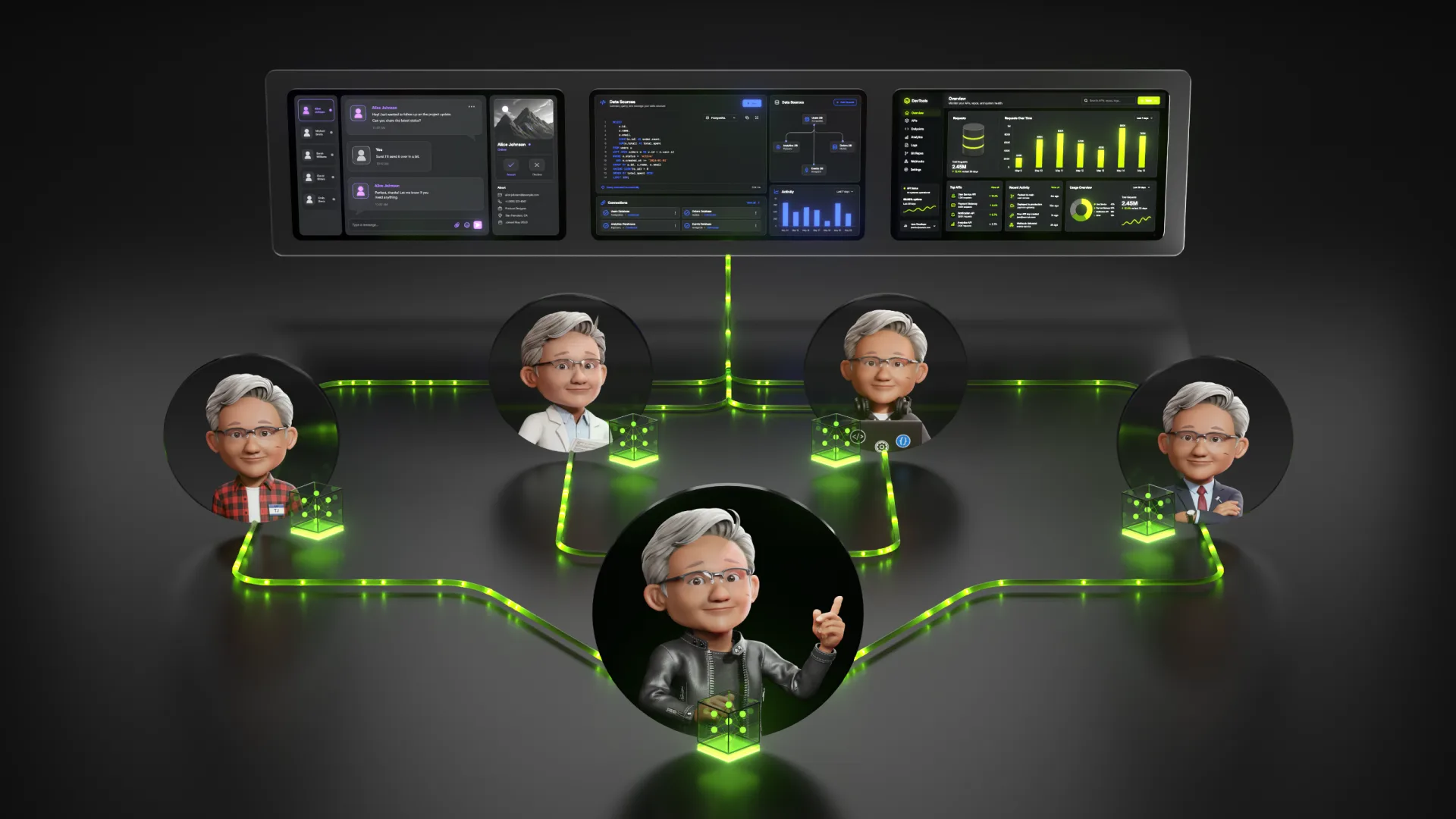
Building an AI Agent for Industrial Alarm Management with NVIDIA Nemotron
Industrial machinery generates more alarms than technicians can triage.
This process remains consistent, and is well-suited for an AI agent.
Industrial machinery currently generates a volume of alarms that exceeds the manual triage capacity of human technicians. For every critical alarm requiring follow-up, personnel must manually retrieve historical context, identify the appropriate procedure, verify failure modes using specialized signals, and compile a final recommendation report. NVIDIA Nemotron serves as the foundation for an AI agent designed to automate these consistent, repetitive tasks to improve maintenance efficiency. This per-alarm analysis agent streamlines the decision-making process by digitizing the standard operating procedures traditionally handled by specialized workers. By leveraging generative AI, industrial operators can better manage equipment health without overwhelming their workforce with low-level data processing. The implementation focus remains on transforming raw alarm data into actionable maintenance insights through a structured agentic workflow that mimics expert human reasoning.
Source: NVIDIA Generative AI Blog
AI Applications
Explore the latest breakthroughs in practical artificial intelligence tools that streamline workflows and enhance productivity. From high-speed voice dictation models like Willow Frontier Pro to advanced creative assistants, this category covers how AI is being integrated into everyday tasks. Stay updated on the evolving landscape of specialized software and hardware designed to make complex operations more accessible and efficient for users across various industries.
Willow Frontier Pro: High-Speed AI Voice Dictation Model
The fastest, most accurate dictation model in the world
Willow Frontier Pro enters the market as a highly optimized dictation model designed for speed and accuracy in voice-to-text conversion. This tool addresses the common latency and error rate issues found in traditional speech recognition software by leveraging advanced AI processing. Users can utilize the model to streamline workflows across various productivity and engineering applications without the typical friction of manual typing. The system focuses on delivering real-time performance, positioning itself as a leading solution for professionals requiring rapid transcription. Its integration within the broader AI dictation ecosystem highlights a growing trend toward specialized, high-performance voice interfaces. By optimizing the underlying model for frontier-level performance, Willow aims to redefine the standard for reliable digital dictation.
Source: Product Hunt
This report is auto-generated by WindFlash AI based on public AI news from the past 48 hours.