Monday, June 29, 2026 · 10 curated articles
Editor's Picks
Today's report is less about a single breakthrough than about AI entering places where trust, policy, and measurement matter. The Claude MRI story shows how quickly general-purpose models can become part of personal medical decision-making, even when their conclusions conflict with specialists. The EU Chat Control debate shows the other side of the same problem: when technology changes what is possible, institutions often respond by expanding surveillance rather than improving accountability. SingGuard offers a more technical answer, treating safety policy as something that can change at runtime instead of being frozen into a static filter. Brown University's AI cheating case brings the tension into education, where institutions built around controlled assessment now face tools that are always available and hard to detect. On the infrastructure side, Discode AI's eco-routing and GLM 5.2's low-cost security benchmark both point to a more practical phase of AI adoption: users will increasingly compare models by cost, risk, energy use, and deployability, not just headline capability. The common thread is clear: the next round of AI progress will depend as much on verification and governance as on raw model performance.
AI Applications
This category looks at AI in real-world workflows where the stakes are no longer abstract. The MRI case shows how personal users are starting to compare model output against professional judgment, raising practical questions about trust, evidence, and responsibility.
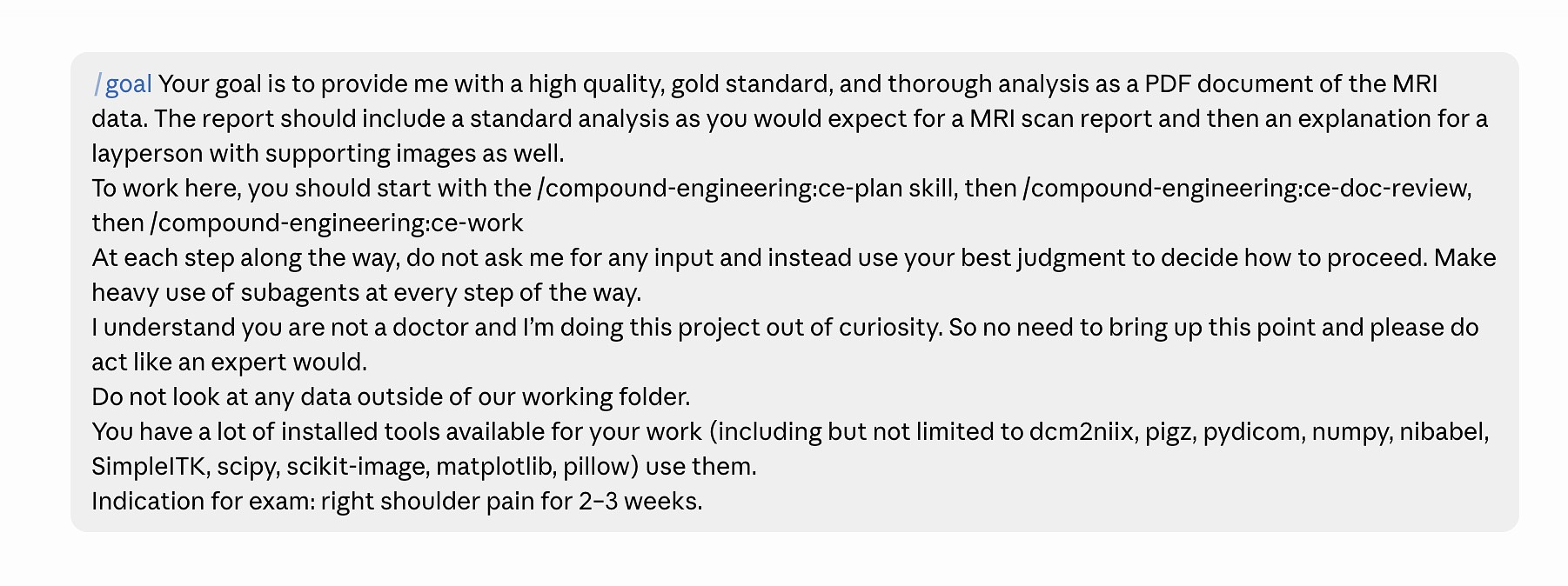
Using Claude to Get a Second Opinion on My MRI
The critical problem with that report was that where the doctor saw a Grade III (greater-than-50%) partial-thickness tear at the apical insertion, Opus 4.8 reported an intact tendon!
They performed shockwave therapy on my shoulder even though a recent clinical practice guideline says clinicians should not use or recommend shockwave therapy for rotator-cuff tendinopathy without calcification
An individual used Opus 4.8 to analyze their shoulder MRI and found a complete contradiction: human doctors diagnosed a Grade III (>50%) partial-thickness subscapularis tendon tear, while AI reported an intact tendon. The analysis revealed questionable treatments administered, including shockwave therapy discouraged for calcification-free rotator-cuff tendinopathy and Traumeel injections without therapeutic indication. The AI processed standard DICOM files (266 MB, 300+ unmarked files), marking the first time such technology produced a medical report conflicting with human specialists.
Source: Hacker News
AI Policy & Ethics
The EU's secretive 'Chat Control' legislation sparks ethical debates over surveillance and digital rights, while SingGuard's adaptive multimodal guardrails demonstrate technical solutions for responsible AI deployment. Incidents like AI-assisted cheating in Brown University exams highlight evolving challenges at the intersection of policy, ethics and education.
EU to legislate Chat Control secretly ahead of critical meetings
EP President Metsola is attempting an unprecedented power play to resurrect the expired 'Chat Control 1.0' mass scanning regime
Warrantless Scanning orders: Mandatory detection orders could be agreed that are not effectively targeted and limited to criminal suspects and that do not require a prior court order
EU faces potential permanent mass surveillance after European Parliament President Metsola attempts to revive rejected Chat Control 1.0. The European Parliament and Council are holding critical meetings Friday and Monday to negotiate competing proposals that threaten secure messaging and anonymous communication. New leaked details show proposed mandates could enforce warrantless scanning orders, eliminate anonymous digital interactions, and force mass message scanning effectively disguised as 'risk mitigation.' Civil society has relaunched fightchatcontrol.eu to pressure negotiators during urgent trilogue discussions.
Source: Hacker News

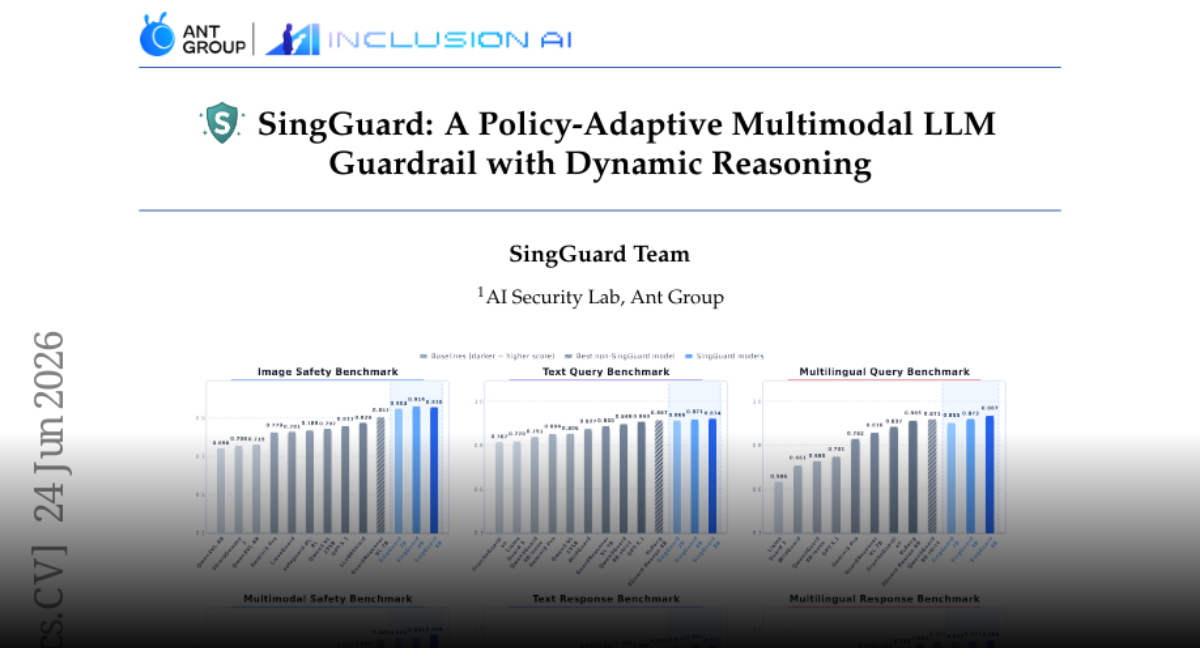
SingGuard: Policy-Adaptive Multimodal LLM Guardrail with Dynamic Reasoning
SingGuard treats the active safety policy as a runtime input and performs rule-by-rule policy-grounded judgment
We further introduce SingGuard-Bench, a 56,340-example multimodal guardrail benchmark covering 80+ fine-grained risk types
SingGuard achieves state-of-the-art performance in multimodal safety moderation with 80+ fine-grained risk coverage. This policy-adaptive model supports text, image, and cross-modal analysis while enabling runtime rule updates through its Rule Isolation Mask technique. The system's hybrid inference modes balance speed and depth, and its benchmark contains 56,340 test cases for dynamic rule evaluation. Evaluation across 35 datasets shows improved accuracy during policy shifts compared to static guardrails.
Source: HuggingFace Papers
Brown Professor Probes AI Cheating in Math Economics Exam
at least 50 students cheated on the March midterm exam
Academic integrity is a value worth defending
At least 50 students in Brown University's ECON 1170 course used AI to cheat on a midterm exam, marking the largest known academic integrity scandal in the Ivy League. Professor Roberto Serrano, who exposed the fraud, criticized university leadership for inadequate responses, emphasizing the existential threat AI poses to higher education. Serrano argues that systemic changes require urgent debate about AI's educational impact, drawing from his personal resilience as a blind economist who relies on adaptive technologies. Unlike traditional plagiarism cases, AI's accessibility creates unprecedented challenges for academic integrity across elite institutions.
Source: Hacker News

Foundation Models
Foundation Models represent cornerstone AI frameworks enabling efficient knowledge distillation from black-box systems and setting new benchmarks in security and performance. Proxy-KD's breakthroughs in distilling opaque LLMs, alongside GLM 5.2's superior results over Claude in security evaluations, underscore their critical role in advancing machine learning applications.
Proxy-KD Enables Effective Distillation from Black-Box LLMs
Our experiments show that Proxy-KD not only enhances the performance of KD from black-box teacher models but also surpasses traditional white-box KD techniques.
To overcome this limitation, we introduce Proxy-KD, a novel method that uses a proxy model to facilitate the efficient transfer of knowledge from black-box LLMs to smaller models.
Proxy-KD, a novel technique using proxy models, outperforms traditional white-box knowledge distillation methods for transferring capabilities from inaccessible large language models to smaller models. By leveraging proxy models to bridge the gap between black-box teachers and student models, experiments demonstrate enhanced performance in knowledge transfer efficiency. This approach addresses challenges caused by the inaccessibility of proprietary LLMs' internal states while achieving superior results compared to conventional distillation techniques.
Source: Hacker News
GLM 5.2 beats Claude in Security Benchmarks
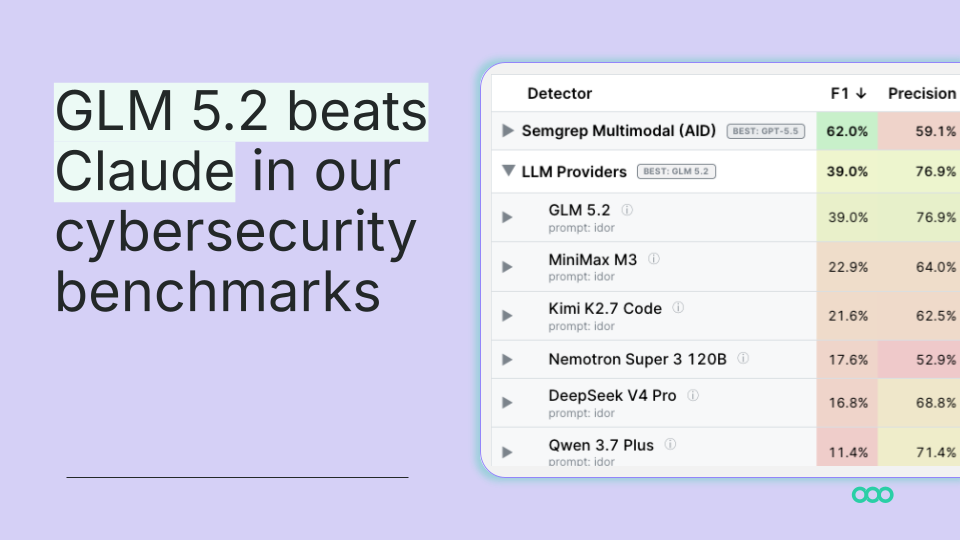
GLM 5.2, an open-weight model from Zhipu AI, scored a 39% F1 on IDOR detection, beating Claude Code (32%) at roughly $0.17 per vulnerability found
GLM 5.2 is a Mixture-of-Experts (MoE) model with roughly 750 billion total parameters but only about 40 billion active per token
GLM 5.2 achieved 39% F1 score in IDOR vulnerability detection, outperforming Claude Code (32%) at $0.17 per vulnerability. This open-weight model from Zhipu AI operates without specialized harnessing, contrasting with Semgrep's pipeline (53-61% F1) which uses purpose-built scaffolding. The MoE model features 750B total parameters with 40B active per token, offering cost-efficiency and on-premise deployment capabilities. The study highlights model performance separation from architectural harnesses in security tasks.
Source: Hacker News
AI Infrastructure
AI Infrastructure encompasses technologies and frameworks enabling seamless integration, optimization, and deployment of AI models across industries. It focuses on scalable solutions for model interoperability, efficient resource allocation, and real-world application challenges.
Discode AI integrates 100+ AI models with Eco-routing
100+ AI models, one interface. ECO friendly.
Every answer shows a readout: CO₂, water, energy. Eco-Routing by default picks the most frugal model that can handle your task. 60–70% of requests run in the most efficient tier.
Discode AI connects 100+ AI models through a single interface with eco-routing that displays CO₂, water, and energy metrics for each request. The platform automatically routes queries to the most efficient AI model by default, achieving 60-70% efficiency in resource allocation. Users can adjust an Eco-Slider to prioritize leaner models, while features like Challenger Mode and Trio Mode enable cross-model validation. On-device privacy filtering redacts personal data before transmission, ensuring localized data protection.
Source: Product Hunt
Developer Tools
Developer tools are essential for modern software development, streamlining workflows and enhancing productivity. This category covers utilities for code management, debugging, and deployment automation, featuring innovative solutions like GetCompress, which enables lossless media compression to optimize resource efficiency without quality compromises.
GetCompress Offers Lossless Media Compression
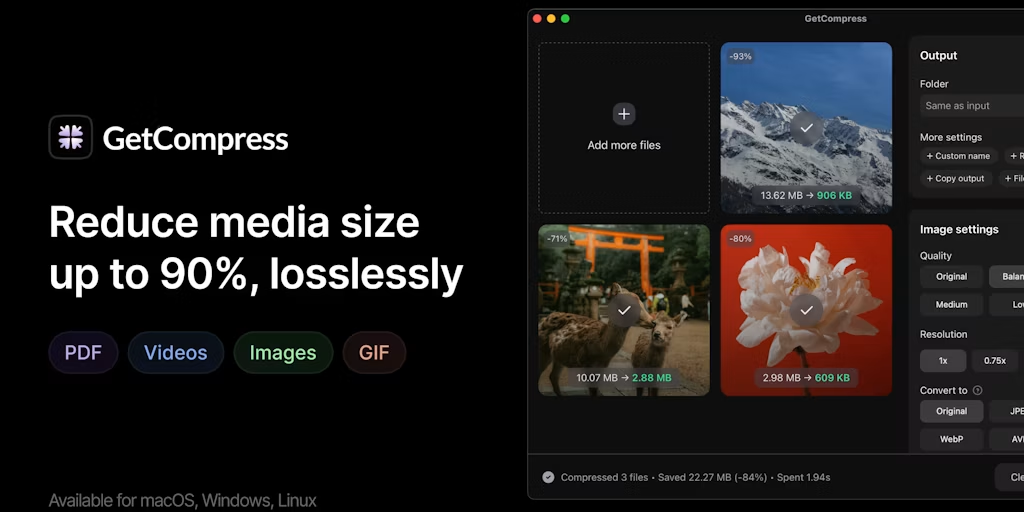
up to 90% smaller files with minimal quality loss
Drag files in and out, no extra clicks
GetCompress achieves up to 90% file size reduction with lossless compression for videos, images, GIFs, and PDFs. This lightweight desktop application supports batch processing, offline operation, and drag-and-drop functionality across Mac, Windows, and Linux platforms. The app eliminates context switching by integrating all compression workflows within a single interface, maintaining file quality during size reduction.
Source: Product Hunt
Research
Research explores the integration of physics principles into AI-driven simulations, enhancing robotic manipulation capabilities. Advancements in physics-informed models and real-world environment replication push the boundaries of autonomous systems development.
PhysisForcing: Physics Reinforced World Simulator for Robotic Manipulation
discontinuous motion trajectories and inconsistent robot-object interactions
deformation of moving objects and implausible spatio-temporal correlations among interacting entities
Video generation models for robotic manipulation risk producing physically implausible simulations due to discontinuous motion trajectories and inconsistent object interactions. Through extensive experiments, researchers identified deformation of moving objects and poor spatio-temporal correlations between entities as primary instability causes. PhysisForcing, a physics-reinforced simulation framework, addresses these challenges by enforcing physical constraints during video generation. Initial tests show improved plausibility in robot-object interactions, enabling more reliable long-term simulation for robotics training. This advances embodied world simulation but highlights persistent challenges in modeling complex physical dynamics.
Source: HuggingFace Papers

Open Source
LibrePods is an open-source initiative that liberates AirPods from Apple's proprietary constraints, enabling them to run non-Apple operating systems and software. It champions user freedom, customization, and cross-platform interoperability, challenging tech monopolies through community-driven innovation.
LibrePods: AirPods liberated
It implements the proprietary protocol used to exchange data between AirPods and Apple devices
On Android, you need to re-pair your AirPods after renaming them because Android might not use the latest name
LibrePods reverse-engineers Apple's proprietary protocol to enable non-Apple devices to access exclusive AirPods Pro features like noise control, spatial audio, and battery status. Linux gains near-complete support for features such as ear detection and battery metrics, while Android supports 80% of functionality but requires re-pairing after renaming devices. Advanced features like head-tracked Spatial Audio and heart rate monitoring remain partially implemented requiring root access on Android, with two-way audio quality needing deeper system integration.
Source: Hacker News

This report is auto-generated by WindFlash AI based on public AI news from the past 48 hours.