Friday, June 5, 2026 · 10 curated articles

Editor's Picks
The era of the 'smart chatbot' is officially dead. As we look at today’s landscape, it is clear that we have entered the age of the 'System 2 Orchestrator.' Microsoft’s MAI-Thinking-1 marks a pivotal shift in foundation model philosophy: by achieving a 97% AIME score without relying on synthetic data 'cold starts,' Microsoft is signaling that the path to AGI isn't just about scaling more parameters, but about the rigorous, verifiable reasoning found in code and STEM datasets. For developers, the takeaway is stark—general-purpose inference is a commodity; specialized, logic-heavy reasoning is the new frontier. This isn't just about models that talk; it's about models that can handle the 'heavy lift' of complex engineering without hallucinating their way through a pull request.
This transition from chat to agency is being institutionalized by the infrastructure players. GitHub Universe 2026’s theme of 'Builders as Orchestrators' perfectly encapsulates the shifting role of the software engineer. We are no longer just writing lines of code; we are managing fleets of autonomous agents. However, the 'agentic era' faces a brutal reality check: latency and cost. Databricks’ launch of Instructed-Retriever-1 addresses this head-on. By replacing sequential agentic loops with parallel test-time scaling, they’ve managed to slash search latency by 3x. This is where the real engineering is happening now—not in making models 'smarter' in a vacuum, but in optimizing the 'agentic loop' so it doesn't bankrupt the enterprise or bore the user to death. Efficiency is becoming the ultimate benchmark of intelligence.
Finally, we are seeing a massive realignment in how AI interacts with the physical world. Apple’s reported pivot from the Vision Pro toward lightweight glasses, contrasted with Daimon Robotics’ $14M raise for tactile-centric models, suggests a 'de-pixelation' of AI strategy. The industry is realizing that high-fidelity visual immersion (XR) is less valuable than lightweight assistance and high-precision physical manipulation. Daimon’s focus on haptic feedback over pure vision models is the missing link for embodied intelligence. For the engineer, the message is clear: the next five years won't be about living in a virtual world; they will be about AI agents that finally have the 'sense of touch' and the logical reasoning required to navigate and modify our actual world.
Foundation Models
This category explores the latest breakthroughs in large-scale foundation models, featuring the debut of Reve 2.0 and Ideogram 4.0's enhanced creative capabilities. Additionally, Microsoft introduces MAI-Thinking-1, a model designed to push the boundaries of logical reasoning and complex problem-solving. As multimodal and reasoning-focused architectures evolve, these releases signify a major leap in AI's capacity for high-fidelity content generation and sophisticated cognitive tasks, setting new benchmarks for industry performance and versatility.
Reve 2.0, Ideogram 4.0, and Microsoft MAI-Thinking-1 Launch
Reve 2.0, the best 4K image model in the world. We invented a new way to generate and edit any image using precise layouts.
Microsoft introduced MAI-Thinking-1, a generalist/reasoning model trained without third-party distillation, reporting 97% on AIME 2025
Reve 2.0 and Ideogram 4.0 have introduced advanced layout-based image generation capabilities, utilizing bounding boxes and region descriptions to solve complex composition challenges. Ideogram 4.0 is positioned as a leading open image model, while Reve 2.0 focuses on 4K image generation and precise editing through layout-based control. Simultaneously, Microsoft released MAI-Thinking-1, a reasoning model that achieved 97% on AIME 2025 and 53% on SWE-Bench Pro without relying on third-party distillation or synthetic data. This 109-page technical report details a training stack incorporating zero synthetic "cold starts" and a scaling recipe weighted heavily toward code and STEM datasets. Researchers noted the shift toward treating image layouts as a next token prediction problem, significantly boosting diffusion model efficiency. Microsoft also introduced Frontier Tuning to enable enterprise adaptation of frontier models through reinforcement learning environments.
Source: Latent Space
Developer Tools
Developer tools form the bedrock of modern software engineering, encompassing everything from integrated development environments and frameworks to sophisticated build toolchains. This category tracks the latest advancements in the developer ecosystem, including major industry acquisitions and open-source updates that streamline the programming lifecycle. By highlighting innovations like the evolution of the Vite ecosystem under new partnerships, we explore how these tools empower engineers to build faster, more efficient, and highly scalable digital solutions across global infrastructures.
VoidZero Joins Cloudflare to Accelerate the Open Source Vite Toolchain
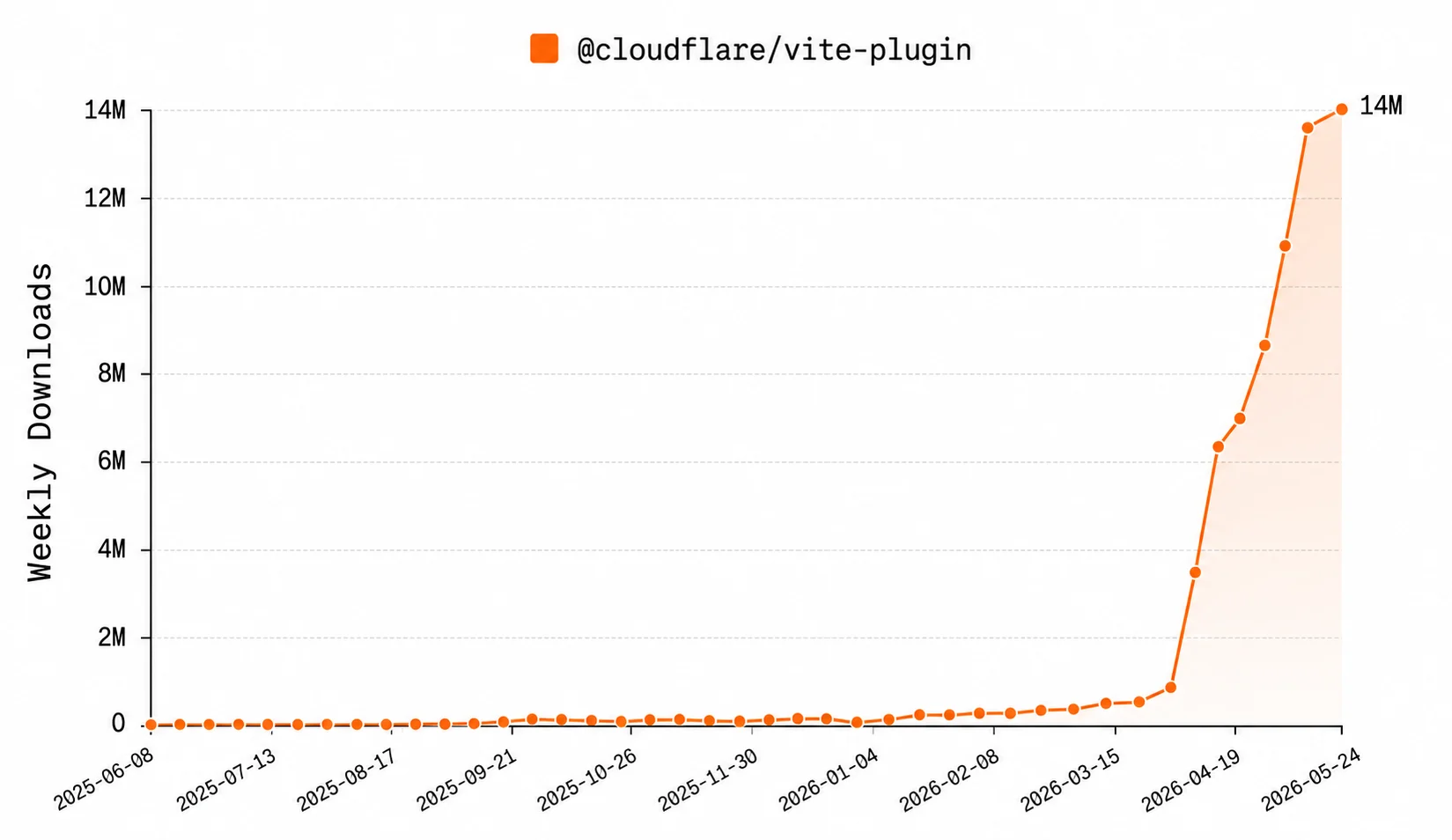
VoidZero, the company behind Vite, Vitest, Rolldown, Oxc, and Vite+, is joining Cloudflare.
Cloudflare is committing $1 million to a Vite ecosystem fund to support maintainers and contributors
VoidZero, the company responsible for foundational web development tools including Vite, Vitest, Rolldown, and Oxc, has joined Cloudflare to further invest in the open-source JavaScript ecosystem. This acquisition brings the entire VoidZero team under Cloudflare's engineering umbrella while explicitly maintaining the MIT-licensed, vendor-agnostic status of all their projects. Cloudflare is committing $1 million to a new Vite ecosystem fund, administered by the Vite core team, to support contributors and maintainers across the broader community. Evan You and the rest of the VoidZero team will continue to lead development roadmaps in the open, ensuring that Vite remains a neutral foundation for frameworks like Vue, SvelteKit, and React Router. This move mirrors Cloudflare’s previous partnership with Astro, emphasizing a strategy to build a better internet by supporting portable, high-performance toolchains that operate independently of specific hosting providers.
Source: The Cloudflare Blog
AI Business
This category explores the evolving landscape of AI commerce, focusing on massive capital injections and strategic pivots. From DeepSeek’s landmark 50-billion-yuan funding to the shifting focus toward operational efficiency over raw token output, the industry is balancing ambition with pragmatism. Additionally, breakthroughs in physical world models and hardware reevaluations highlight how market leaders are redefining the boundaries between digital intelligence and commercial viability.
Apple Vision Pro Canceled, DeepSeek Secures 50B RMB Funding, and AI News Highlights
DeepSeek plans to raise about 50 billion RMB in its first round of financing, with investors including Tencent, CATL, NetEase, and JD.com.
Analyst Ming-Chi Kuo posted that Apple's XR roadmap has been significantly adjusted, and the Apple Vision series has actually been removed.
DeepSeek is reportedly raising approximately 50 billion RMB in its first funding round, valuing the company between 350 billion and 400 billion RMB with Tencent and CATL as major external investors. Apple has significantly adjusted its XR roadmap, reportedly removing the Vision Pro series to prioritize lightweight smart glasses expected between 2027 and 2029. In the application space, ChatGPT has become the fastest platform to reach 1 billion monthly active users, while ByteDance’s Volcano Engine raised its MaaS revenue target to 15 billion RMB for the year. Additionally, multiple Chinese smartphone brands like Honor are integrating AI agents that can directly control WeChat via an Agent-to-Agent mechanism. Educational authorities have also announced strict inspections for smart glasses during the upcoming national college entrance exams to prevent cheating.
Source: 爱范儿

The Growing Cost of AI Intelligence: From Tokenmaxxing to Optimization
The company blew through their annual token budget in a single quarter (and is now capping token spend at $1,500/month).
Another company reportedly blew $500m on Claude AI in one month due to no usage limits on licenses for their employees.
Enterprise AI costs are escalating rapidly, with some companies spending millions of dollars monthly on token consumption far beyond their initial budgets. This phenomenon, termed "tokenmaxxing," reflects an early-stage experimentation phase where high usage is often treated as a proxy for productivity. As AI transitions from proof-of-concept to core infrastructure, organizations are entering an optimization phase to control expanding line items on their financial statements. Major AI providers including Anthropic, Salesforce, and ServiceNow are responding by shifting toward consumption-based pricing models to manage demand. Furthermore, the shift to agentic workflows creates a hidden cost multiplier because these systems rely on iterative loops—generating, observing, and learning—rather than simple linear requests. Future AI development will likely be defined by a focus on efficiency as intelligence becomes more capable but increasingly resource-intensive.
Source: AI Musings by Mu

Daimon Robotics Raises $14M to Build Tactile-Centric Physical World Models
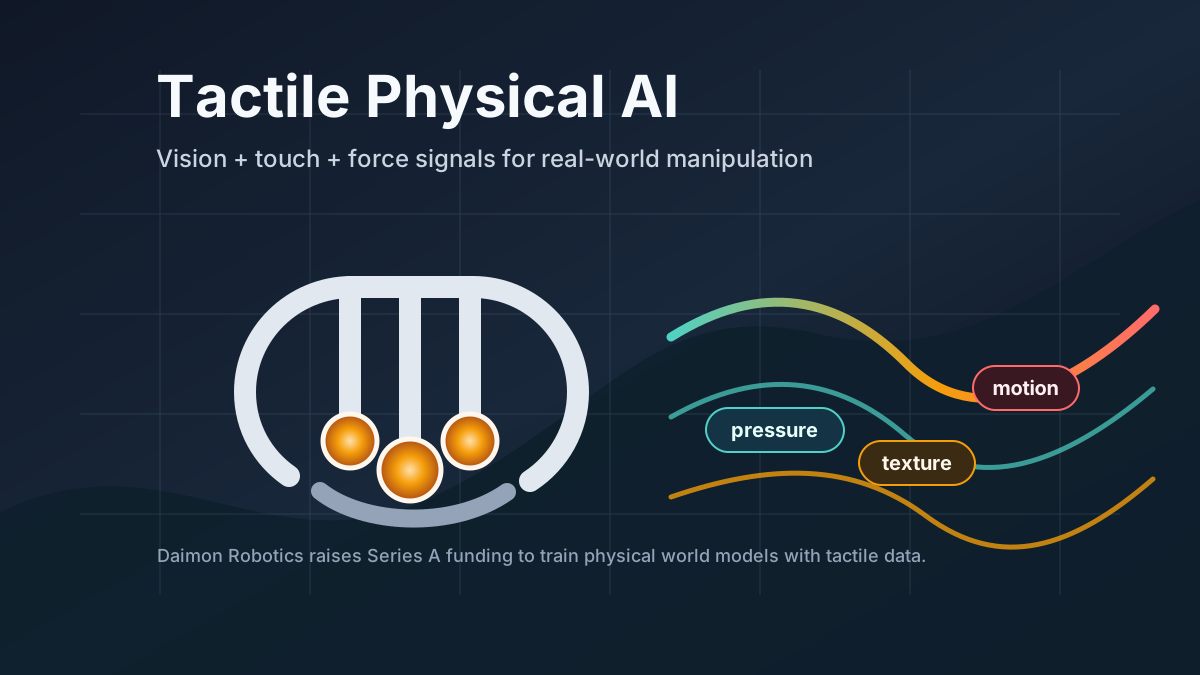
Daimon Robotics recently completed a 100 million RMB Series A funding round, jointly invested by Inovance Capital and China Telecom.
Yuan Weihao, a former multimodal research expert from Alibaba Tongyi Lab, joined Daimon as Chief AI Scientist.
Daimon Robotics has secured 100 million RMB in Series A funding led by Inovance Capital and China Telecom to advance haptic-centric embodied intelligence. The company has appointed Yuan Weihao, a former multimodal research expert from Alibaba's Tongyi Lab, as its Chief AI Scientist to lead the development of physical world models. Unlike traditional video-based world models, Daimon's approach integrates tactile signals with vision and language to predict haptic interaction states and force requirements. The company focuses on a two-layer mechanism involving high-frequency haptic feedback for reflex-like adjustments and long-term physical reasoning for strategic correction. This strategy addresses the limitations of pure vision models in high-precision manipulation by leveraging the Daimon-Infinity dataset and the RobOmni evaluation benchmark. These funds will be directed toward scaling physical world models and establishing a commercial data flywheel in real-world scenarios.
Source: Sina Finance via QbitAI
Data & Analytics
This section covers the latest advancements in data processing, big data management, and cloud-based analytics platforms. As organizations strive for faster insights, major providers like Google Cloud are introducing powerful optimizations like the Lightning engine to accelerate Apache Spark workloads. Explore updates on infrastructure scalability, real-time data streaming, and the evolving ecosystem of tools designed to transform raw information into actionable business intelligence.
Google Cloud Enhances Managed Service for Apache Spark with Lightning Engine
This native execution engine delivers: Up to 4.9x faster performance than standard open-source Spark
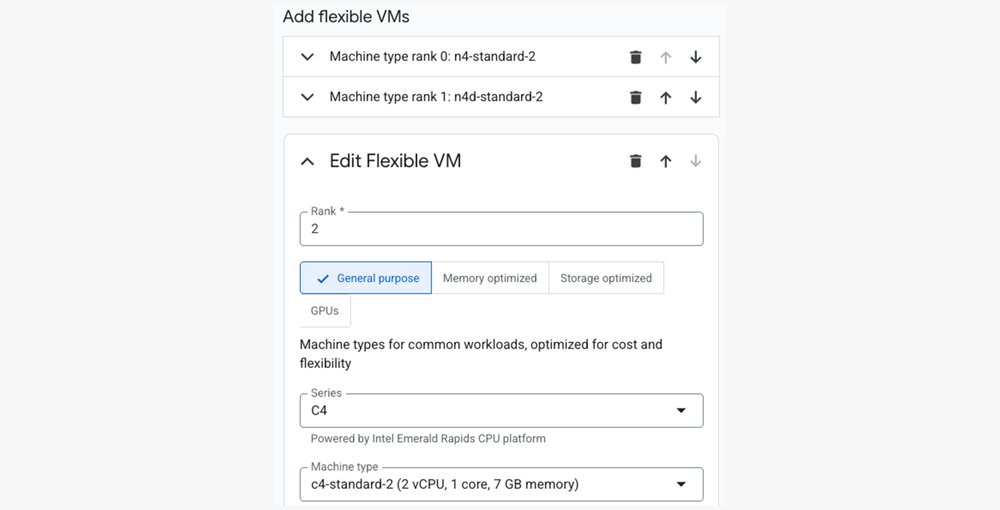
Flexible VMs allow you to define up to ten ranked machine types for your master, primary, and secondary worker nodes.
Google Cloud has rebranded Dataproc as Managed Service for Apache Spark and introduced the Lightning Engine to significantly boost processing speeds for large-scale data workloads. This native execution engine, built on C++ using Velox and Gluten, delivers up to 4.9x faster performance than standard open-source Spark and offers twice the price-performance compared to alternative high-speed solutions. The update allows users to bypass JVM bottlenecks through SIMD vectorization without requiring any modifications to existing Spark application code. Additionally, the service now features Flexible VMs in general availability, enabling teams to define up to ten ranked machine types to ensure cluster resilience against hardware shortages. These enhancements aim to streamline data engineering by embedding AI-powered extensions and smarter scaling policies directly into the development lifecycle. By focusing on execution speed, resource obtainability, and operational overhead, Google Cloud provides a more flexible environment for long-running stateful processing and complex ETL tasks.
Source: Google Cloud Blog
AI Infrastructure
This category focuses on the foundational hardware and software frameworks required to build, deploy, and scale artificial intelligence systems. From optimized data retrieval models like Databricks’ Instructed-Retriever-1 to advanced compute resources, we cover the essential components that drive high-speed agentic search and model performance. These innovations enable developers to streamline complex workflows and enhance the efficiency of AI-driven applications in production environments.
Databricks Launches Instructed-Retriever-1 for 3x Faster Agentic Search
search time has dropped by more than 3x, bringing Time To First Token (TTFT) to around two seconds.
Instructed-Retriever-1 is a single model trained for both retrieval stages: query generation to increase recall and reranking to increase precision
Databricks has introduced Instructed-Retriever-1, a specialized retrieval model that reduces search latency by over 3x and answer generation time by 2x for its Knowledge Assistant. The system achieves a Time To First Token (TTFT) of approximately two seconds by utilizing parallel test-time scaling instead of traditional sequential agentic reasoning. Instructed-Retriever-1 serves as a unified model for both query generation to increase recall and reranking to improve precision, executing these stages concurrently to minimize latency. This approach addresses the limitations of standard agentic systems that rely on slow reason-act loops or tool calls by fanning out retrieval work in parallel. Performance validation on the KARLBench benchmark indicates that this method provides Pareto-optimal results for enterprise workloads involving domain-specific constraints like organization and product area.
Source: Databricks
AI Agents
AI agents are evolving from simple assistants into autonomous systems that need better orchestration, lower latency, and more reliable voice interfaces. GitHub is framing developers as workflow orchestrators, while NVIDIA's Nemotron 3.5 ASR work shows how speech recognition can be tuned for domain-specific voice agents. Together, these updates point to agent systems moving from demos into production workflows where speed, cost, and sensory accuracy matter.
GitHub Universe 2026 Set for October in San Francisco to Focus on the Agentic Era
GitHub Universe is back: returning to the historic Fort Mason Center in San Francisco on October 28–29, 2026.
Today, that collaboration goes beyond just people, extending to tools, integrations, and agents in one unified workflow.
GitHub Universe 2026 will return to the Fort Mason Center in San Francisco on October 28–29 to explore the integration of AI agents into software development workflows. This flagship event aims to move beyond industry hype by providing practical paths for developers, security practitioners, and technical leaders to transform builders into orchestrators. The 2026 edition introduces several new formats, including Ship & Tell lightning talks, Speaker After Parties in GitHub Central, and a Discussions Lounge powered by Braindate for collaborative learning. Additionally, the expanded "The Source" zone will serve as a dedicated space for open-source project creators and contributors to connect. Attendees can secure Super Early Bird passes at the lowest annual price until July 9, with additional discounts available for team registrations of four or more people. This gathering emphasizes the transition toward a unified workflow where collaboration extends across people, tools, and integrations within the agentic era.
Source: The GitHub Blog
NVIDIA Nemotron 3.5 ASR Fine-Tuning Targets Real-Time Voice Agents
Nemotron 3.5 ASR is a 600M-parameter speech-to-text model built for real-time voice agents.
Fine-tuning examples show Greek WER improving from 35 to 24 and Bulgarian from 22 to 15.
NVIDIA's Hugging Face tutorial explains how teams can fine-tune Nemotron 3.5 ASR for specific languages, domains, and accents when building real-time voice agents. The model is a 600M-parameter streaming speech-to-text system covering about 40 language-locales from a single checkpoint, with punctuation and capitalization built in. Its Cache-Aware FastConformer-RNNT design reuses encoder activations so each audio frame is processed once, reducing wasted compute in streaming scenarios. Developers can tune the attention context window from roughly 80 ms to 1.12 seconds, trading latency against accuracy for different products. The tutorial's language-adaptation examples report a Greek word error rate drop from 35 to 24 and a Bulgarian drop from 22 to 15, showing why domain-specific ASR tuning is becoming part of the voice-agent stack.
Source: Hugging Face Blog
Emerging Tech
Explore the cutting edge of innovation where digital transformation reshapes daily interactions through advanced identity verification and secure transaction systems. This section highlights breakthroughs in biometrics, decentralized credentials, and integrated ecosystems that prioritize user privacy and convenience. As industry leaders refine digital wallets and security protocols, these developments signal a broader shift toward a seamless future where smartphones serve as comprehensive digital hubs for global identification and commerce.
Google Expands Digital ID and Secure Payment Features in Google Wallet
Digital IDs are coming to more European countries to help you prove your identity safely.
New age verification features let you confirm your age without sharing private personal details.
Google is expanding its digital identity tools to select European Union member states this summer following recent launches in Brazil, India, Taiwan, and the U.K. The company has partnered with private issuers such as Sparkasse Bank to implement privacy-preserving age verification, enabling users to confirm their age without revealing sensitive data like name, address, or date of birth. These updates transform Google Wallet into a unified digital home for IDs, payment credentials, receipts, and loyalty passes while giving consumers greater control over their information. Google Pay direct checkout is also launching for select merchants using Airwallex and is planned for Adyen, bringing saved Wallet payment options directly into retailer checkout pages. Google says its updated Secure Payment Authentication testing reduced authentication time by 50% and increased conversions by 3%, showing how payment security and checkout speed are converging.
Source: The Keyword (blog.google)
This report is auto-generated by WindFlash AI based on public AI news from the past 48 hours.