Saturday, May 30, 2026 · 10 curated articles
Editor's Picks
The headlines from May 2026 signal a definitive structural pivot: the era of centralized, cloud-only AI dominance is fracturing. We are witnessing the 'Apple II moment' of personal computing, as YC’s Garry Tan aptly puts it in his recent discourse. For developers, the message is clear: the future of innovation isn't just in the cloud; it’s on the edge, in the memory controller, and embedded directly within the enterprise workflow. The launch of ModelBest’s Open Source Week, featuring the 1.58-bit BitCPM-CANN and the ForgeTrain framework, isn't just another incremental release. It represents a systemic challenge to the 'scaling laws' that have governed the last three years. By proving that a 1B-parameter model can out-hustle GPT-4o on specific tasks through hardware-algorithm synergy, we are seeing the end of the 'brute force' era and the beginning of the 'efficiency' era.
This shift is being forced by cold, hard physics. The 'AI Memory Boom' analysis reveals a trillion-dollar storage supercycle that has effectively hit a 'memory wall.' When SK Hynix is sold out through 2026 and bandwidth becomes the primary bottleneck, the industry has no choice but to innovate around the constraints of silicon. This is why the rise of the 'Forward Deployed Engineer' (FDE) at firms like OpenAI and Anthropic is so telling. We are moving away from general-purpose 'wrappers' toward deeply customized, agentic workflows that require engineers to be as comfortable with hardware adaptation and local data sovereignty as they are with prompt engineering. The 'vibe coding' trend Tan mentions might lower the barrier to entry, but the real value is shifting toward those who can navigate the complexities of local inference and private 'G-Brains.'
For the engineering community, the implications are profound. If you are still relying solely on high-latency cloud APIs, you are building on shifting sands. The professionalization of the field—highlighted by the need for multi-dimensional observability in SageMaker and the technical nuances of 're-tokenization bugs' in RL loops—suggests that AI engineering is maturing into a rigorous discipline. We are moving from 'playing with models' to 'architecting systems.' The move toward the Model Context Protocol (MCP) and localized agent operating systems like PilotDeck indicates that the next million-dollar apps won't just be 'AI-powered'; they will be 'Edge-Native,' privacy-first, and hardware-optimized. The 'Little Tech' revolution is here, and it’s being built on the bones of open-source efficiency and individual data sovereignty.
Foundation Models
Foundation models remain the bedrock of the generative AI revolution, evolving through architectural refinements and specialized deployment strategies for edge devices. Recent advancements highlight a shift toward more efficient systems like Claude 4.8, alongside a growing focus on robust reinforcement learning and standardized agent evaluation metrics. As open-source initiatives accelerate, these large-scale systems are transitioning from cloud-based research tools to optimized, on-device intelligence that redefines the boundaries of practical AI engineering.
ModelBest Launches Open Source Week to Redefine the Edge AI Landscape
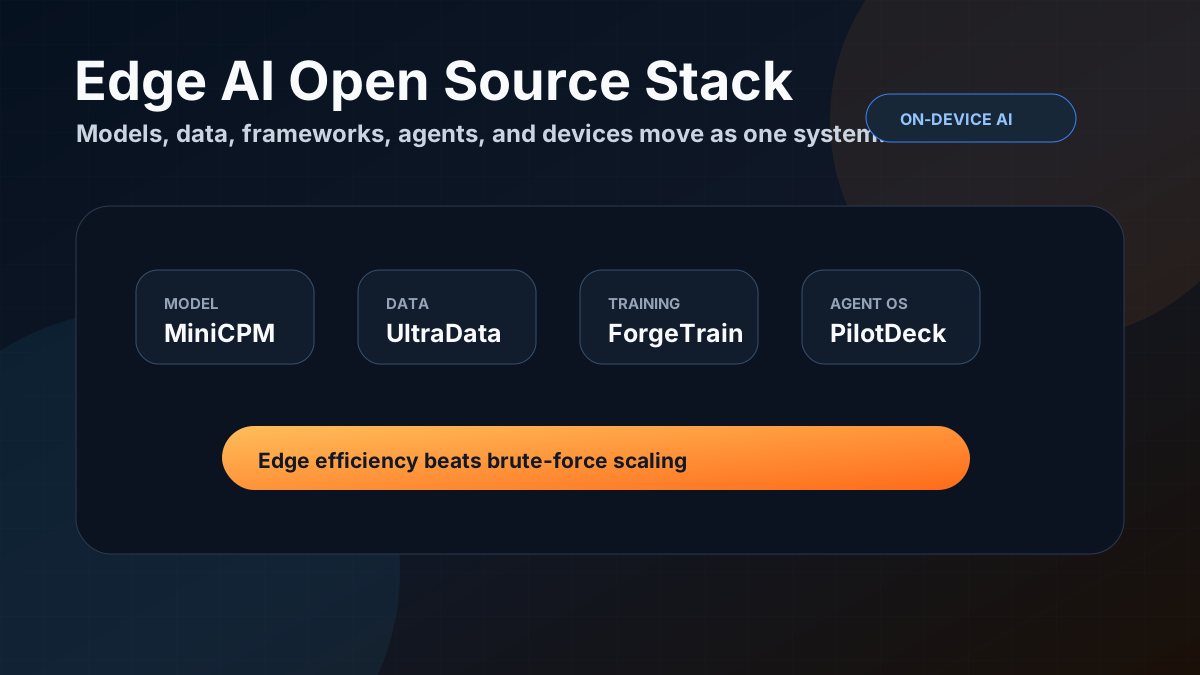
ModelBest, in collaboration with the OpenBMB open-source community, held an 'Edge Large Model Open Source Week,' releasing one key technological achievement per day.
The performance of MiniCPM5-1B has already surpassed the capabilities of some versions of GPT-4o.
ModelBest and the OpenBMB community released five major technological achievements during an Open Source Week in May 2026, marking a significant milestone in edge-side AI development. These releases include the 1.58-bit training model BitCPM-CANN, the MiniCPM5-1B model which outperforms GPT-4o in specific tasks, and ForgeTrain, an AI-authored training framework that exceeds NVIDIA's Megatron performance by 10% on H100 GPUs. The initiative also introduced the PilotDeck agent operating system and the UltraData dataset series to provide a full-stack open-source ecosystem. This systemic approach demonstrates that edge AI success depends on the synergy of data, algorithms, frameworks, and hardware adaptation rather than isolated breakthroughs. ModelBest emphasizes that true open source involves sharing the entire production line, including training details and datasets, to foster a robust developer ecosystem. These advancements suggest a shift in the AI value chain from cloud-based APIs toward high-efficiency edge solutions and personal digital companions.
Source: 量子位
AI News: Claude Opus 4.8 Rollout, RL Training Bugs, and Agent Harness Metrics (May 2026)
Opus 4.8 landed into a noisy, mixed eval landscape: multiple independent benches converged on “incremental but not dominant.”
The core bug: decoding model output, parsing tool calls, then re-tokenizing the updated conversation can change tokenization
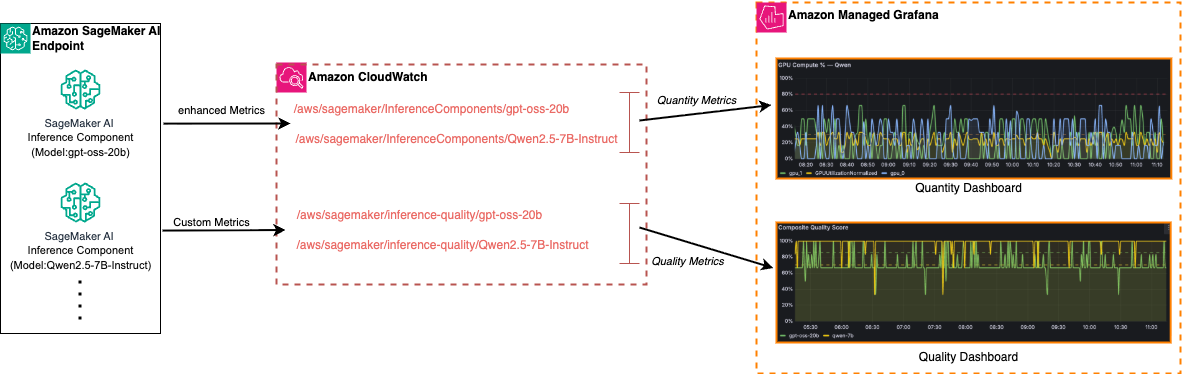
Claude Opus 4.8 has launched into a competitive landscape, showing incremental improvements in coding and cooperation while facing regressions in content faithfulness and document parsing. Testing on platforms like CursorBench indicates the model is more efficient than its predecessors but lacks the breakthrough performance required to dominate existing benchmarks like ALE-Bench. Technical analysis of reinforcement learning training loops reveals a critical re-tokenization bug where gradient updates are applied to sequences that do not match the model's actual samples during multi-turn tool use. To resolve this, researchers propose a strict Token-In, Token-Out rule to maintain a consistent token buffer across interactions. Additionally, the emergence of Effective Feedback Compute as a metric suggests that the quality of agent harnesses is more predictive of success than raw token counts. These updates coincide with the launch of new specialized tracks for Forward Deployed Engineers and AI founders aimed at optimizing enterprise AI deployment.
Source: Latent Space
AI Infrastructure
AI infrastructure is evolving rapidly as the demand for high-performance memory and storage reaches unprecedented levels, fueling a trillion-dollar hardware supercycle. Beyond physical components, the modern landscape focuses on optimizing large language model inference through advanced observability and monitoring frameworks. This category explores the foundational technologies, from cutting-edge storage solutions to cloud-native platforms like Amazon SageMaker, that enable the efficient deployment and scaling of sophisticated artificial intelligence systems globally.
AI Memory Boom: Analyzing the Trillion-Dollar Storage Supercycle | S10E13
The three global memory giants—SK Hynix, Samsung, and Micron—saw their combined market value exceed one trillion US dollars.
SK Hynix's HBM capacity for the entire year of 2026 is already sold out, with shortages expected to last until 2027.
Global memory giants SK Hynix, Samsung, and Micron have reached a combined market capitalization of $1 trillion as AI demand reshapes the semiconductor landscape. SK Hynix's HBM capacity for 2026 is already sold out, with shortages expected to persist through 2027 due to doubling requirements in Nvidia's next-generation chips. This cycle represents a structural shift from traditional inventory replenishment to massive AI-driven demand across HBM, DRAM, and NAND architectures. The industry is currently facing a "memory wall" where bandwidth, rather than compute power, has become the primary bottleneck for large-scale AI models. While alternative solutions like Google’s CXL pools and high-bandwidth flash are emerging, manufacturers are maintaining strict capital discipline through new long-term agreements. Domestic Chinese progress remains mixed, with YMTC scaling NAND production while ChangXin works toward HBM commercialization.
Source: What's Next|科技早知道

Observability for Amazon SageMaker AI LLM Inference and Quality
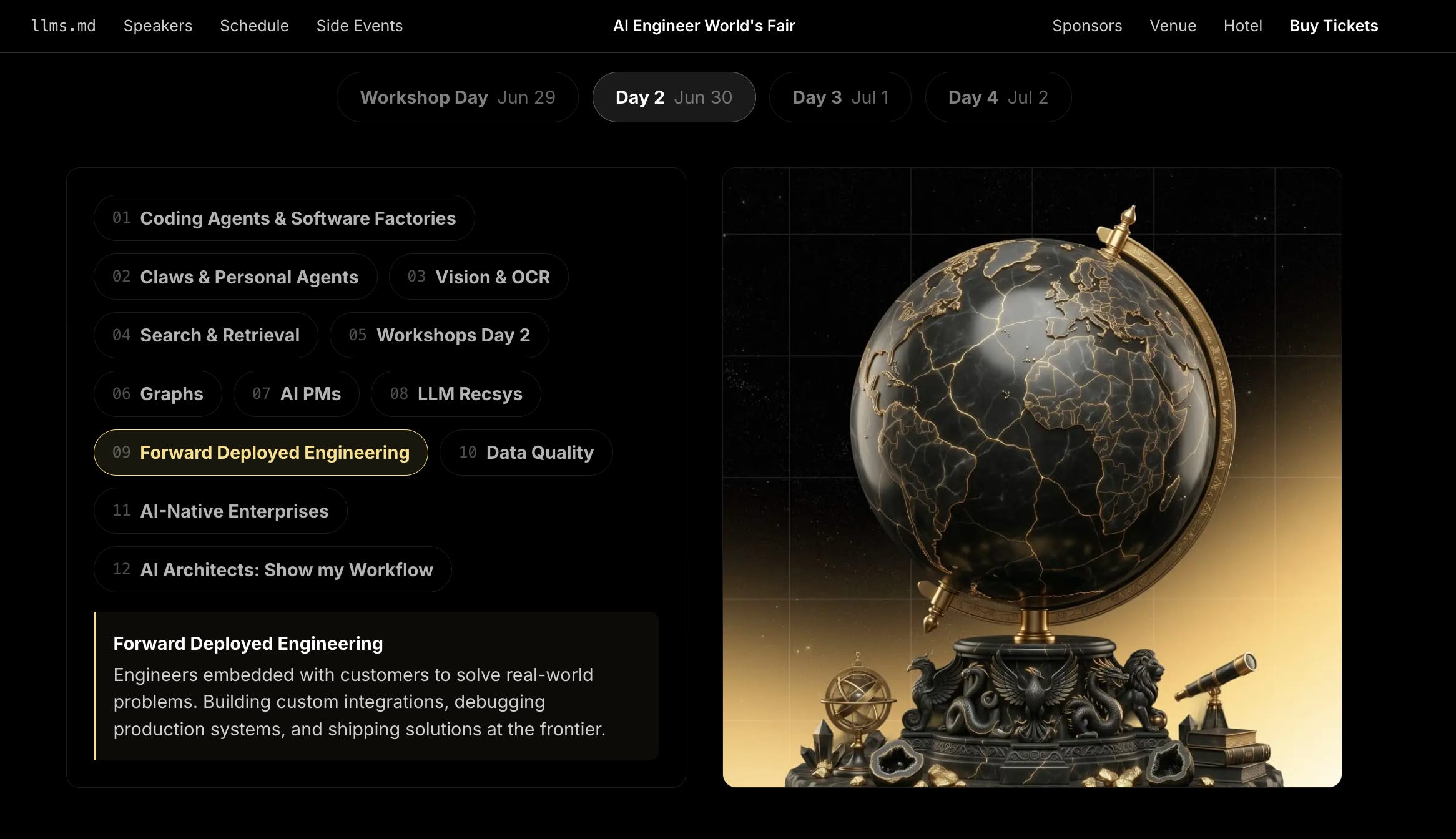
Quantity monitoring focuses on the operational health of inference infrastructure, tracking request throughput and resource utilization.
A single SageMaker AI endpoint can host multiple inference components, each running a different LLM
Amazon SageMaker AI endpoints with inference components enable a comprehensive observability solution using Amazon Managed Grafana dashboards to monitor both operational quantity and LLM output quality. Quantity monitoring tracks critical metrics like request throughput, GPU memory pressure, and resource utilization to help teams identify bottlenecks and right-size compute resources. Quality monitoring focuses on evaluating response accuracy, compliance, and consistency to detect model drift or degradation over time. The integrated architecture utilizes Amazon CloudWatch for metric collection and SageMaker AI endpoints to host multiple models, such as Qwen2.5-7B-Instruct, on shared infrastructure. This multi-stage approach allows engineering teams to correlate infrastructure health with response safety, ensuring endpoints deliver high-quality outputs without over-provisioning costs. Production-grade LLM observability is achieved when these two distinct dimensions are monitored and optimized together to maintain reliability and performance.
Source: AWS Machine Learning Blog
AI Business
Explore the dynamic intersection of artificial intelligence and corporate strategy, highlighting how industry leaders like YC CEO Garry Tan envision the future of open-source agents and personal computing. We examine the shifting landscape of professional roles, specifically the rise of AI Forward Deployed Engineers as essential drivers of modern engineering teams. This section provides critical insights into how AI integration is fundamentally reshaping business models and the global tech workforce.
YC CEO Garry Tan on the AI Revolution, Open Source Agents, and Personal Computing
The Apple II moment of AI: from institutionalized AI to everyone having their own Agent
AI is opening the next personal computing revolution; how personal AI, open-source Agents, and vibe coding will change the creative abilities of ordinary people
Y Combinator CEO Garry Tan identifies the current AI landscape as an "Apple II moment" for personal computing, where localized, open-source AI agents are poised to displace institutionalized systems. The rapid evolution of coding tools like Claude Code and OpenClaw signifies a shift toward "vibe coding," enabling individuals to develop software through high-level intent rather than manual syntax. Tan advocates for the "G Brain" concept, a personal knowledge system that processes local emails and notes to ensure user privacy while maintaining data sovereignty. Successful founders in this era must demonstrate extreme agency and authenticity, focusing on solving specific personal problems while leveraging powerful open-source models like DeepSeek and Qwen. YC continues to prioritize the belief that ideas are functions of the people behind them, championing "Little Tech" over the closed ecosystems of major tech conglomerates as the primary driver of future innovation.
Source: 跨国串门儿计划

The Rise of AI Forward Deployed Engineers and the Future of AI Engineering Roles
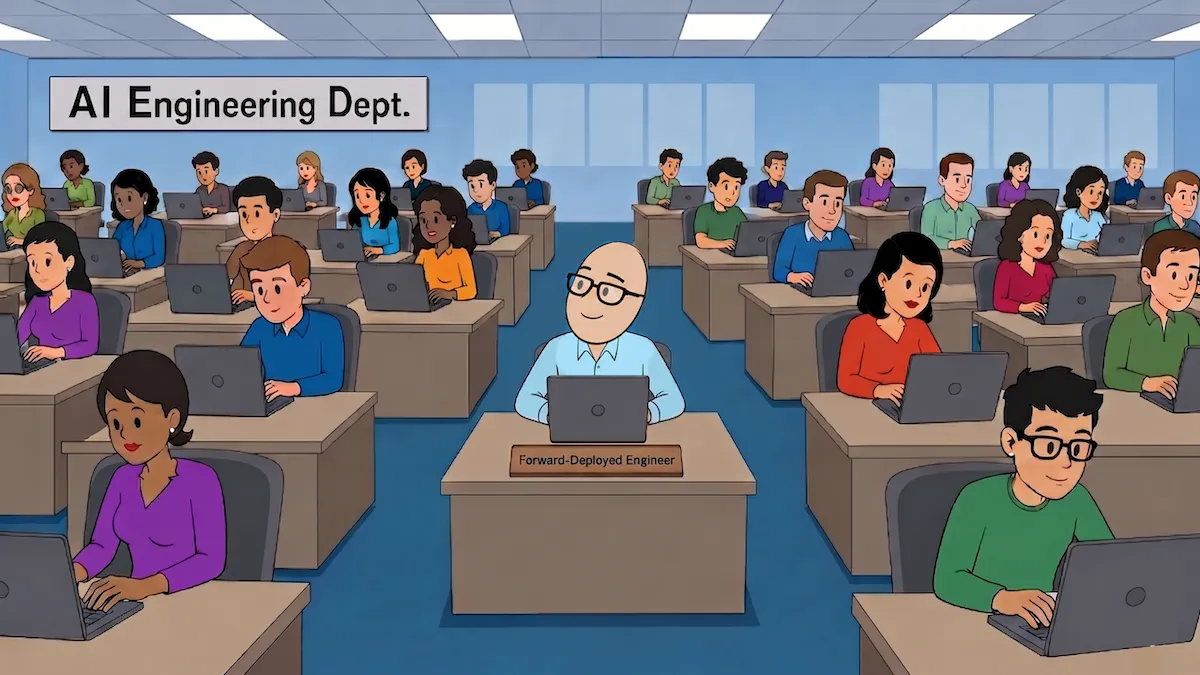
One of the new, buzzy jobs in Silicon Valley is the AI Forward Deployed Engineer (FDE), an engineer who is embedded within a client organization to help customize solutions
OpenAI and Anthropic started building new teams to place FDEs within client organizations.
OpenAI and Anthropic have begun establishing dedicated teams for AI Forward Deployed Engineers (FDEs) who embed within client organizations to build customized agentic workflows. This role, pioneered by Palantir decades ago, requires a combination of technical proficiency, communication skills, and strategic business acumen to bridge the gap between off-the-shelf models and specific enterprise needs. Despite the resurgence of the FDE, the broader demand for internal AI Engineers is expected to be significantly larger as companies prioritize native expertise over vendor-specific consultants. Building internal teams allows organizations to maintain vendor neutrality and future optionality, preventing them from being locked into a single provider's ecosystem in a rapidly shifting market. As the industry matures over the next decade, the current generalist AI Engineer role will likely fragment into specialized positions such as LLMOps, Evals, and AI Data Engineers. High demand currently persists for developers who can effectively utilize AI software components and coding agents to create business value.
Source: deeplearning.ai
Emerging Tech
This section explores the frontier of innovation, focusing on the ethical dilemmas and shifting dynamics within the artificial intelligence landscape. We examine how corporate governance balances with technological control, alongside the growing trends of talent migration as AI reshapes career trajectories. Stay informed on how these nascent developments are redefining the relationship between human agency and automated systems in the modern digital era.
2026-05-30 Hacker News: Corporate Ethics, AI Passion, and Tech Control
Bricks & Minifigs headquarters was accused of refusing to return Lego valued at over $200,000 and lying about having paid compensation.
Chad Whitacre announced his retirement from tech and open source to move towards a simpler offline life, lamenting how AI changes creation and erodes passion.
The Hacker News top stories for May 30, 2026, highlight significant corporate disputes and a cultural shift away from AI-dominated creative workflows. A major controversy involving Bricks & Minifigs centers on the alleged illegal seizure of a $200,000 Lego collection, raising concerns about corporate bullying and police inaction in civil-criminal overlaps. Prominent open-source developer Chad Whitacre announced his retirement from the tech industry, citing a decline in passion as AI fundamentally changes the nature of artistic and technical work. In the automotive sector, Volkswagen has reportedly restricted third-party access to vehicle APIs, forcing users toward official paid services and sparking debates over data rights under EU law. Meanwhile, aerospace firm Blue Origin faced a setback as its New Glenn rocket engine exploded during a static fire test. These events collectively reflect growing tensions between individual rights, community-driven innovation, and centralized corporate control.
Source: SuperTechFans
AI Agents
AI agents are evolving from simple chatbots into sophisticated autonomous systems capable of executing complex workflows and interacting with enterprise data. This category explores the latest advancements in agentic frameworks, including Google Cloud’s Gemini-powered enterprise solutions and the adoption of standardized protocols like MCP. Stay informed on how these intelligent entities are revolutionizing productivity and decision-making across various industries through seamless integration and enhanced reasoning capabilities.
What’s New with Google Cloud: May 2026 AI Agent and Gemini Updates
Anthropic’s Claude Opus 4.8 is now available on Gemini Enterprise Agent Platform.
Google AI Edge Portal bridges this gap, giving GCP developers the ability to test AI performance on 120+ Android devices
Anthropic’s Claude Opus 4.8 is now integrated into the Gemini Enterprise Agent Platform to facilitate complex, multi-stage enterprise workflows and agentic coding. This addition enables developers to manage extensive refactors and track dependencies over extended sessions using advanced model capabilities. Google Cloud is also prioritizing AI governance through the Model Context Protocol (MCP), with upcoming technical sessions focusing on securing autonomous agents and enforcing fine-grained authorization at the API gateway layer. Developers can now utilize the Google AI Edge Portal to benchmark and optimize fine-tuned Large Language Models across more than 120 distinct Android devices representing diverse hardware tiers. Upcoming events like the API Horizon in Munich and various technical webinars aim to educate the community on transforming legacy REST APIs into secure MCP servers while enforcing guardrails. These updates collectively emphasize a shift toward operationalizing AI through robust management layers and cross-platform performance optimization.
Source: Google Cloud Blog

Data & Analytics
Explore the latest developments in data infrastructure, big data management, and advanced analytics. From lakehouse architectures to real-time processing, we cover how organizations leverage massive datasets to drive actionable insights and operational excellence. Stay updated on the tools and strategies that empower businesses to transform raw information into strategic value, enabling smarter decision-making and innovation across diverse industries including healthcare and finance.
Databricks on CMS TEAM: Building Data Foundations for Value-Based Care Success
top-performing health systems could capture $4M-$30M annually in shared savings, while unprepared organizations risk $10M+ in repayments
two-thirds of hospitals will lose revenue under TEAM based on current spending patterns
Starting January 1, 2026, over 700 U.S. hospitals will be mandated to manage total cost and quality across five high-volume surgical episodes under the CMS Transforming Episode Accountability Model (TEAM). The financial stakes are significant, with top-performing systems potentially capturing $4M to $30M in annual savings, while unprepared organizations face over $10M in repayments. Traditional analytics infrastructure often fails to provide the proactive clinical decision-making required for these 30-day accountability windows across multiple care settings. Success in this model requires a unified data platform that integrates clinical, claims, and operational data into a single source of truth. By leveraging cloud-native data lakehouse architectures, health systems can implement AI and machine learning for real-time risk stratification and intervention. This transition from retrospective dashboards to predictive intelligence is essential as two-thirds of hospitals currently risk losing revenue under TEAM spending patterns.
Source: Databricks
AI Applications
Artificial intelligence is rapidly moving beyond theoretical models into practical tools that transform how we live and work. This category explores the latest AI-driven solutions across various sectors, including education, healthcare, and professional productivity. By focusing on real-world implementations like the recent collaborative prototypes from Google and academia, we highlight how intelligent systems are streamlining complex tasks and fostering innovation in everyday environments.
Google and University of Waterloo Students Develop AI Prototypes for Education and Work
University of Waterloo students develop AI prototypes like sign language tutors to reshape the future of education and work.
Each lab is an eight-week intensive AI and user experience prototyping workshop.
The Google-funded Futures Lab at the University of Waterloo has produced a series of AI-driven prototypes designed to transform educational and vocational learning through eight-week intensive workshops. Among the featured projects is Kanji Garden, an application that utilizes AI-generated immersive stories and visuals to teach Japanese language skills beyond traditional rote memorization methods. Another significant development is SignFluent, a real-time American Sign Language tutor that leverages computer vision to provide immediate feedback on the user's signing form. MuscleMemory offers on-the-go calisthenics training by utilizing AI camera tracking to deliver instant audio instructions, effectively assisting users in preventing workout-related injuries. Led by Dr. Edith Law, the Google Chair in the Future of Work and Learning, this partnership allows students from diverse academic backgrounds to move beyond theoretical concepts into practical technology creation. These prototypes demonstrate how integrated AI can provide personalized, real-time guidance across various skill-based disciplines.
Source: The Keyword (blog.google)
This report is auto-generated by WindFlash AI based on public AI news from the past 48 hours.