Tuesday, March 17, 2026 · 10 curated articles
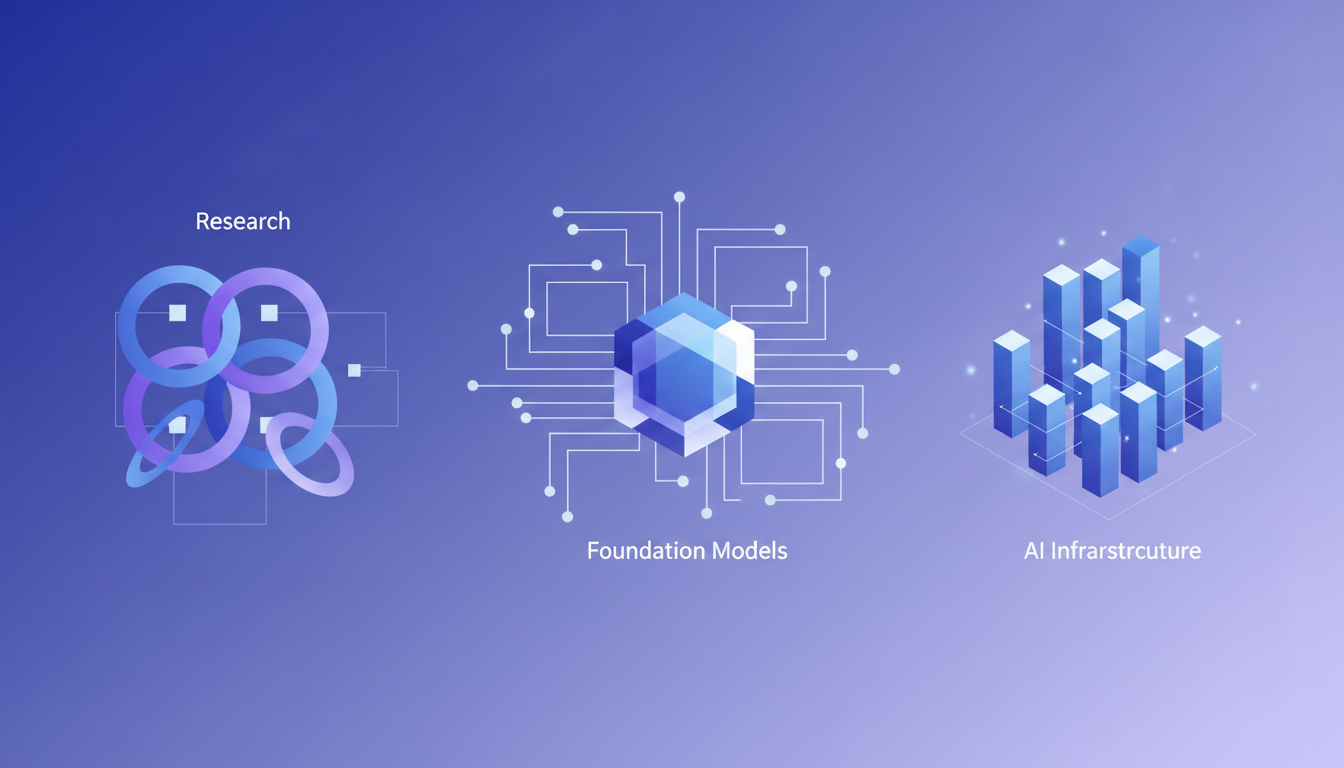
Editor's Picks
The era of the 'AI assistant' is officially dead, buried under a mountain of autonomous code. Today’s news signals a violent shift from human-in-the-loop completion to the 'Middle Loop' of supervisory engineering. When Stripe reports merging 1,300 pull requests weekly with zero human-written code via their 'Minion' agents, we aren't looking at a future trend—we are witnessing the new baseline for industrial-scale software development. As noted in 'Fragments: The Rise of Supervisory Engineering,' the traditional 'inner loop' of coding is being commoditized. The value is no longer in the typing; it’s in the orchestration, the validation, and the architecture of the agentic flow.
This transition is being fueled by a collapse in the cost of intelligence. OpenAI’s GPT-5.4 isn’t just a bigger model; its 32x efficiency gain for reasoning tasks—dropping a complex ARC-AGI-1 task from $11.64 to a mere $0.37—changes the unit economics of autonomy. We have moved from 'is this possible?' to 'how many millions of times per day should we do this?' This is why NVIDIA is pivoting GTC 2026 toward the 'Agentic Scaling Law.' The bottleneck is no longer raw tokens-per-second; it’s the infrastructure required to manage sub-agent spawning, memory movement, and long-context tool calling. If you are building for the chat interface, you are building for 2024. If you are building for the 'NemoClaw' and 'GPU+LPU' supercomputers, you are building for the agentic era.
For the individual developer, the message is blunt: your 'craft' has moved up the stack. As the Stripe case study highlights, their success didn't come from a secret LLM, but from a robust engineering infrastructure that allows agents to navigate hundreds of millions of lines of code safely. This is the 'Supervisory' shift. Engineers must stop identifying as creators and start identifying as directors of autonomous fleets. The 'Middle Loop'—the effort to correct and validate AI output—is where the next decade of software engineering will be won or lost. If your workflow still relies on manual PR reviews for routine bug fixes, you aren't just slow; you’re an infrastructure bottleneck in an age of machine-speed iteration.
Foundation Models
Foundation models are evolving at an unprecedented pace, shifting from experimental research to massive commercial successes through architectural innovation. The latest breakthroughs demonstrate that efficiency gains can yield exponential revenue growth, drastically lowering the barrier to entry for complex AI tasks while enhancing performance. This category tracks the frontier of large-scale pre-training, focusing on how improved scaling laws and optimized inference are redefining the economic landscape of artificial intelligence.
GPT-5.4 Hits $1 Billion ARR in One Week with 32x Efficiency Gain
GPT-5.4 reached $1 billion in annualized net new revenue within one week, processing 5 trillion tokens daily.
The efficiency of GPT-5.4 has increased 32-fold over the past three months.
OpenAI’s GPT-5.4 model achieved a record-breaking $1 billion annualized net new revenue within its first week of launch, processing approximately 5 trillion tokens per day. While the model features higher token pricing at $15 per million output tokens, its overall reasoning efficiency has increased by 32 times compared to previous versions. Specifically, the cost for an ARC-AGI-1 task dropped from $11.64 on GPT-5.2 to just $0.37 on GPT-5.4. As a unified model, it integrates reasoning, coding, and native computer use, allowing it to navigate software interfaces through screenshots and basic tool calls. The model reportedly outperforms humans in 83% of 44 job categories, including roles in law, accounting, and financial analysis.
Source: 量子位
Research
Explore the cutting edge of technological innovation through our curated selection of recent scientific breakthroughs and academic studies. This section highlights significant advancements in robotics, machine learning, and healthcare, exemplified by NVIDIA's new Open-H-Embodiment dataset designed to accelerate medical automation. By bridging the gap between theoretical research and real-world applications, these findings pave the way for more intelligent systems that can operate safely in complex human environments.
NVIDIA and Partners Launch Open-H-Embodiment Healthcare Robotics Dataset
Comprises 778 hours of CC-BY-4.0 healthcare robotics training data, largely surgical robotics, but also ultrasound and colonoscopy autonomy data.
Trained on roughly 600 hours of Open-H-Embodiment data, GR00T-H is the first policy model for surgical robotics tasks.
Open-H-Embodiment is the first large-scale healthcare robotics open dataset, comprising 778 hours of CC-BY-4.0 training data spanning surgical robotics, ultrasound, and colonoscopy procedures. Developed by a global consortium of 35 organizations including NVIDIA and Johns Hopkins University, the initiative addresses the critical need for vision–force–kinematics data in Physical AI. Alongside the dataset, the collaborators introduced GR00T-H, a Vision-Language-Action (VLA) policy model specifically designed for high-precision surgical tasks. GR00T-H leverages the Cosmos Reason 2 2B backbone and was pre-trained on approximately 600 hours of the newly released data to manage complex imitation learning challenges. This ecosystem also features the Cosmos-H-Surgical-Simulator, providing a foundation for sim-to-real transfer and reasoning in healthcare robotics. The release marks a significant shift from perception-only healthcare AI toward embodied autonomy in clinical environments.
Source: Hugging Face Blog
AI Infrastructure
AI Infrastructure focuses on the foundational hardware and software stacks that power modern intelligence, ranging from high-performance chips to distributed orchestration platforms. NVIDIA’s recent introduction of the Agentic Scaling Law and NemoClaw at GTC 2026 highlights a shift toward autonomous resource management and more efficient model scaling. These developments represent a critical evolution in how enterprises deploy and optimize the underlying systems necessary for large-scale agentic workflows.
FOD#144: NVIDIA Proposes Agentic Scaling Law and NemoClaw at GTC 2026
Now NVIDIA wants to add a fourth law: agentic scaling.
One of the biggest announcements hiding inside all this infrastructure talk is NemoClaw.
NVIDIA is introducing "agentic scaling" as a fourth scaling law to address the infrastructure demands of AI systems that move beyond simple chat to calling tools, writing code, and spawning sub-agents. This new paradigm shifts the industry focus toward systems that interact with other AIs and hold long contexts, creating intense pressure on latency, memory movement, and coordination. At the GTC 2026 conference in San Jose, the company highlighted NemoClaw and GPU+LPU supercomputers as critical components of this evolving landscape. Over 30,000 attendees are exploring these advancements, which represent a strategic shift from traditional token-per-second metrics to complex multi-agent coordination. NVIDIA aims to position itself as the foundational layer for every AI company by managing the workload transition from pretraining to active agentic operations.
Source: Turing Post
AI Agents
AI agents represent the next frontier in automation, moving beyond simple conversational interfaces to autonomous entities capable of executing complex tasks. Companies like Stripe are already demonstrating their power by deploying unattended minions to handle high-volume workflows, such as code reviews and pull requests. This shift signifies a major transition where AI no longer just assists humans but actively manages end-to-end technical processes, drastically increasing operational efficiency and engineering velocity.
How Stripe Merges 1,300 AI-Generated PRs Weekly with Unattended Minion Agents
Every week, Stripe merges over 1,300 pull requests that contain zero human-written code.
Minions are what’s known as unattended agents. No one is watching or steering them.
Stripe merges over 1,300 pull requests every week that contain zero human-written code, relying entirely on internal unattended AI agents known as Minions. These agents operate without human supervision, receiving tasks via Slack and delivering finished pull requests that have already passed automated tests and linters. Unlike attended tools such as Cursor or Claude Code, Minions function as autonomous entities that spin up isolated cloud environments in under ten seconds to perform code modifications and documentation reviews. The system's success is attributed primarily to Stripe's robust pre-existing engineering infrastructure rather than the specific underlying large language models. This infrastructure allows agents to navigate a complex codebase consisting of hundreds of millions of lines of Ruby and Sorbet code. By automating routine fixes, these agents significantly increase developer productivity, enabling engineers to handle multiple on-call issues simultaneously through simple Slack commands while focusing their attention on higher-level review tasks.
Source: ByteByteGo Newsletter
Data & Analytics
Explore the evolving landscape of data engineering and machine learning infrastructure with updates on cloud-native processing and feature management. Databricks has enhanced its platform with serverless capabilities for Scala and Java Spark jobs, reducing operational overhead for legacy application modernization. Meanwhile, new integrations within Amazon SageMaker Unified Studio facilitate the construction of offline feature stores, centralizing metadata and streamlining the transition from data preparation to model training for enterprise-scale AI initiatives.
Databricks Launches Serverless JARs for Scala and Java Spark Jobs
Serverless JARs are built on Spark 4 (Scala 2.13) and Spark Connect, using the same architecture as Python.
With Serverless, Scala and Java jobs start in seconds instead of minutes.
Databricks now supports Serverless JARs written in Scala or Java, offering instant startup times and eliminating the operational overhead of cluster management. Built on Spark 4 and Scala 2.13, this architecture utilizes Spark Connect to decouple user code from the engine, enabling versionless upgrades and reducing dependency conflicts. Engineers can develop and debug code interactively within IDEs like IntelliJ or Cursor using Databricks Connect, then productionize jobs via Databricks Asset Bundles. The serverless model implements a usage-based billing system where teams pay only for active compute rather than idle instances or acquisition time. Additionally, the platform integrates Lakeguard to enforce native fine-grained access controls, including row-level filters and attribute-based security, ensuring high performance without compromising data governance.
Source: Databricks
Building Offline Feature Stores with SageMaker Unified Studio and Catalog
data producers can use this solution to publish curated, versioned feature tables
data consumers can securely discover, subscribe to, and reuse them for model development.
Amazon SageMaker Catalog provides a centralized governance framework for managing curated and versioned feature tables within a SageMaker Unified Studio domain. This architectural approach implements a robust publish-subscribe pattern that facilitates seamless collaboration between data producers and machine learning consumers. Data producers leverage this system to host high-quality, reusable features, while consumers can efficiently discover, subscribe to, and utilize specific datasets for model training and evaluation. By centralizing feature management, organizations can significantly reduce data duplication and ensure that consistent features are used throughout the model development lifecycle. The implementation ensures that feature tables remain well-documented and versioned across various disparate machine learning development workflows. Furthermore, secure discovery mechanisms within the SageMaker environment help maintain strict data integrity while streamlining the complex transition from raw data engineering to sophisticated model deployment and scaling.
Source: AWS Machine Learning Blog
Programming
Stay ahead in the evolving world of software development with our latest updates on programming methodologies and tools. This section explores cutting-edge concepts like supervisory engineering and agentic loops, which are redefining how developers interact with autonomous systems and AI-driven workflows. Whether you are optimizing legacy codebases or building modern distributed architectures, these insights provide the technical depth necessary to navigate today’s complex software ecosystem while enhancing productivity and system reliability across diverse engineering projects.
Fragments: March 16 - The Rise of Supervisory Engineering and Agentic Loops
participants saw a shift from creation-oriented tasks to verification-oriented tasks
supervisory engineering work - the effort required to direct AI, evaluate its output, and correct it when it’s wrong
Research involving 158 software engineers reveals a fundamental shift from creation-oriented tasks to supervisory engineering work focused on directing and evaluating AI output. This transition introduces a "middle loop" in software development, sitting between the traditional inner loop of coding and the outer loop of CI/CD. While AI increasingly automates code generation and debugging, engineers must now focus on the effort required to correct AI errors and validate results. Bassim Eledath outlines eight levels of agentic engineering to close the gap between AI capability and organizational practice, ranging from simple tab completion to autonomous agent teams. This shift commoditizes traditional coding skills, necessitating a redefinition of the engineering role rather than its obsolescence. Organizations that successfully bridge this gap, such as those shipping complex products in days, demonstrate that effectiveness depends on how engineers wield agentic tools.
Source: Martin Fowler
Developer Tools
Stay ahead of the curve with the latest advancements in developer ecosystems, focusing on tools that streamline coding and deployment workflows. This section covers critical updates to platforms like Google AI Studio, including new cost management features for the Gemini API, alongside practical guides for mastering automation with GitHub Actions. These resources are designed to help developers optimize productivity, manage project expenses effectively, and implement robust CI/CD pipelines.
Google AI Studio Adds Project Spend Caps and Revamped Usage Tiers for Gemini API
With Project Spend Caps, you can now easily establish a monthly dollar limit for Gemini API spend on your projects in Google AI Studio.
We’ve completely revamped our Usage Tiers to get you higher capacity faster.
Google AI Studio now features Project Spend Caps that allow developers to set specific monthly dollar limits for Gemini API expenses at a granular project level. The platform has also overhauled its Usage Tiers to provide automated and faster upgrades based on usage growth and payment history, facilitating easier access to higher rate limits. These updates include reduced spend qualifications for higher tiers and a system-defined billing account tier cap that operates independently of custom project limits. Additionally, a new integrated billing setup and rate limit dashboard enable developers to monitor key metrics like Requests Per Minute (RPM) and Tokens Per Minute (TPM) directly within the interface. These enhancements aim to provide greater transparency and cost control for developers scaling AI applications as their resource needs grow.
Source: The Keyword (blog.google)
Getting Started with GitHub Actions: A Beginner's Guide to Workflow Automation
GitHub Actions is a Continuous Integration/Continuous Delivery (CI/CD) and automation platform built right into GitHub.
Action workflows are triggered by GitHub events like pushes, pull requests, or schedules, and they run in a virtual environment.
GitHub Actions functions as a built-in Continuous Integration/Continuous Delivery (CI/CD) and automation platform that enables users to automate repetitive tasks using YAML files. These workflows are executed within virtual environments triggered by specific events such as code pushes, pull requests, or defined schedules. The architecture of an action workflow comprises three essential components: events that trigger the process, hosted runners that execute jobs, and specific steps composed of shell commands or prebuilt marketplace actions. Developers utilize this system to perform critical maintenance tasks like vulnerability scanning, automated testing, and managing project releases without manual interaction. Configuration typically involves defining the workflow name, the trigger conditions under the "On" key, and the specific operations within the "Jobs" section. This native integration allows for seamless automation of the software development lifecycle directly within the GitHub ecosystem.
Source: The GitHub Blog
AI Policy & Ethics
This section examines the evolving landscape of artificial intelligence governance, focusing on the ethical implications of digital interfaces and user manipulation. We analyze how policy frameworks address issues like 'consent theater' and algorithmic transparency to protect individual autonomy in an increasingly automated world. By exploring the intersection of law, technology, and human rights, we highlight the critical debates shaping the responsible development and deployment of AI systems across global markets.
Consent Theater: How Digital Interfaces Manipulate User Choice
Consent theater refers to UI patterns that appear to give users freedom of choice, while structurally favoring the business’s preferred outcomes.
Cookie prompts where “Accept All” is a glowing button, while “Manage Options” is barely visible.
Digital interfaces frequently employ "consent theater" to simulate user choice while structurally nudging individuals toward predetermined business outcomes. These mechanisms, such as cookie banners with high-contrast buttons and obscured privacy settings, leverage visual hierarchy bias to trigger subconscious compliance. Platforms often utilize cognitive load theory by overwhelming users with technical jargon and excessive options, leading to consent fatigue rather than informed decision-making. Such practices prioritize legal optics and conversion rates over genuine user autonomy and ethical design principles. By creating an illusion of control, companies satisfy regulatory requirements without truly honoring the intent of privacy laws. This systemic manipulation often involves pre-checked permissions and coercive flows designed to minimize the friction of data collection for the organization.
Source: UX Magazine
This report is auto-generated by WindFlash AI based on public AI news from the past 48 hours.