AI Daily Report: Developer Tools · Industry Insights · AI Technology (Mar 03, 2026)
Tuesday, March 3, 2026 · 10 curated articles
Today's Overview
Today's collection of ten articles delves into the latest advancements in AI technology and developer tools, offering a comprehensive look at how emerging research is reshaping the software engineering landscape. These insights provide developers with a strategic understanding of industry trends, emphasizing the transition toward more autonomous coding environments and optimized infrastructure for large-scale model deployment. By bridging the gap between theoretical research and practical implementation, this digest serves as a guide for engineers aiming to leverage cutting-edge diagnostic tools and efficient development workflows. The selected topics highlight the critical synergy between algorithmic innovation and practical industrial application.
Developer Tools
This category explores the transformative evolution of modern development, transitioning from manual coding to architecting sophisticated AI-driven environments and autonomous agents. It provides pragmatic frameworks for integrating artificial intelligence into engineering workflows while highlighting essential security innovations for cloud-based collaboration platforms. By focusing on cutting-edge methodologies and robust tooling, these resources empower developers to master emerging technologies and secure their digital infrastructure effectively.
From Coder to AI Architect: Redefining Development in the Agent Era
Your role has changed—from the person doing the work to the person building the scaffolding for AI.,Xu Wenhao admitted that his efficiency has increased by 3-5 times and is sprinting towards 100 times.
We examine the profound shift in software development where human roles transition from manual coding to architecting environments for AI agents like Claude Code and OpenClaw. By focusing on 'building the harness'—comprising sandboxes, automated testing, and CI/CD pipelines—pioneering developers are already achieving 3-5x productivity gains with a clear path toward 100x efficiency. We break down the 'Three-Step Development' method that delegates execution entirely to AI, leaving humans to manage the critical 'judgment bandwidth' and strategic direction. The discussion reveals that the primary bottleneck is no longer AI's raw intelligence, but the context and permissions provided by the human supervisor. Furthermore, we analyze why the entire SaaS landscape must pivot from serving human users to facilitating secure agent-to-agent communications to survive this paradigm shift.
Source: AI炼金术

Mitchell Hashimoto’s 6-Step Methodology for Pragmatic AI Adoption in Engineering
Mitchell Hashimoto's six-step record of progressing from an AI skeptic to a proficient user.,He broke this experience down into six clear stages, each with specific methodologies and pitfalls encountered.
We analyze Mitchell Hashimoto’s transition from an AI skeptic to a proficient user through a structured six-stage methodology. By moving beyond chat interfaces and embracing autonomous agents like Claude Code, Hashimoto demonstrates how experienced developers can integrate AI into real-world workflows without succumbing to industry hype. We examine his rigorous 'do it twice' approach, where he manually completes tasks before challenging an agent to match his output, ensuring deep understanding of tool capabilities and limitations. Our report highlights key strategies such as 'Harness Engineering'—creating AGENTS.md files to prevent recurring errors—and leveraging off-peak hours for background research and issue triaging. Ultimately, we find that the most significant productivity gains come from delegating high-confidence tasks while maintaining personal focus on creative problem-solving and core skill development.
Source: Gino Notes

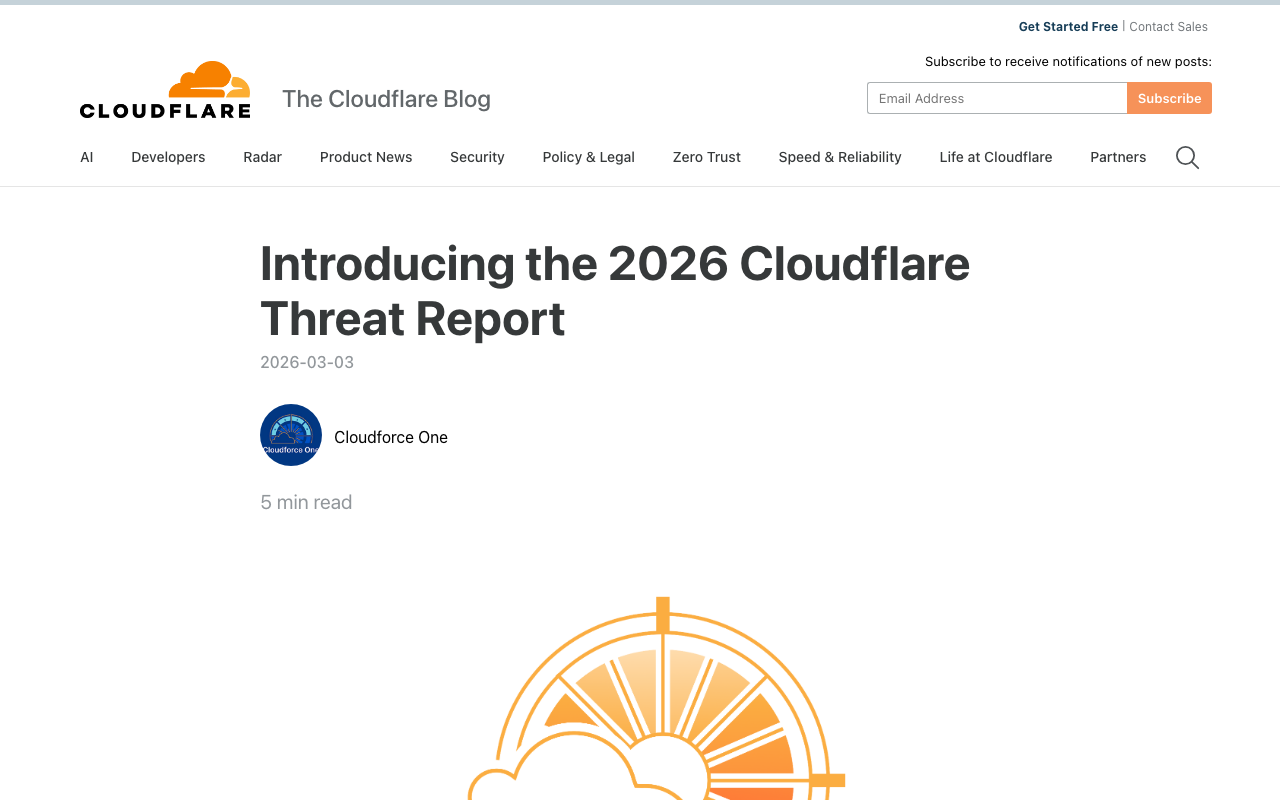
Cloudflare Launches CASB Remediation for Microsoft 365 and Google Workspace
Cloudflare CASB Remediation lets security teams go beyond visibility to fix risky file sharing in Microsoft 365 and Google Workspace,Remediation – a new way to fix problems with just a click, right from the CASB Findings page
We are tracking Cloudflare’s significant upgrade to its Cloud Access Security Broker (CASB) with the introduction of Remediation, a feature that enables security teams to fix risky file-sharing settings directly from the Cloudflare One dashboard. Historically, CASB provided visibility into misconfigurations; however, this update allows for immediate action within Microsoft 365 and Google Workspace environments. The new functionality targets high-impact risks including public links, organization-wide access, and files shared with external domains. By utilizing API-based interactions, we ensure that security professionals can remove risky sharing permissions with a single click without deleting files or changing ownership. This development effectively closes the loop between threat detection and mitigation, reducing the reliance on external ticketing systems or multiple admin interfaces. We consider this a pivotal step in Cloudflare’s mission to provide comprehensive SaaS security, transforming how organizations manage their most sensitive business-critical documents and data.
Source: The Cloudflare Blog
Industry Insights
This category provides a comprehensive analysis of the rapidly evolving technology landscape, ranging from the latest hardware breakthroughs in mobile and AI wearables to critical business strategies for startup survival. It explores the complex intersection of innovation, user experience ethics, and media integrity in an AI-driven era, offering readers profound perspectives on market shifts. By examining both industry giants and disruptive newcomers, these insights equip professionals with the foresight needed to navigate the challenges of modern digital transformation.
Tech Daily (2026-03-05): iPhone 17e, vivo X300 Ultra, and Xpeng VLA 2.0
The starting price of the iPhone 17e is 4499 yuan, with the base capacity reaching 256G,Xiaomi's humanoid robot completed a 3-hour autonomous operation test at the Beijing auto factory with a success rate of 90.2%
We cover a massive wave of tech updates led by Apple's release of the iPhone 17e and M4-powered iPad Air, marking a strategic shift toward eSIM support in the Chinese market. In the mobile photography space, vivo showcased the X300 Ultra at MWC 2026, featuring a groundbreaking dual 200-megapixel triple-camera system and specialized optics for professional-grade imaging. Xiaomi's humanoid robots have begun testing at automotive factories, achieving a 90.2% success rate in autonomous assembly tasks with response cycles matching production beats. Meanwhile, Xpeng unveiled its second-generation VLA, which significantly reduces system latency by 80% and delivers driving performance comparable to experienced human drivers. We also highlight Starlink's V2 satellite deployment approval and MiniMax's first post-IPO financial results showing rapid revenue growth alongside widening losses.
Source: 爱范儿

How Founders Can Prevent Cash Depletion: Two Essential Survival Strategies
Most of them don’t fail because the of the product. They don’t fail because the market wasn’t there. They almost fail because they ran out of cash.,And it almost always happens gradually, then suddenly. One day you think you’re fine, you’ve got 18 months of runway....
Today we examine the critical reality of startup survival, noting that most companies collapse not because of product defects or market absence, but due to preventable cash depletion. We observe that financial crises in startups often manifest gradually before hitting a sudden, catastrophic breaking point where 18 months of projected runway evaporates unexpectedly. To mitigate this risk, we highlight two fundamental strategies that help founders maintain liquidity and navigate the treacherous gap between optimistic projections and harsh market realities. By understanding the subtle signs of capital erosion early on, we can ensure that high-potential ventures survive long enough to achieve their intended scale and impact. Our analysis emphasizes that proactive cash management is the single most important factor for long-term operational viability in the current economic landscape. We believe these insights are vital for any leader aiming to bridge the gap between initial funding and sustainable profitability.
Source: SaaStr

Qwen Unveils G1 AI Glasses at MWC 2026 to Challenge Meta's Dominance
Qwen announced that its first AI hardware will go on sale in China on March 8 and will head global within the year.,Compared to Meta Ray-Ban Gen 2, Qwen AI Glasses G1 goes a step further in core configuration: dedicated co-processor, 64GB storage, bone conduction audio design.
We are closely tracking the intensifying battle in the AI wearables market as Qwen showcases its G1 AI glasses at MWC 2026 in Barcelona, positioning itself as a direct competitor to Meta's Ray-Ban Gen 2. The G1 model distinguishes itself with superior hardware specifications, including a dedicated co-processor, 64GB of internal storage, and a specialized bone conduction audio system designed for enhanced comfort. One of the most significant innovations we observed is the clever swappable battery design, which international testers suggest could finally enable true all-day AI assistance. Scheduled for a domestic launch in China on March 8 followed by a global rollout later this year, the device will fully integrate with the Qwen ecosystem to support advanced AI-driven productivity tasks. This strategic move signals the arrival of Chinese AI hardware as a formidable force on the global stage, challenging established incumbents with aggressive hardware optimization.
Source: 量子位

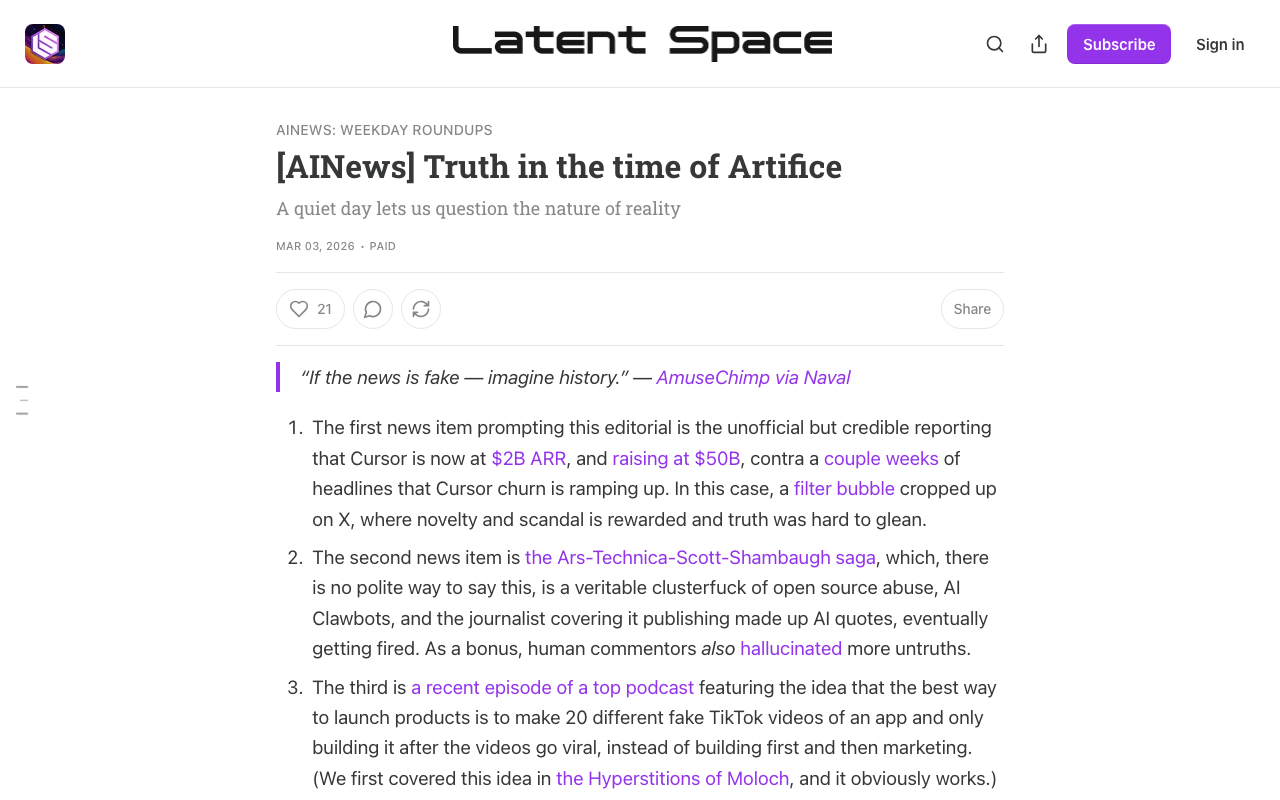
Truth in the Time of Artifice: Navigating AI Content and Media Trust (AINews)
the unofficial but credible reporting that Cursor is now at $2B ARR, and raising at $50B,The final stage — personalized creation replacing curation. Everyone lives in a Truman Show cage of their own making
Today we examine the fragmenting nature of shared reality as AI-driven misinformation and "hyperstitions" reshape the technology landscape. We highlight conflicting reports regarding Cursor's growth, where rumors of a $50B valuation and $2B ARR stand in stark contrast to social media narratives about user churn. Our analysis covers the recent editorial failures at Ars Technica involving AI-generated quotes and the rising trend of launching products via simulated viral videos before a single line of code is written. We trace the evolution of digital media from personalized feeds to an AI-dominated "Dead Internet" where curated reality is replaced by algorithmic cages. For developers and creators, this shift underscores the urgent need to prioritize human effort and authentic taste to "scale without slop" in an increasingly artificial environment.
Source: Latent Space
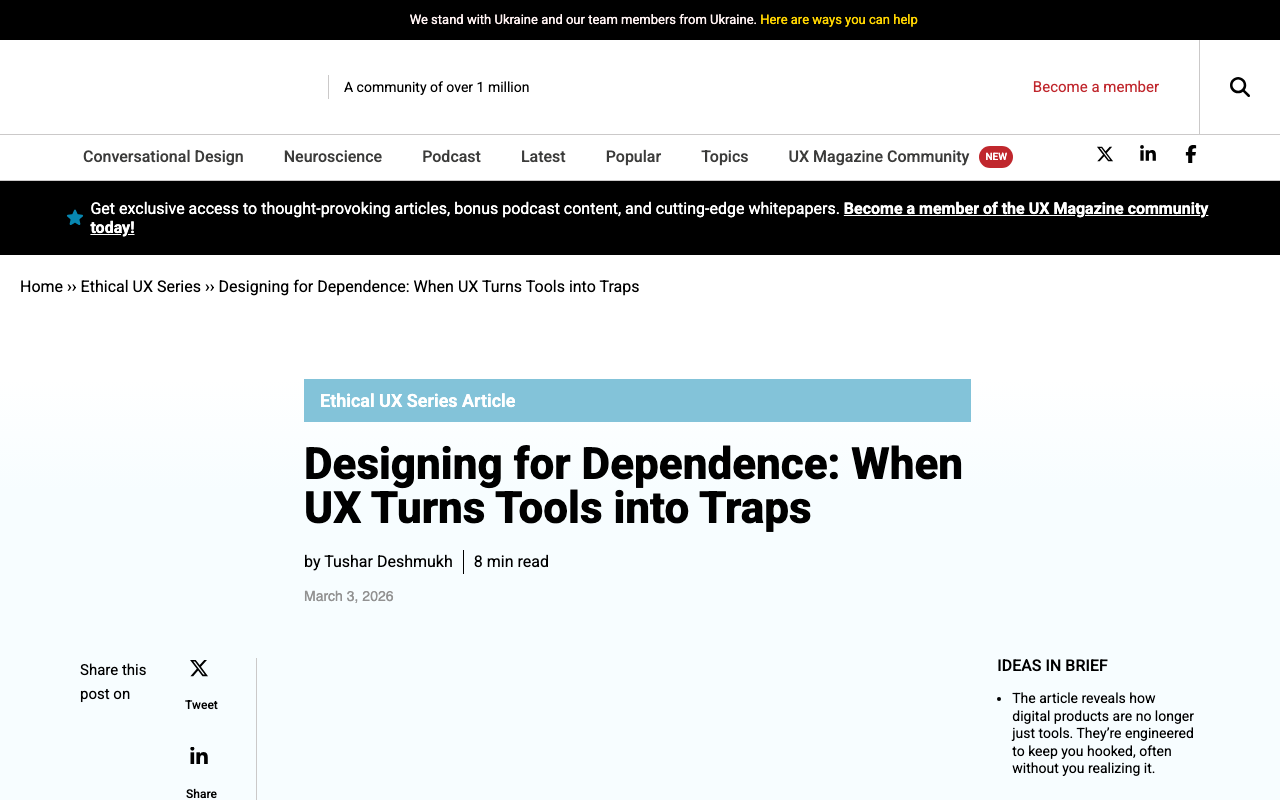
Designing for Dependence: When UX Turns Tools into Traps
A 2022 Journal of Behavioral Addictions study found variable rewards increase compulsive checking by 37%,Amazon One-Click Buy: Increases buyer regret by 19% (Statista 2023).
We are witnessing a concerning shift where helpful digital experiences have evolved into calculated ecosystems designed to maximize user dependency rather than utility. Our analysis examines how the “Hook Model”—comprising triggers, actions, variable rewards, and investments—manipulates psychological loops to bypass human intention. Specifically, a 2022 study highlighted that variable rewards increase compulsive checking by 37%, while features like Amazon's one-click buying can drive buyer regret up by 19%. We challenge the current UX obsession with “frictionless” design, as seen in YouTube's autoplay and TikTok's infinite scroll, which often strip away moments of necessary user reflection. To counter this, we recommend that designers incorporate friction mapping into usability studies to ensure technology amplifies rather than replaces human intention. By evaluating whether behavior loops truly serve user goals, we can move toward a more ethical architecture that respects cognitive load.
Source: UX Magazine
AI Technology
This category explores the cutting-edge developments in artificial intelligence, focusing on the shift from pattern recognition to advanced reasoning capabilities and the proliferation of autonomous agents. It examines how emerging paradigms like 'vibe coding' are reshaping software development by lowering technical barriers and enhancing human-machine collaboration. By analyzing these transformative shifts, we provide a comprehensive roadmap for navigating the rapidly evolving technological landscape of 2026 and beyond.
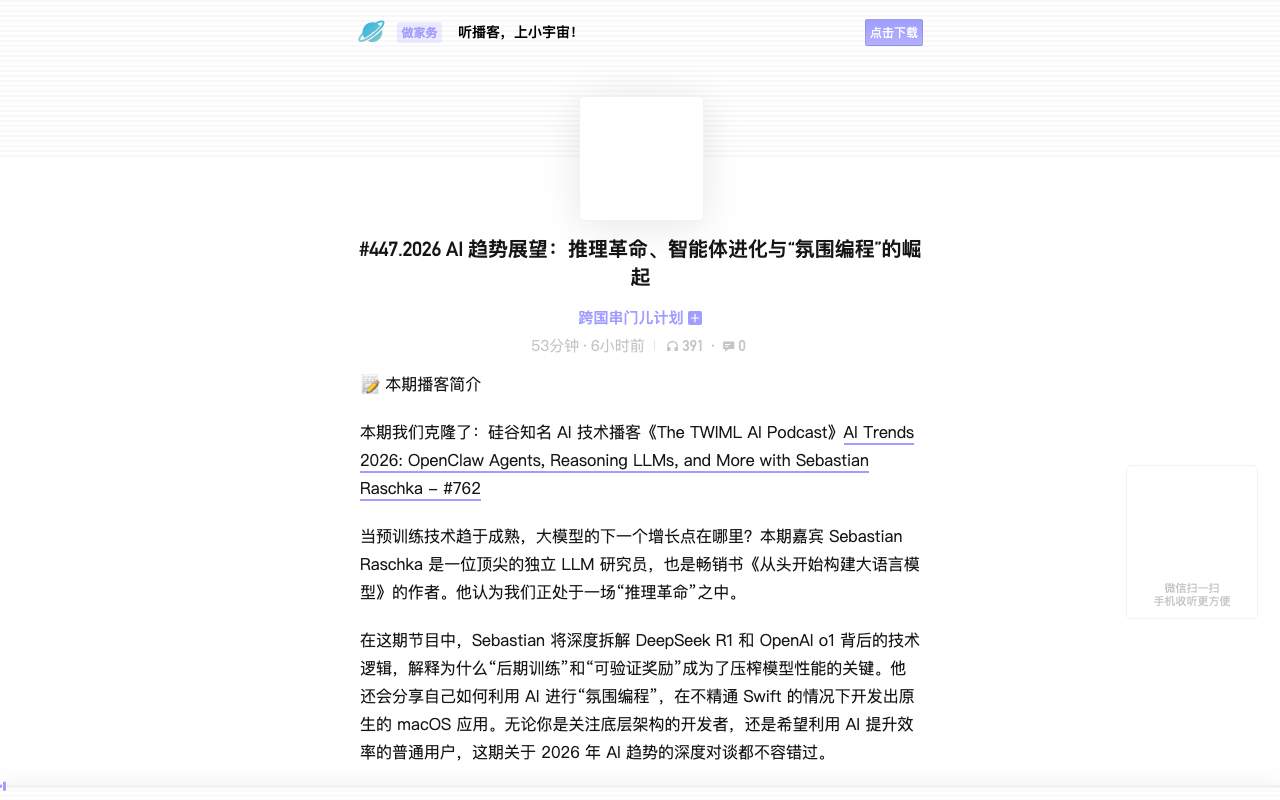
#447 AI Trends 2026: Reasoning Revolution, Agents, and the Rise of Vibe Coding
Three core themes for 2026: reasoning, inference scaling, and agentization.,DeepSeek R1 utilizes the deterministic rules of mathematics and code to provide reward signals. This paradigm eliminates the ambiguity of manual labeling, allowing the model to undergo large-scale self-evolution through reinforcement learning.
We analyze the upcoming paradigm shift in artificial intelligence for 2026 through a deep dive with researcher Sebastian Raschka into the "reasoning revolution." As pre-training matures, we observe that post-training and inference scaling are becoming the primary drivers of model performance, particularly through techniques like verifiable rewards used in DeepSeek R1 and OpenAI o1. Our discussion highlights how "vibe coding" is lowering technical barriers, enabling creators to build native macOS applications without deep language expertise by leveraging LLMs to generate deterministic logic. Furthermore, we explore the transition from simple wrappers to autonomous agents and the role of Multi-Head Latent Attention (MLA) in optimizing massive model architectures. This evolution signals a move from mere memory retrieval toward sophisticated logical thinking and self-refinement capabilities, redefining how developers and users interact with intelligence.
Source: 跨国串门儿计划
Research
This category explores foundational inquiries and rigorous academic investigations into the frontiers of artificial intelligence, with a specific focus on alignment and safety. It delves into the theoretical limits of computational models, examining whether core cognitive abilities like intelligence and ethical judgment can be decoupled in complex systems. By synthesizing mathematical proofs with philosophical insights, these works aim to redefine our understanding of safe and robust AI development.
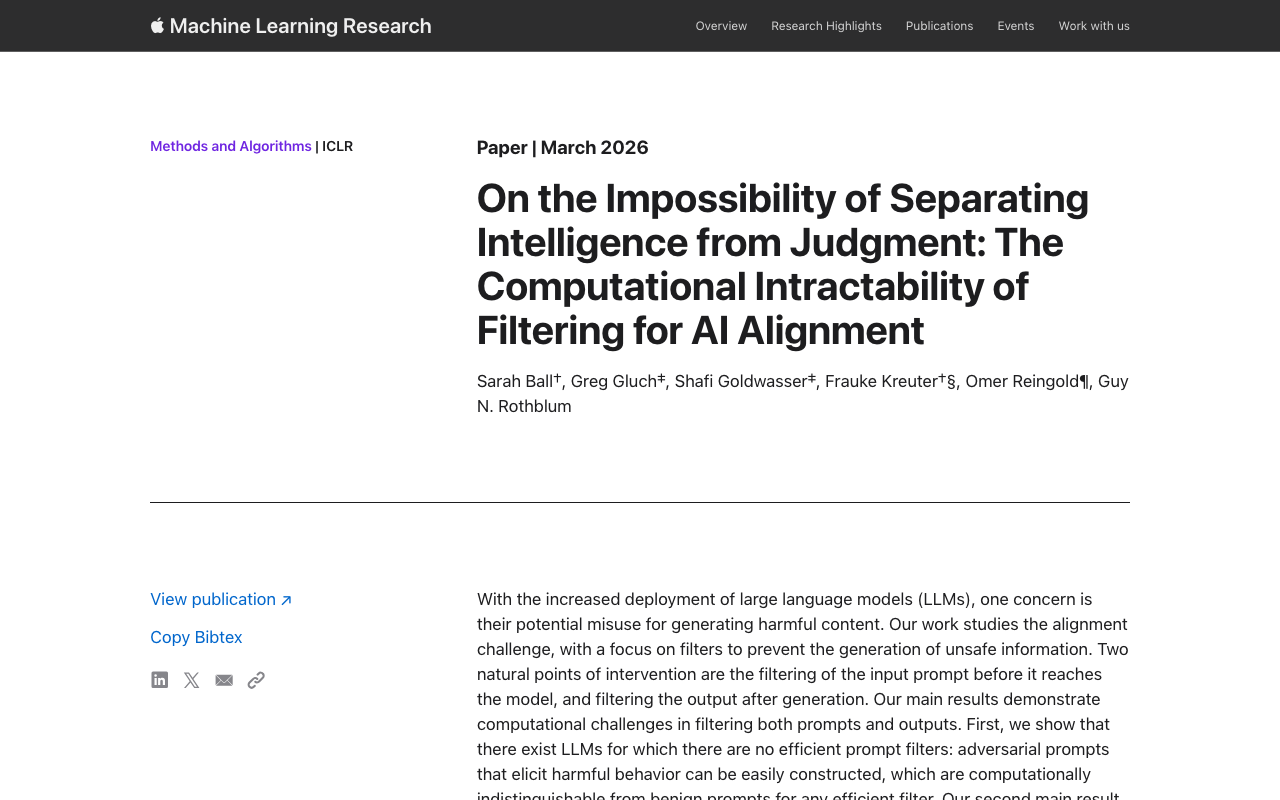
The Computational Intractability of Separating AI Intelligence from Judgment
adversarial prompts that elicit harmful behavior can be easily constructed,safety cannot be achieved by designing filters external to the LLM internals (architecture and weights)
Today we examine a critical research paper from Apple and partner institutions that challenges the feasibility of external AI safety filters. We explore their primary finding: for certain large language models (LLMs), there exist adversarial prompts that are computationally indistinguishable from benign ones to any efficient filter. Our analysis highlights that both input and output filtering mechanisms face fundamental computational barriers rooted in cryptographic hardness assumptions. We note the authors' conclusion that safety cannot be achieved through black-box interventions or external layers alone; instead, an aligned system’s intelligence is inextricably linked to its internal judgment. This research suggests that future alignment efforts must focus on model internals rather than peripheral filtering systems. By establishing these theoretical limits, the work emphasizes that intelligence and safety judgment are computationally inseparable in advanced AI systems.
Source: Apple Machine Learning Research
This report is auto-generated by WindFlash AI based on public AI news from the past 48 hours.