AI Daily Report: Industry Insights · Research · Developer Tools (Jan 30, 2026)
Friday, January 30, 2026 · 10 curated articles
Today's Overview
This collection highlights ten essential articles from early 2026, focusing on the intersection of cutting-edge research and practical engineering within the AI development ecosystem. The curated selections offer deep industry insights into evolving architectural standards while introducing innovative developer tools designed to streamline automated workflows and model deployment. By analyzing these latest research papers alongside production-ready solutions, developers can gain a comprehensive understanding of how to leverage next-generation frameworks to optimize performance. This update serves as a critical guide for engineers looking to master the complexities of modern software lifecycles and stay ahead in a rapidly shifting technological landscape.
Industry Insights
This category provides a comprehensive overview of the latest developments in the technology landscape, focusing on breakthrough AI models and strategic corporate shifts. It analyzes how global giants like Apple and Tencent navigate fluctuating market conditions and talent acquisition while exploring the critical balance between sovereign AI initiatives and open-source movements. By examining significant cybersecurity actions and venture capital trends, these insights offer a deep dive into the economic and technical forces currently shaping the future of global innovation.
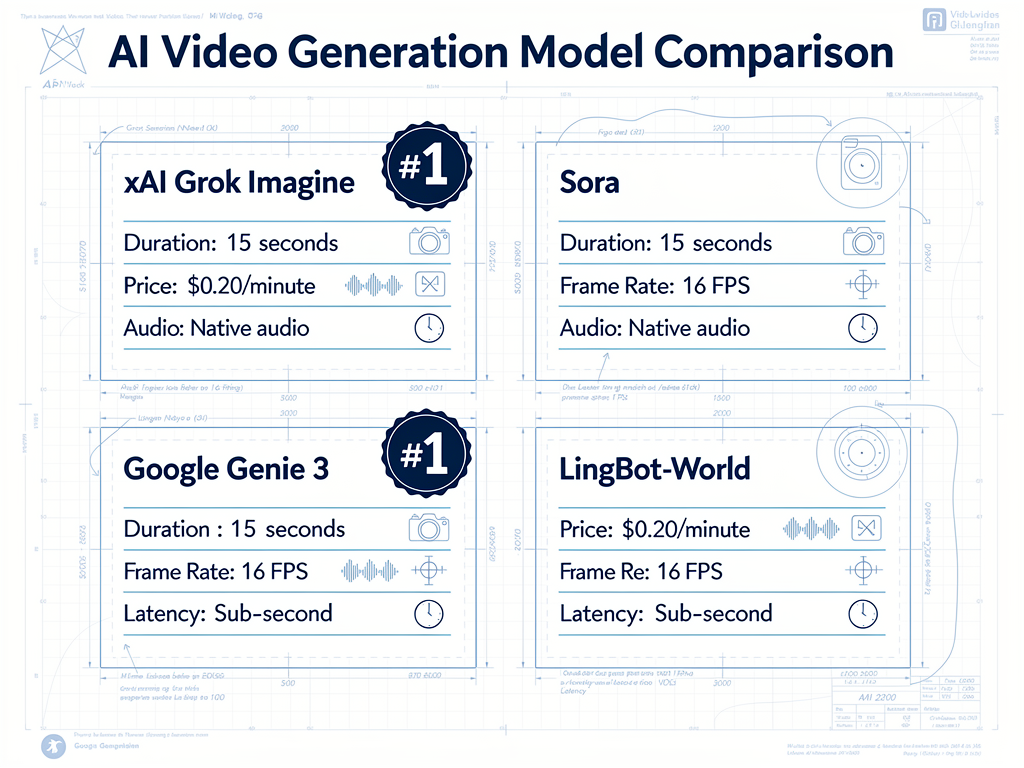
[AINews] xAI Grok Imagine API Debuts as #1 Video Model (Jan 28-29, 2026)
Grok, who now have the SOTA Image/Video Generation and Editing model released in API,SpaceX + xAI ($1100B? - folllowing their $20B Series E 3 weeks ago) are in a dead heat racing to IPO
Today we report on a pivotal shift in the AI hierarchy as xAI launches Grok Imagine, which has immediately secured the top position on the Artificial Analysis video generation leaderboards. This new multimodal API features native audio, 15-second durations, and an aggressive pricing model of $4.20 per minute, directly challenging proprietary rivals like Sora. We also track the financial acceleration of frontier labs, with the potential SpaceX and xAI merger pushing a $1.1 trillion valuation as they race against OpenAI and Anthropic for end-of-year IPOs. Furthermore, Google DeepMind has deployed Genie 3 to Ultra subscribers, marking a significant step toward interactive world simulation. Meanwhile, the open-source community is countering with LingBot-World, a real-time world model achieving sub-second latency at 16 FPS. These collective advancements suggest that the industry is rapidly transitioning from passive video creation to controllable, interactive environments.
Source: Latent Space
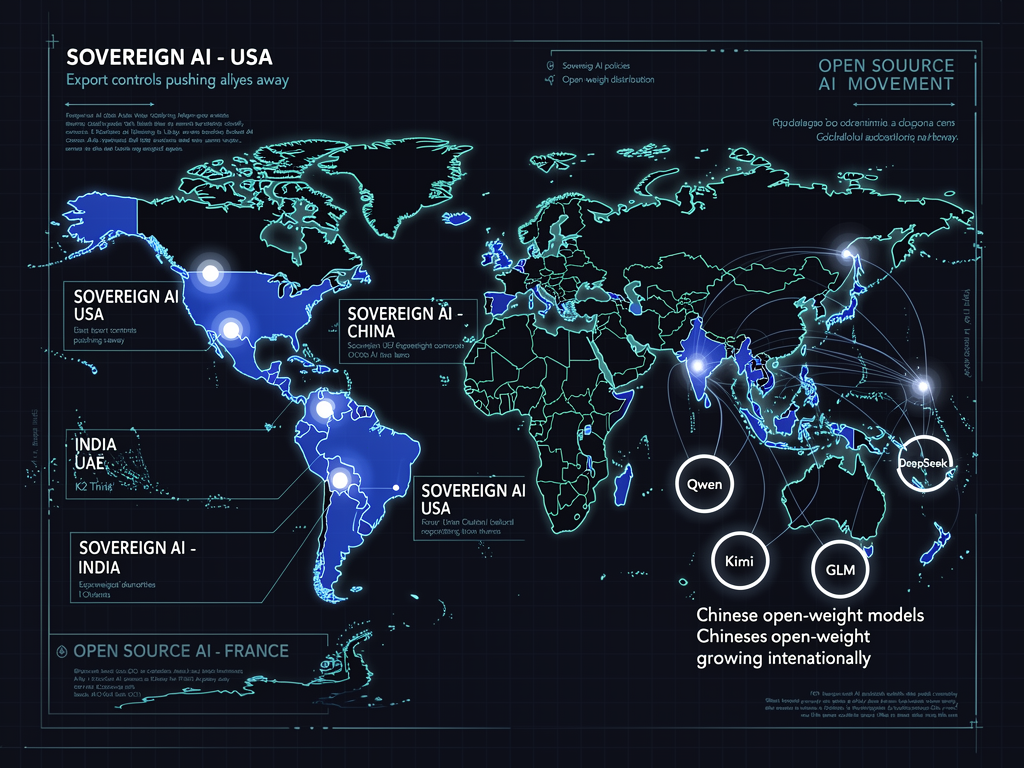
The Batch Issue 338: Sovereign AI and the Global Shift Toward Open Source
U.S. policies are driving allies away from using American AI technology. This is leading to interest in sovereign AI,open-weight Chinese models like DeepSeek, Qwen, Kimi, and GLM are gaining rapid adoption, especially outside the U.S.
In this issue, we examine how U.S. export controls and geopolitical strategies are inadvertently accelerating the global movement toward sovereign AI. We highlight that many nations, fearing overreliance on American technology giants like OpenAI and Google, are turning to open-weight alternatives to secure their technological independence. Our analysis shows that Chinese models such as DeepSeek and Qwen are gaining significant traction internationally, while countries like the UAE are launching their own open-source reasoning models like K2 Think. We conclude that while complete hardware independence remains a challenge, the strategic shift toward open-source infrastructure is empowering nations to maintain control over their AI futures. For the global AI community, this trend underscores the growing importance of a decentralized, open-source ecosystem that transcends national borders.
Source: deeplearning.ai
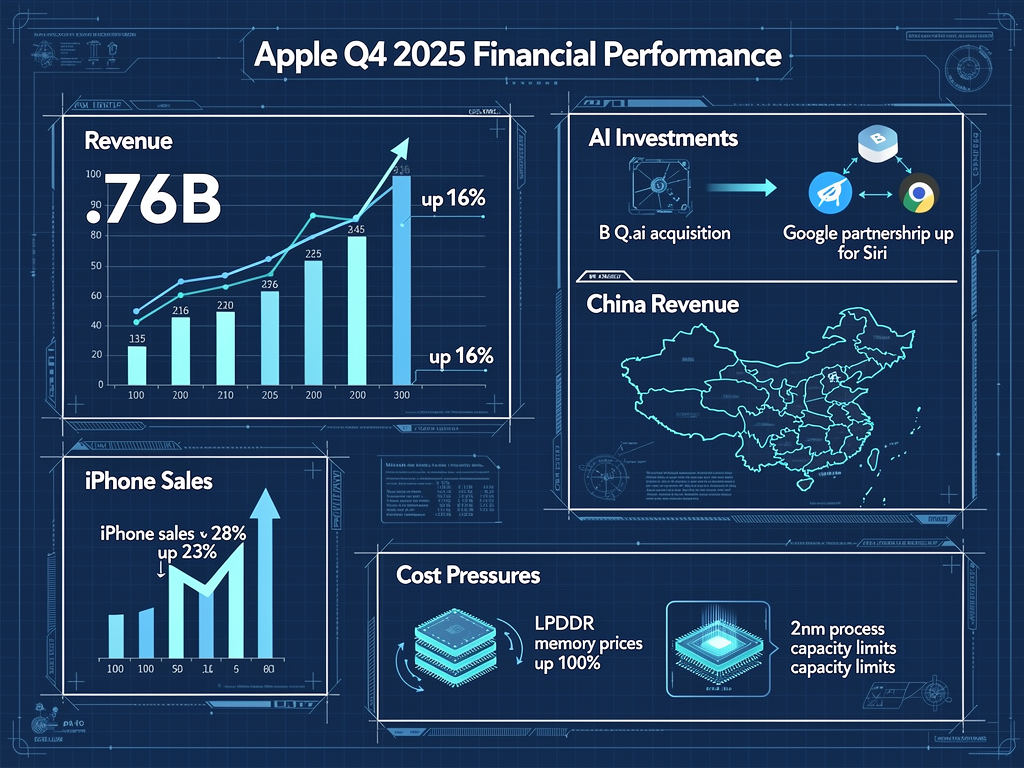
Apple Hits Record Revenue but Rising Component Costs Threaten iPhone 18 Pricing
Apple's Q4 2025 revenue reached $143.756 billion, up 16% year-over-year, hitting a record high; net profit reached $42.097 billion, up 16%. Korean media ZDNET Korea reports that Samsung Electronics and SK Hynix have negotiated with Apple to significantly increase LPDDR memory prices for iPhones, with hikes of up to 100%.
We are analyzing Apple's record-breaking Q4 2025 performance, where revenue soared to $143.76 billion driven by an extraordinary 23% surge in iPhone sales. Despite the massive success of the iPhone 17 series, particularly in Greater China with a 38% revenue jump, we observe significant headwinds from skyrocketing memory prices, with reports suggesting hikes of up to 100%. While Apple maintains a massive base of 2.5 billion active devices, the upcoming iPhone 18 faces unavoidable cost pressures from both LPDDR memory and the transition to TSMC's limited 2nm process capacity. We also note Apple's strategic pivot toward AI, highlighted by a $2 billion acquisition of Q.ai and a landmark partnership with Google to power a revamped Siri. Developers should prepare for a landscape where hardware margins are squeezed by supply chain volatility while ecosystem services and AI integration become the primary growth engines.
Source: 爱范儿
Google Disrupts IPIDEA: A Major Global Malicious Proxy Network Takedown
Google shut down the proxy network used by more than 550 bad actors,Google Play Protect — Android’s built-in security protection — will automatically warn you if an app contains bad IPIDEA code
We are reporting on Google's significant breakthrough in cybersecurity after successfully dismantling the IPIDEA proxy network, a massive infrastructure used by over 550 distinct threat actors. This operation involved shutting down the network’s online storefront and pursuing legal action to prevent the further marketing of tools that hijack residential internet connections for untraceable criminal activity. We observed that IPIDEA functioned as a hidden tunnel system, allowing bad actors to infiltrate millions of computers and mobile devices globally. To protect the broader ecosystem, we have integrated specific detection signatures into Google Play Protect to automatically warn Android users about infected apps and block their installation. By sharing our comprehensive research with industry partners, we aim to ensure this malicious network cannot rebuild its infrastructure. We urge all users to remain vigilant and avoid sharing internet access with untrusted programs to maintain their digital safety.
Source: The Keyword (blog.google)
20VC x SaaStr This Week: The $5.15B Brex Exit and Rising AI Inference Costs
Brex sold for $5.15 billion—a heroic outcome by any rational standard,Anthropic’s inference costs came in 23% higher than expected
We examine the latest market shifts through the 20VC x SaaStr collaboration featuring Harry Stebbings, Jason Lemkin, and Rory O’Driscoll. This week, we dissect why Brex's massive $5.15 billion exit feels unsettling to the venture community, signaling a transition away from the hyper-growth era's valuation norms despite the deal's size. Our analysis covers the alarming 23% spike in Anthropic’s inference costs above projections, a factor that we believe could become the final nail for mid-growth SaaS companies struggling with operational margins. We also look at Andreessen Horowitz's strategic move to secure a dominant position in the evolving AI landscape. For founders and developers, these developments highlight a critical need to balance AI innovation with sustainable unit economics in an increasingly cost-sensitive environment where infrastructure efficiency determines survival.
Source: SaaStr
Tencent Recruits AI Expert Pang Tianyu to Lead RL Research for Hunyuan Multimodal Team
Dr. Pang Tianyu, former senior research scientist at Sea AI Lab in Singapore and a 2017 direct PhD student in Computer Science at Tsinghua University, will soon join Tencent's Hunyuan Multimodal Exploration Center to lead frontier reinforcement learning algorithm research. As of now, Tencent Hunyuan's image and video derivative models total 3,000, with video model community downloads exceeding 5 million and Hunyuan 3D series model downloads surpassing 3 million.
We are tracking a major talent acquisition at Tencent as the tech giant welcomes Dr. Pang Tianyu, a former senior research scientist at Sea AI Lab, to its Hunyuan Multimodal Exploration Center. Tasked with spearheading frontier reinforcement learning algorithms, Pang brings a distinguished academic background from Tsinghua University and a track record of top-tier publications in ICML and NeurIPS. This strategic move aligns with CEO Pony Ma's recent commitment to "deeply reconstruct" the Hunyuan team under Chief AI Scientist Yao Shunyu to bolster multimodal capabilities and cross-product integration. We note that Tencent's multimodal ecosystem has already achieved significant scale, with over 3,000 derivative models and millions of community downloads for its video and 3D series. By strengthening its R&D leadership, Tencent aims to maintain its competitive edge in the evolving AI landscape while launching new initiatives like the "Yuanbao Pai" social feature and continuing its aggressive open-source strategy.
Source: 量子位
E223: The Pragmatic Era of LLM Commercialization and Business Value in 2025
2025 is being called the "Year of AI Applications," as large models are no longer just technical toys in the lab but are truly moving to production lines. B-side users' focus is shifting: from model performance to performance and cost.
Today we examine the transition of large models from experimental toys to essential production tools in 2025, a year designated as the "Year of AI Applications." We discuss how leaders like Alibaba Qwen, Insta360, and Yuyi Tech are embedding AI into smart hardware and enterprise data workflows to generate real revenue. A significant shift is occurring as B-side users move their focus from raw model performance toward cost-efficiency and specific business value encapsulation. We highlight how the exponential drop in inference costs is driving this pragmatism, alongside a growing trend of "edge-cloud" integration where nearly seventy percent of general tasks are handled locally. For developers and enterprises, the competitive landscape is shifting: the winner is no longer who has the largest model, but who best understands industry scenarios and can deliver consistent business ROI through iterative AI deployment.
Source: 硅谷101
AI as a Power Tool: Revolutionizing Niche Software Development for the Arts
This latest TikTok describes his Claude Opus moment, after he used Claude Code to build a custom lighting design application,I think we've got to come to terms with this is a career-changing moment.
We examine a significant shift in professional software development through the lens of Chris Ashworth, the creator of QLab, who recently experienced a transformative "Claude Opus moment" while building specialized lighting tools. We highlight how Ashworth, despite initial skepticism, utilized Claude Code to develop a polished, niche application for just three users in a few days—a project that would have been economically impossible using traditional manual coding. We emphasize his core conclusion that while AI cannot inherently make someone a better programmer, it acts as a suite of "power tools" that enables skilled developers to execute complex designs with unprecedented speed. We recognize this as a career-changing development that allows for the creation of high-quality software for small, underserved communities within the arts. Ultimately, we argue that the ability to direct and quality-control AI-generated code represents a new essential skill set for experienced engineers in the modern era.
Source: Simon Willison's Weblog
Research
This research category explores the integration of large language models within virtual sandboxes to enhance their agentic capabilities and autonomous decision-making processes. It investigates how isolated environments allow models to safely execute code and interact with complex digital tools, ultimately unlocking higher levels of general intelligence. By analyzing innovative frameworks like LLM-in-Sandbox, researchers aim to bridge the gap between theoretical reasoning and practical, goal-oriented actions in dynamic computational landscapes.
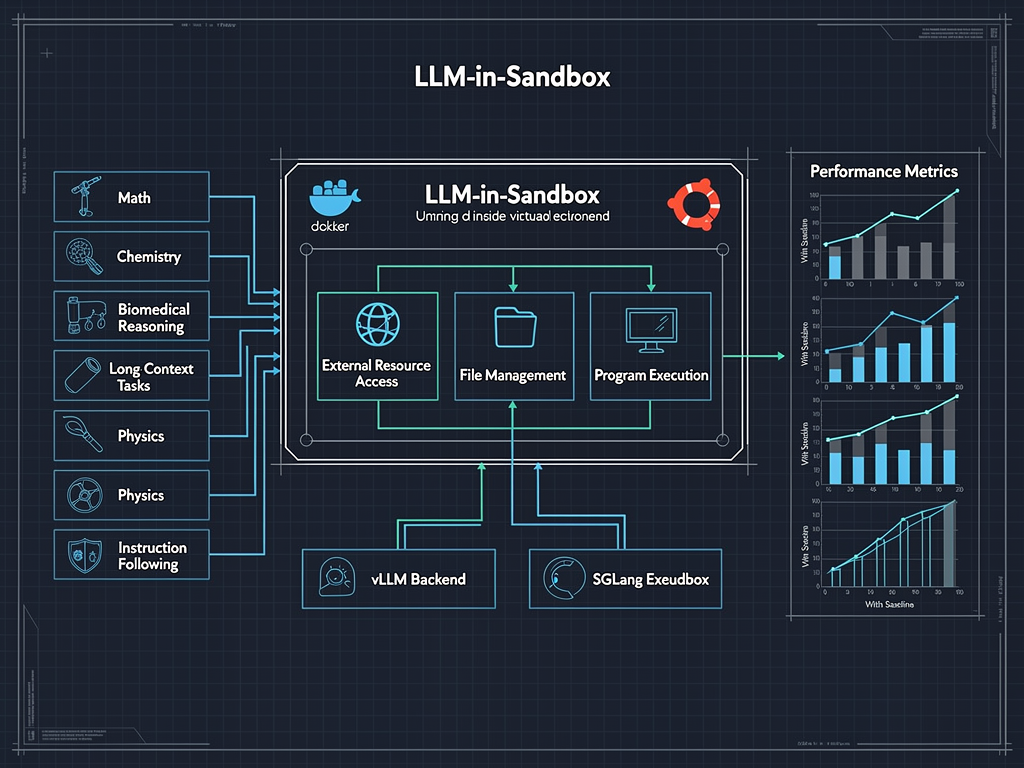
LLM-in-Sandbox: Unlocking General Agentic Intelligence via Virtual Sandbox
This paradigm is effective not only in code tasks but also significantly improves model performance in multiple non-code domains such as mathematics, physics, chemistry, biomedicine, long-text understanding, and instruction following. LLM-in-Sandbox should become the default deployment paradigm for large models, replacing pure LLM inference.
Today we highlight a transformative paradigm called LLM-in-Sandbox, developed by researchers from Renmin University, Microsoft, and Tsinghua University. By providing Large Language Models with a lightweight virtual computer environment based on Docker, the framework enables agents to access external resources, manage files, and execute programs autonomously. Our analysis shows that this approach consistently improves performance across six non-coding domains—including mathematics, chemistry, and long-context understanding—without requiring additional training. Specifically, the system utilizes a minimal toolset consisting of bash execution and file editing, which reduces token consumption while maintaining high reasoning speeds. We also note that the project is now open-sourced and compatible with vLLM and SGLang backends, making it a viable candidate to replace standard pure LLM inference. For smaller models, a specialized reinforcement learning method is introduced to bridge the capability gap in utilizing these sandbox environments.
Source: 机器之心
Developer Tools
Explore the essential tools and frameworks that empower developers to build, debug, and optimize software with greater efficiency and precision. This category focuses on cutting-edge AI-assisted coding technologies and best practices for responsible integration into the modern software development lifecycle. From IDE extensions to automated testing suites, discover how to leverage intelligent tools to enhance productivity while maintaining high standards of code integrity and ethical development.
Practical AI Coding Strategies for the Responsible Developer
AI coding tools like agents can be valuable allies in everyday development work.,Sensitive aspects like security and privacy need to be handled properly: Don’t paste secrets, customer data (PII), or proprietary code
We have observed that AI coding tools like Copilot and Cursor can significantly transform daily development workflows when used with a responsible mindset. By integrating these agents into our processes at Work & Co over the past two years, we have developed techniques to handle time-consuming grunt work and navigate legacy codebases. We define a responsible developer as one who ensures code quality, respects employer privacy policies, and never treats AI output as inherently trustworthy. Our approach involves using AI to triage breaking changes during dependency upgrades and to explore unfamiliar programming languages with reduced risk. We emphasize that all AI-generated contributions must undergo rigorous verification to avoid becoming a burden during peer reviews or testing phases. Ultimately, we aim to leverage these technologies to deliver high-quality web experiences while maintaining strict standards for security and architectural integrity.
Source: Smashing Magazine
This report is auto-generated by WindFlash AI based on public AI news from the past 48 hours.