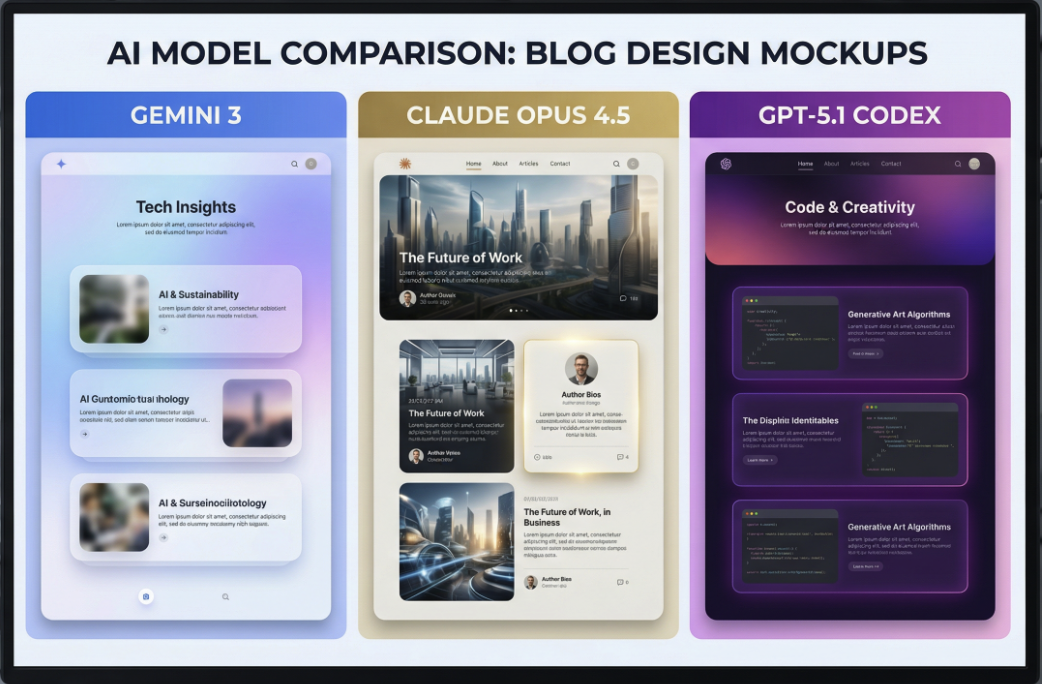
Preface: When Three “Designers” Walk into an Interview
Imagine you urgently need a designer to save your “painfully ugly” blog page. Three candidates walk in: Google’s Gemini 3 Pro, Anthropic’s Claude Opus 4.5, and OpenAI’s GPT-5.1 Codex. They all claim to be “design experts,” with resumes full of impressive achievements.
So the question is: who is the real design genius?
Today, we’re going to run a head-to-head design showdown. Same project, same requirements, same code—the three “designers” will let their work speak for itself.Note: This article is based on the YouTube channel “How I AI.” Original link: https://youtu.be/6w0i2Wp0knM ↗
Test Scenario: A Blog Page “Ugly Beyond Belief”
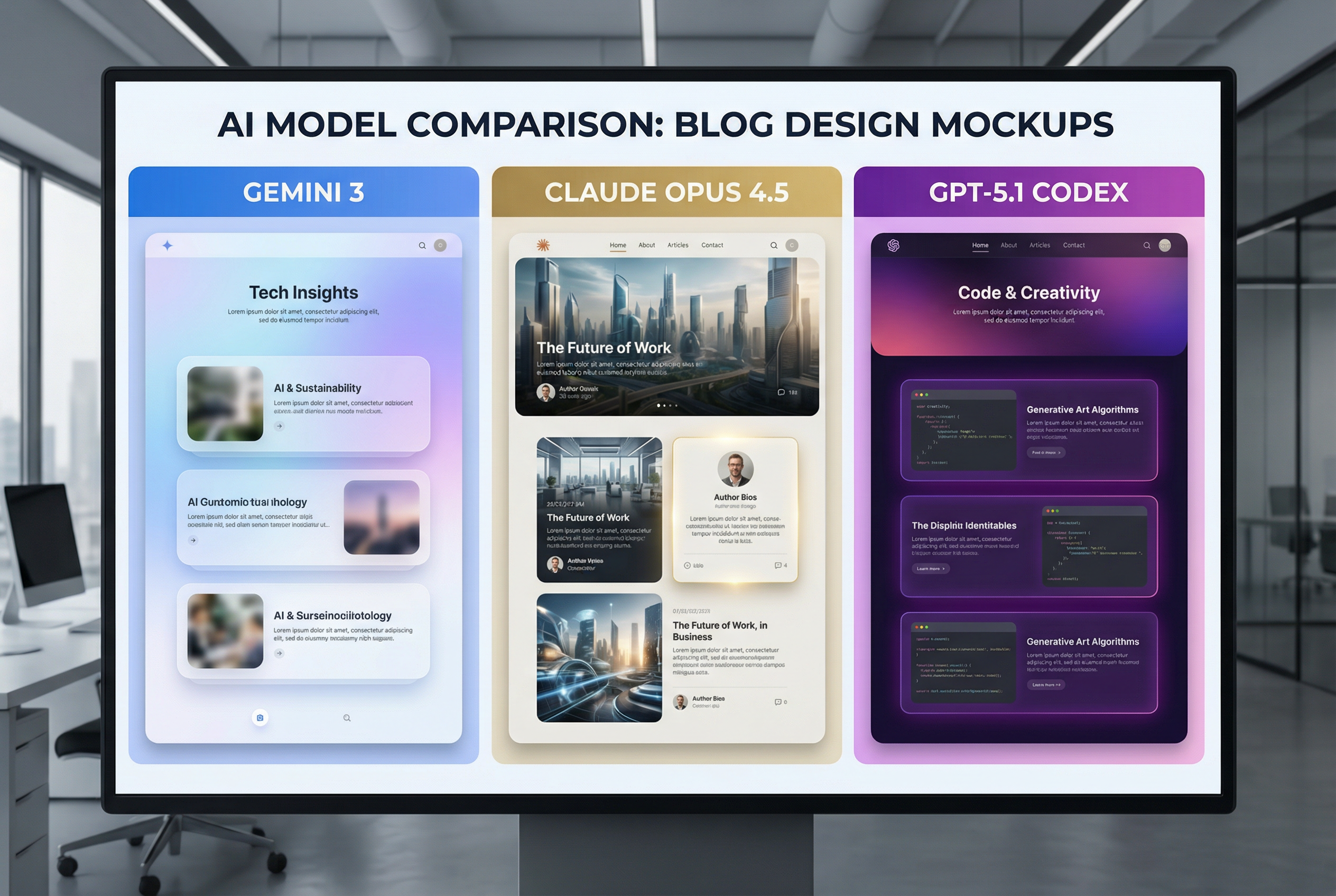
The subject is Chat PRD’s blog page—honestly, the design is… not great. The layout is monotonous, it lacks visual appeal, and the user experience needs work.
The test task is very simple:
“Redesign this blog page to improve visual appeal and user experience, and add SEO best practices and navigation optimizations.”
That’s it. No detailed design specs, no specific implementation guidance—just like what you’d say to a teammate at work: “This page isn’t working—can you optimize it?”
Then we gave this task to the three models separately to see who would deliver the best result.
Contestant 1: Gemini 3 Pro — Fast, but light on details
Gemini 3 Pro’s performance can be summed up as “decisive and lightning-fast.” It barely showed any thinking process and dove straight into outputting code.
What it did:
- Added a Hero Section to highlight the latest blog post
- Adopted a three-column card layout that looks cleaner than before
- Incorporated a glassmorphism design style
- Implemented image hover zoom effects
- Included tags, dates, and other metadata
But the problems:
- The top tag area is too close to the navigation bar, visually uncomfortable
- Blog cards collapse unattractively for posts without featured images
- Lacks polishing in the details
Evaluation: Like a highly efficient but somewhat rough junior designer—able to complete tasks quickly, but missing that refined, eye-catching touch.
Contestant 2: Claude Opus 4.5 — The champion is here! 🏆
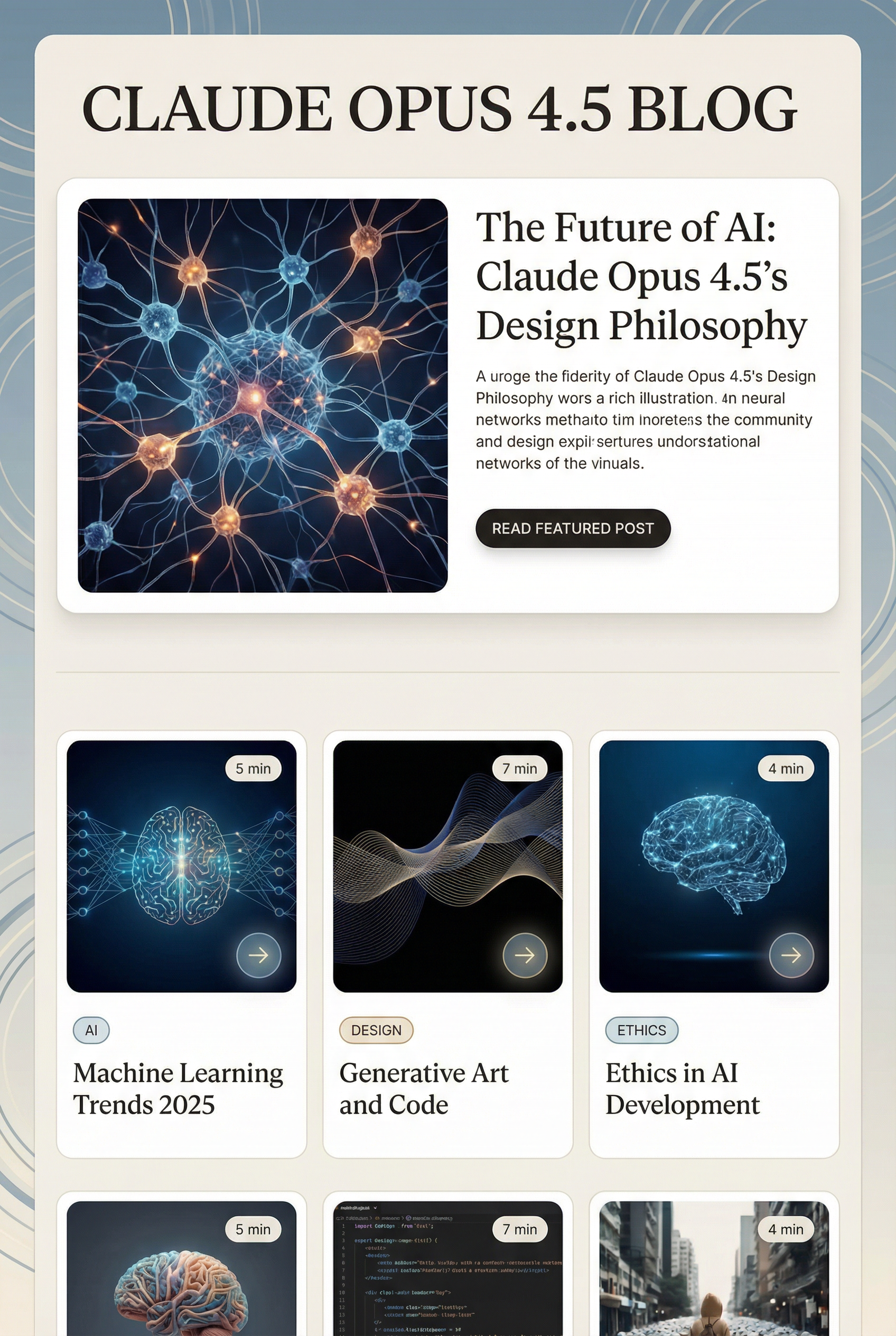
If Gemini 3 is a quick executor, Opus 4.5 is a “detail fanatic.” It not only looks good, more importantly—it thinks and plans.
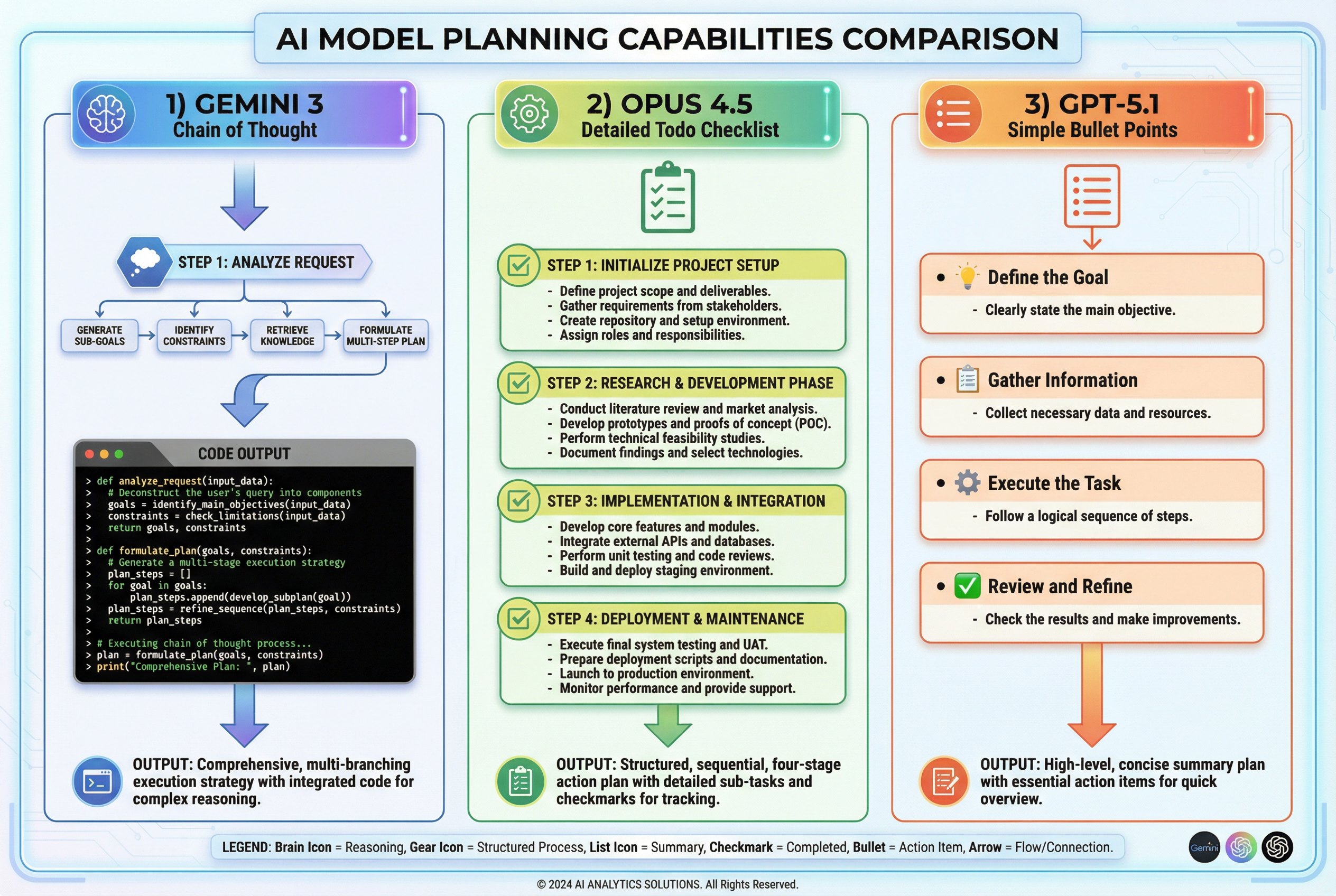
Its "secret weapon": detailed planning
Unlike Gemini 3, Opus 4.5 created a detailed to-do list before getting hands-on:
- Redesign the blog listing page
- Improve blog layout
- Enhance article presentation
- Add comprehensive SEO structured data, canonical URLs, and meta tags
This “plan first, execute after” approach made its design more systematic and complete.
Design highlights (these details are outstanding!)
Visual design:
- Smartly pulled background images and decorative elements from the project’s asset library (instead of a simple gradient background)
- On card hover, not only does the image enlarge, but a cute little arrow CTA appears
- For posts without featured images, added a tasteful placeholder icon (a small book icon)
Functional enhancements:
- Estimated reading time
- More refined category tag design
- Breadcrumb navigation
- Author information display
SEO optimizations:
- Added structured data
- Optimized metadata
- Improved internal linking structure
Evaluation: This is the team’s “chief designer”—not only can it build, but it thinks thoroughly, handles edge cases, and polishes every detail.
Contestant 3: GPT-5.1 Codex — A back-end ace lost in front-end land
Honestly, I was a bit surprised by GPT-5.1 Codex’s design output…
Fatal flaw 1: The AI purple disasterIt gave a purple-blue gradient background—this “AI stock color” has flooded generated works. It’s 2025; we really don’t need more purple gradients!
Fatal flaw 2: Functional issues
- The logo looks poor against the colorful background
- The featured article section lacks a clear call-to-action (CTA)
- Category link logic is messy
- The “browse library” feature couldn’t even display the article list correctly
Planning ability: averageIt did create a to-do list, but much simpler than Opus 4.5:
- Review current layout
- Redesign
- Apply SEO
Evaluation: GPT-5.1 Codex clearly wasn’t born for front-end design. It may be excellent at back-end logic and data processing, but design… better not.
Key Insight: The “team division of labor” philosophy for AI models
The biggest takeaway from this test isn’t finding the “strongest design model,” but something more important:
Different AI models are like different roles in a team—each has its specialty.
Recommended model division strategy
| Work Type | Recommended Model | Reason |
|---|---|---|
| 🎨 Front-end design | Claude Opus 4.5 | Strong on detail and planning |
| 📝 Copywriting | GPT-5.1 Codex | Natural language expression |
| 🛠️ Back-end development | GPT-5.1 Codex | Strong logical processing |
| 🎯 Rapid prototyping | Gemini 3 Pro | Fast and efficient |
| 🧠 strategy planning | Claude Opus 4.5 | systematic thinking |
| 🔍 SEO optimization | Gemini 3 Pro | Comprehensive technical detail |
Practical suggestions
- Don’t worship a “universal best”—no single model is optimal for all scenarios
- Learn to “switch models”—choose based on task characteristics
- Build a testing process—use the same task to test different models and accumulate experience
- Combine usage—let Opus 4.5 do design planning, let Gemini 3 handle technical implementation
Conclusion: 20 minutes, three solutions, one winner
Let’s recap the results of this showdown:
In under 20 minutes, we obtained:
- Three completely different design solutions
- Comprehensive SEO upgrades
- Detailed implementation documentation
Imagine a human designer doing this:
- Multiple rounds of communication to confirm requirements
- A few days to produce the first draft
- Several iterations for revisions
Now, AI makes all this happen in the time it takes to drink a cup of coffee.
Final winner: Claude Opus 4.5
It won because of:
- Systematic planning ability
- Extreme attention to detail
- Thoughtful handling of edge cases
- Elegant visual design
The absolute champion of this PK.
Have you used these AI models in your projects? Which do you prefer? Share your experience in the comments!