
From Vibe Coding to Agentic Engineering: Karpathy’s 1-Year Retrospective
February 5, 2026 · Tech Guides
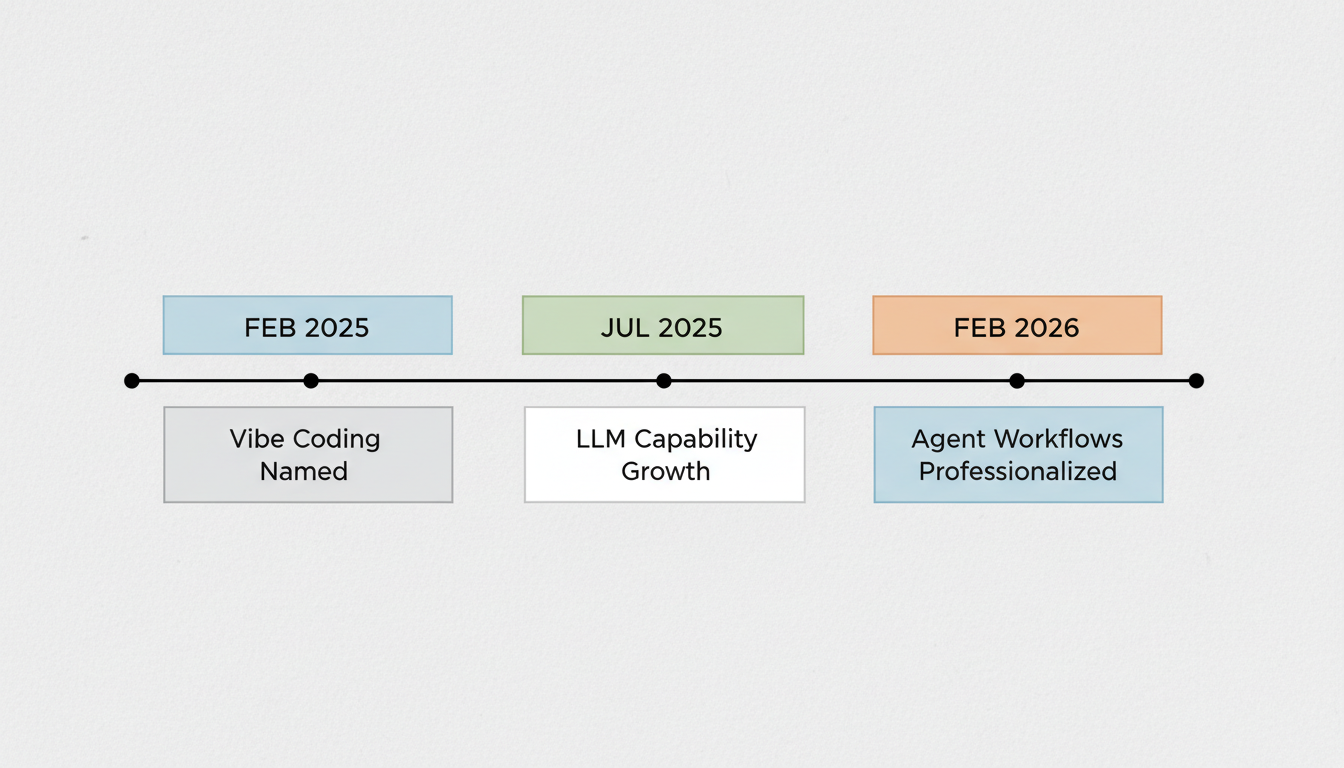
Andrej Karpathy’s “vibe coding” tweet didn’t just go viral — it minted a name. One year later he returned with a retrospective that feels like a precise snapshot of how AI-assisted programming changed in a single year: from playful improvisation to professional, high-leverage work under real engineering standards.
This post unpacks his reflection, clarifies what changed, and turns the ideas into practical guidance for teams building with agents today.
Source: https://x.com/karpathy/status/2019137879310836075
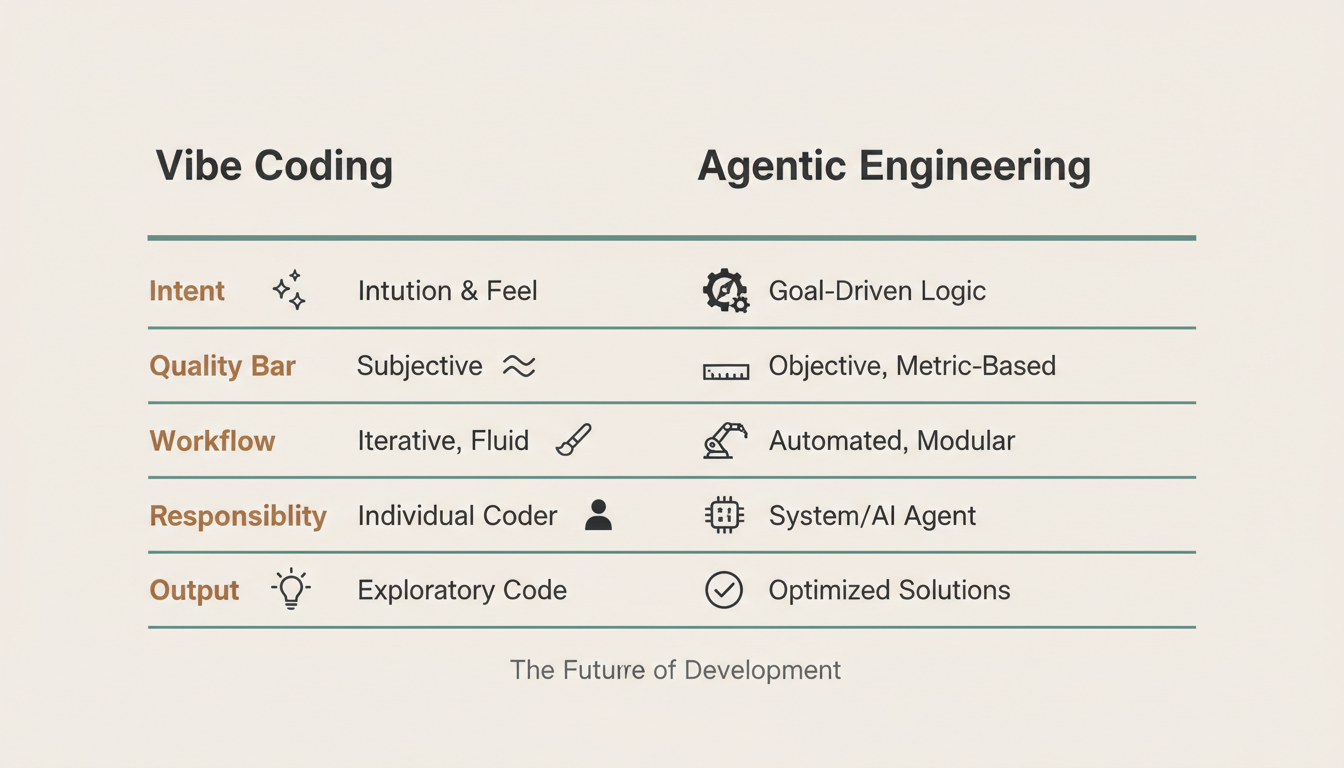
1) The original context: why “vibe coding” stuck
Karpathy describes the original tweet as a “shower of thoughts” — a throwaway that unexpectedly named a real feeling many people had at the time. That matters: memes that stick usually name something that already exists culturally.
The term worked because it captured a moment when:
- LLMs were just good enough to be fun
- The costs of mistakes were low
- The energy was exploratory and playful
It was “coding by feel.” Fast, loose, and optimistic.
2) What changed in a year
The biggest shift is not just model quality — it’s workflow expectations. Karpathy’s key observation:
- Back then: vibe coding was mostly for demos, throwaway projects, and exploration.
- Now: LLM agent workflows are increasingly a professional default, but with more oversight and scrutiny.
In other words, the industry moved from play to production.
3) Why “agentic engineering” is a better name
Karpathy’s proposed term is agentic engineering, and he gives two reasons:
Agentic: you are not writing the code directly most of the time — you are orchestrating agents and acting as oversight.
Engineering: there’s an art and a science to it. It’s a skill you can learn and improve.
This framing is useful because it re-centers accountability. The agent can produce code, but you own the outcomes.
4) From “vibes” to engineering discipline
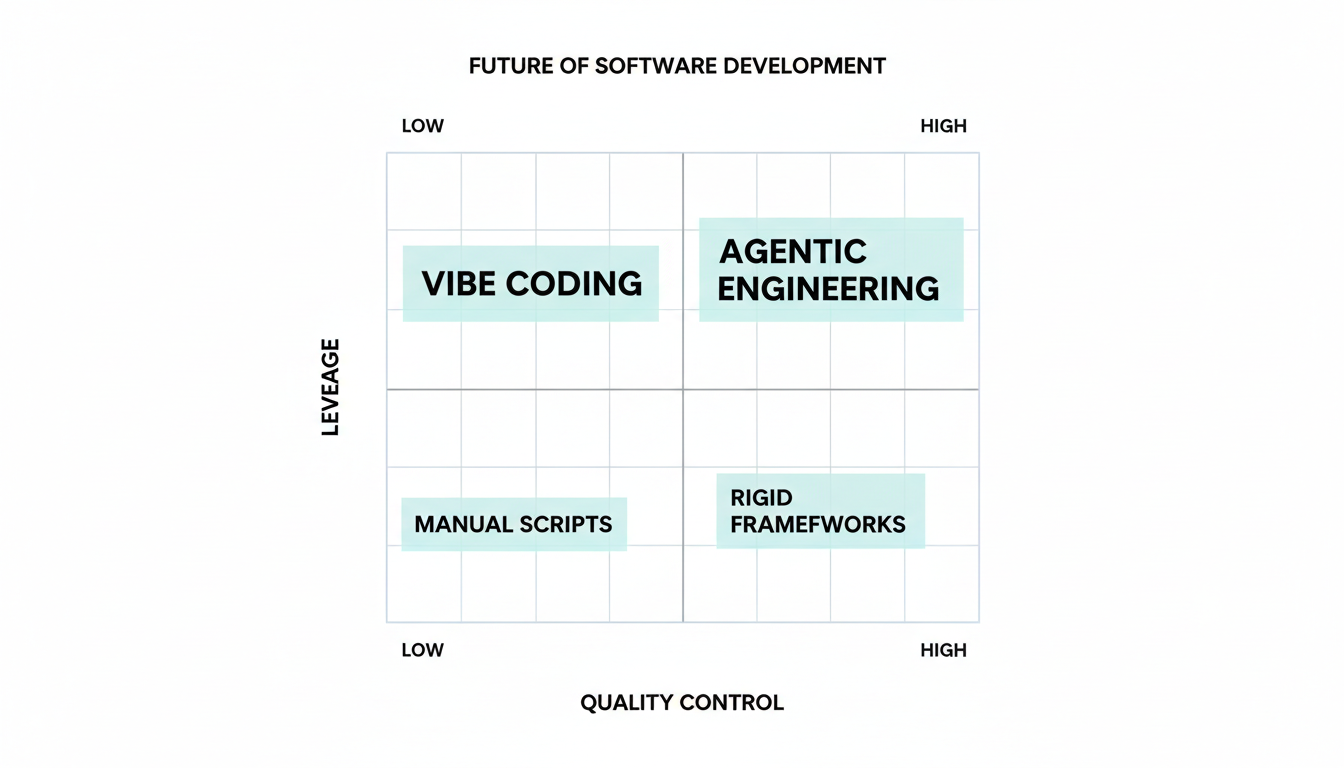
If vibe coding was about speed and exploration, agentic engineering is about leverage without quality regression. That implies a shift in practice:
- Define goals precisely
- Split work into verifiable chunks
- Review outputs like a senior engineer
- Fix root causes, not symptoms
The fundamental job becomes: orchestrate, verify, and ship.
5) A practical workflow for agentic engineering
Here is a minimal loop for professional-grade agent work:
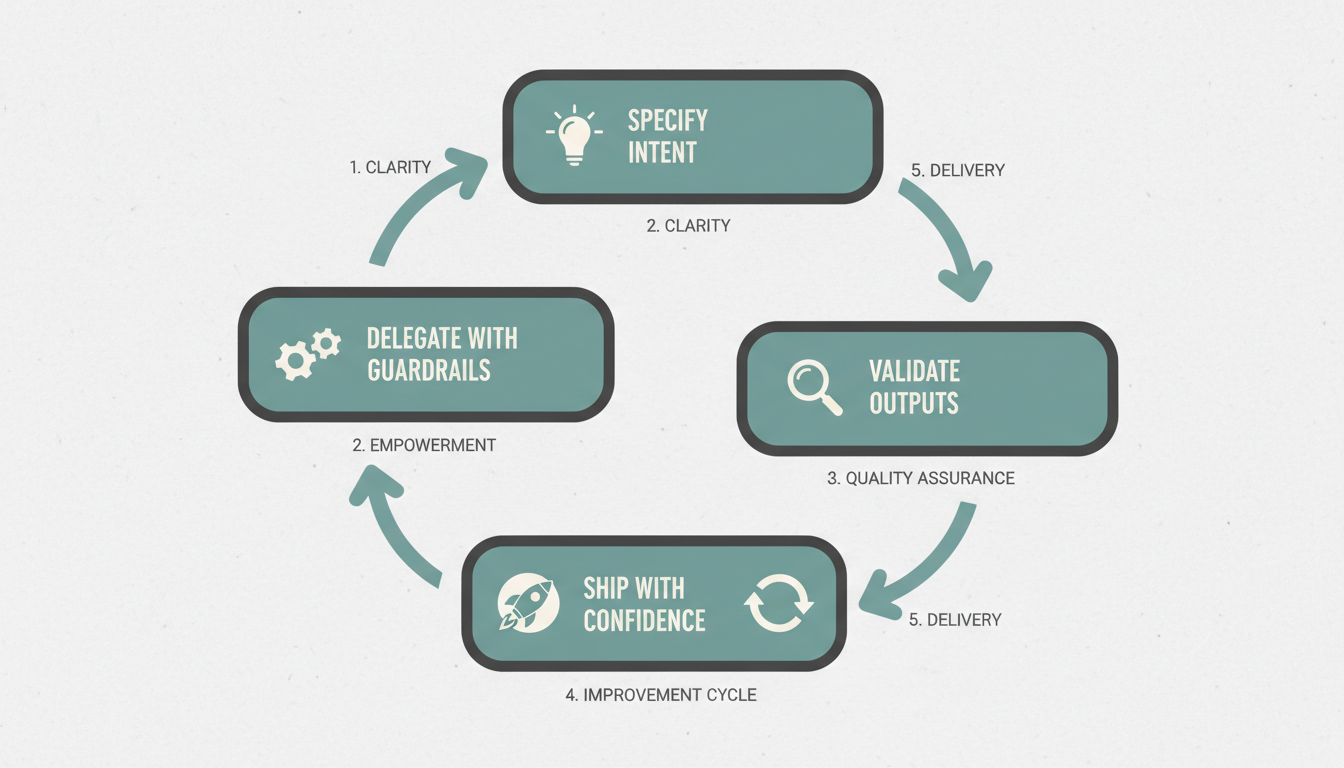
- Specify intent
- Clear outcomes, constraints, and non-goals
- Delegate with guardrails
- Provide scope, tools, and must/must-not rules
- Validate outputs
- Run tests/lint, check integration points, inspect diffs
- Iterate on failure
- Fix root causes, keep changes minimal, rerun checks
- Ship with confidence
- Commit, deploy, and monitor
This is not “prompting.” It’s engineering oversight in a new medium.
6) What this means for teams in 2026
Karpathy’s view implies a new baseline:
- The default engineer is becoming an orchestrator.
- Quality doesn’t move automatically; it must be enforced.
- The best teams will master verification and evaluation, not just generation.
It also reframes hiring: you’re not just hiring someone who writes code — you’re hiring someone who can direct systems that write code.
7) A short checklist you can adopt now
- [ ] Treat agent output as a draft, not a final deliverable
- [ ] Require tests or reproduction steps for every change
- [ ] Add explicit acceptance criteria before delegation
- [ ] Keep a review loop: diff → run → verify → commit
- [ ] Track error patterns and feed them back into prompts
8) Closing thought
Karpathy’s retrospective captures the moment we crossed the line from novelty to infrastructure. “Vibe coding” named the early exploration phase. “Agentic engineering” names the professional era — and it comes with responsibility.
The tools will keep getting better. The differentiator will be how we orchestrate them.